

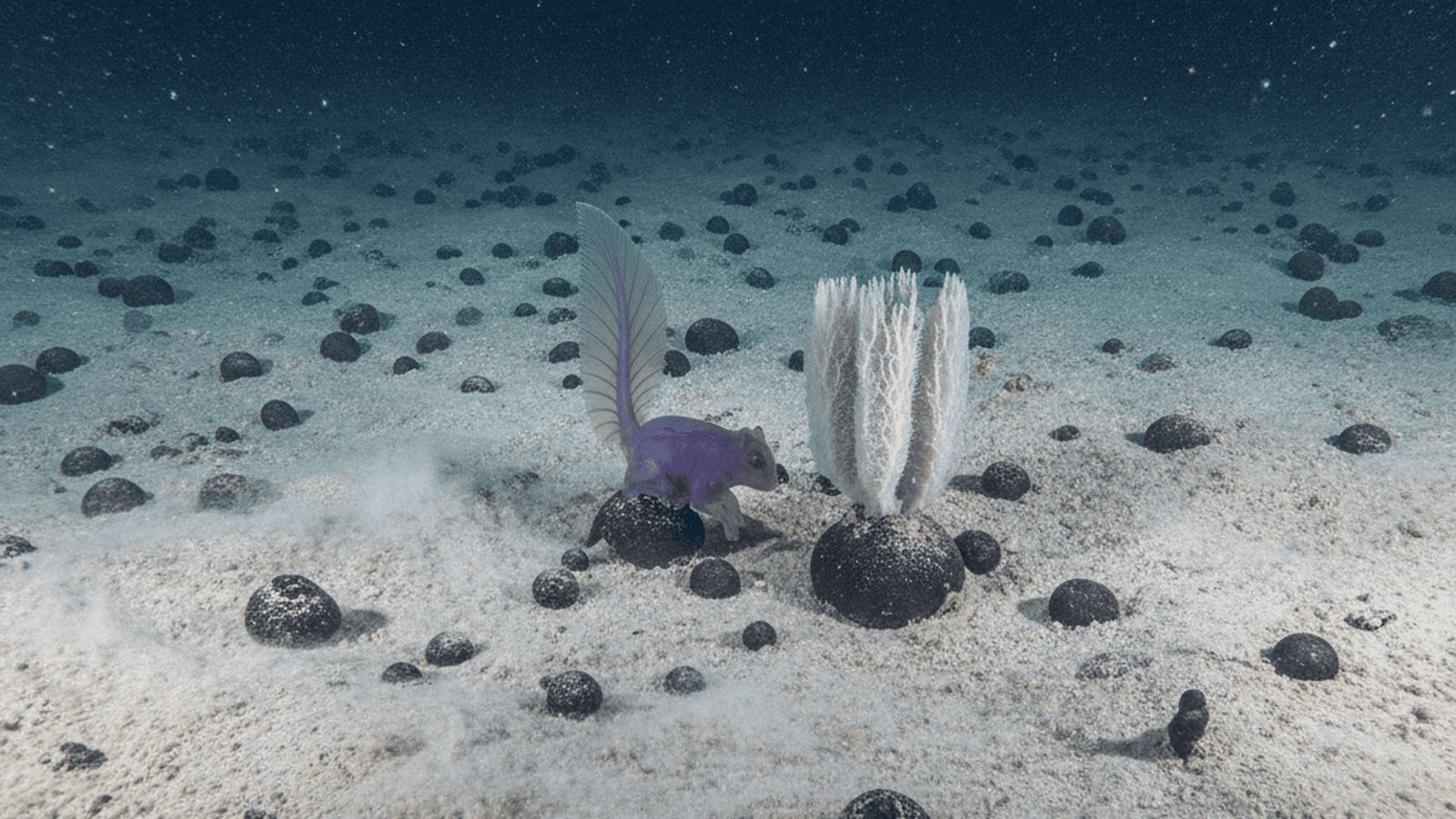
A comprehensive biological survey of the Clarion-Clipperton Zone in the Pacific Ocean has identified over 5,000 new species. These findings highlight the immense biodiversity of the abyssal plain, an area currently targeted for deep-sea mineral mining.
TLDR: Scientists have cataloged over 5,000 new species in the Pacific Ocean’s Clarion-Clipperton Zone, revealing that roughly 90% of the region’s life is unknown to science. The discovery of unique organisms like the gummy squirrel provides a vital ecological baseline as international debates over deep-sea mining intensify.
Deep-sea expeditions into the Clarion-Clipperton Zone (CCZ) of the central Pacific Ocean have unveiled a biological frontier far more diverse than previously imagined. Spanning approximately six million square kilometers between Hawaii and Mexico, this abyssal plain has long been a point of interest for its mineral wealth. However, a recent comprehensive synthesis of expedition data has shifted the focus toward its extraordinary biodiversity. Researchers have now cataloged over 5,000 distinct species within the zone, with an estimated 90% of them being entirely new to science.
The environment of the CCZ is characterized by extreme conditions, including near-freezing temperatures, crushing pressure, and total darkness. Life in this realm depends on a slow rain of organic detritus known as marine snow, which falls from the sunlit layers of the ocean above. Despite these constraints, the seafloor is teeming with specialized organisms. Among the most striking discoveries is the gummy squirrel, a translucent sea cucumber belonging to the genus Psychropotes, which utilizes a large, sail-like appendage to navigate the muddy substrate.
The taxonomic effort was led by a team of international scientists who compiled decades of survey data into a single CCZ checklist. This inventory includes a wide array of life forms, from delicate glass sponges and sea anemones to complex arthropods and mollusks. Many of these species are endemic to the region, meaning they are found nowhere else on Earth. The researchers utilized remotely operated vehicles (ROVs) equipped with high-definition cameras and precision sampling arms to document these creatures in their natural habitat at depths of 4,000 to 6,000 meters.
A central feature of the CCZ ecosystem is the presence of polymetallic nodules. These potato-sized rocks, which take millions of years to form, provide the only hard substrate in an otherwise silty landscape. Many species, such as certain types of sponges and corals, require these nodules to anchor themselves. These same nodules are rich in manganese, nickel, cobalt, and copper, making the region a primary target for the emerging deep-sea mining industry. The discovery of such high biodiversity suggests that mining operations could have far-reaching impacts on species that are still being identified.
The data collection process involved sophisticated DNA barcoding techniques. Because many deep-sea species look remarkably similar to the naked eye, genetic analysis is often the only way to confirm a new discovery. This molecular approach has revealed a high degree of cryptic diversity, where what was once thought to be a single widespread species is actually a complex of several distinct, localized populations. This finding has significant implications for conservation, as it suggests that localized disturbances could lead to the extinction of unique genetic lineages.
As the International Seabed Authority continues to negotiate the regulations that will govern mineral extraction in international waters, this biological baseline is indispensable. Scientists argue that without a complete understanding of the existing ecosystem, it is impossible to accurately predict or mitigate the environmental consequences of industrial activity. The sheer volume of new species discovered underscores how little is known about the deep ocean, which remains the largest and least explored habitat on the planet.
Future research will prioritize mapping the geographic ranges of these newly discovered species. Understanding the connectivity between different areas of the CCZ is crucial for designing effective marine protected areas. By determining how larvae disperse and how populations interact across vast distances, biologists hope to create a framework for preserving the ecological integrity of the abyss. The ongoing work in the Clarion-Clipperton Zone serves as a reminder that the deep sea is not a barren void, but a complex and fragile web of life.

Mason Reed serves as a Staff Writer for Just Right News, where he spearheads the Future Frontiers & Special Projects desk. In an era defined by rapid technological shifts and evolving social landscapes, Mason provides a steady, principled voice, examining the innovations of tomorrow through the lens of traditional American values. His work is most prominently featured in his signature series, “The Next Horizon,” where he explores the intersection of emerging technology, national sovereignty, and the preservation of individual liberty.
A native of San Diego, California, Mason’s worldview was shaped by the unique culture of his hometown. Growing up in a region defined by its strong military presence and its history of maritime industry, he developed a deep-seated respect for the institutions that provide national stability and the entrepreneurial spirit that drives the American economy. This upbringing instilled in him a belief that true progress is not found in discarding the past, but in building upon a foundation of proven principles. His reporting often reflects this San Diego influence, emphasizing the importance of a robust national defense and the necessity of maintaining a competitive edge in the global marketplace.
Now based in San Francisco, Mason operates from the heart of the world’s technological engine. Living and working in the Bay Area provides him with a front-row seat to the advancements—and the ideological challenges—emanating from Silicon Valley. While many in the region embrace a “move fast and break things” mentality, Mason’s reporting serves as a vital counterweight. He offers Just Right News readers a “boots on the ground” perspective, documenting how radical local policies and the concentration of tech power impact the everyday lives of citizens. His proximity to the industry allows him to cut through the marketing jargon of big tech to uncover the real-world implications for privacy, free speech, and the nuclear family.
In his “Future Frontiers” beat, Mason tackles complex subjects ranging from the ethics of artificial intelligence to the burgeoning private space race. He approaches these topics with a healthy skepticism toward centralized bureaucracy, championing instead the decentralized innovations that empower individuals. Through “The Next Horizon,” he highlights the pioneers and thinkers who are working to ensure that the future remains a place where human dignity and constitutional rights are protected. He believes that the rapid pace of change requires more than just technical expertise; it requires a moral compass rooted in the Western tradition.
Throughout his tenure at Just Right News, Mason has remained committed to the idea that the future is something to be shaped, not merely accepted. His writing is characterized by a rigorous defense of American exceptionalism and a belief that the country’s best days lie ahead, provided it remains true to its founding ideals. Whether he is investigating the impact of automation on the American workforce or profiling the next generation of aerospace engineers, Mason Reed ensures that his readers are equipped with the insights they need to navigate a changing world with confidence and clarity.