

President Trump frames a new 14-point memorandum as a total Iranian capitulation while senior-level diplomatic talks in Switzerland face sudden scheduling shifts and logistical hurdles.
The Trump administration is navigating a complex transition from kinetic conflict to diplomatic implementation following the June 14 announcement of a deal to end the war with Iran. While the White House has publicly characterized the 14-point memorandum of understanding as a total surrender by Tehran, the reality on the ground reflects a delicate rebalancing of regional power. The U.S. Navy has officially lifted its naval blockade on Iranian ports, allowing maritime traffic to resume as both nations test the durability of the ceasefire. This shift follows Pakistan’s successful mediation, which paved the way for a scheduled signing ceremony in Switzerland.
Diplomatic efforts encountered a logistical hurdle this weekend as Vice President JD Vance’s planned trip to Switzerland for implementation talks was postponed indefinitely. The delay follows recent Israeli strikes in Lebanon, which have forced a recalibration of the American delegation. In place of the Vice President, a lower-level envoy team led by special envoy Steve Witkoff and Jared Kushner is slated to manage technical discussions at the Burgenstock resort. These talks will focus on uranium stockpile management and the phased lifting of sanctions, even as Swiss authorities officially postponed the formal ceremony marking the war’s end due to the absence of key mediators.
Despite the postponement of high-level ceremonies, the strategic reopening of the Strait of Hormuz remains a primary objective. Under the interim arrangement, Iranian authorities have established new procedures requiring vessels to file transit requests 48 hours in advance. While Tehran initially signaled it might withhold negotiators until it sees concrete implementation across all fronts, the suspension of a previously planned maritime fee regime suggests a pragmatic willingness to maintain the current de-escalation. This reopening is a critical win for global energy markets, which had been rattled by the prospect of a prolonged shutdown of the world’s most vital oil artery.
President Trump remains firm in his public rhetoric, insisting that Iran will receive “not ten cents” in direct payments and framing the deal as a total victory for American pressure. However, administrative frameworks under discussion behind closed doors include the unfreezing of tens of billions in assets and the establishment of a $300 billion reconstruction fund over a 60-day window. This “peace through strength” approach seeks to dismantle Iran’s regional influence while securing global energy corridors, a move Beijing has publicly welcomed as it looks to resume Gulf energy flows.
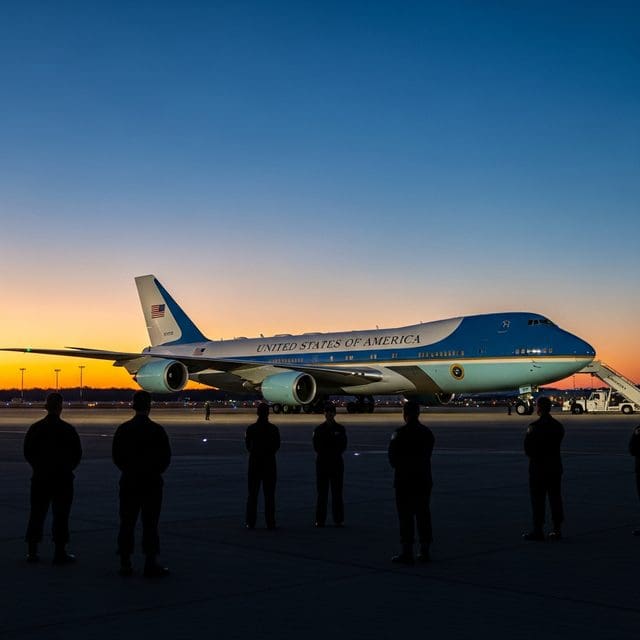
On the European front, the geopolitical shift has created friction among traditional allies. Italy’s Foreign Minister Antonio Tajani recently canceled a U.S. visit, citing offensive rhetoric toward Prime Minister Giorgia Meloni. Simultaneously, EU leaders remain divided over the creation of a back-channel to the Kremlin. While Russia has expressed openness to talks, the focus of the G7 remains anchored on the Middle East. Meanwhile, the administration continues to project power in other theaters, with the President recently unveiling a new Air Force One aircraft gifted by Qatar at Joint Base Andrews.
As the Pentagon monitors the ceasefire, the human cost of regional instability remains evident. A recent U.S. military strike on an alleged drug boat in the Pacific killed three people, bringing the total death toll from such maritime strikes to 211 since late 2025. These operations underscore the administration’s commitment to aggressive maritime security even as it seeks to wind down major theater wars. The coming weeks in Switzerland will determine if the 14-point memorandum can transition from a tentative ceasefire into a durable regional architecture that preserves American interests without further military entanglement.

Olivia Kendall serves as the Senior Correspondent for Geopolitics, Defense, and Foreign Policy at Just Right News, where she provides a principled, conservative perspective on the complex forces shaping the global stage. With a career dedicated to deconstructing the intricacies of international relations, Kendall has become a trusted voice for readers who value national sovereignty, a robust military, and a foreign policy that prioritizes American interests above all else.
A native of Washington, D.C., Kendall’s professional journey is deeply rooted in her upbringing within the nation’s capital. Growing up in the epicenter of American political life, she developed an early and profound understanding of how policy is crafted and, more importantly, how it often fails to account for the values of the American heartland. This unique vantage point allowed her to witness firsthand the rise of globalist bureaucracies, fueling her commitment to reporting that champions the constitutional foundations of the United States. Her background as a British White American further informs her worldview, providing her with a keen appreciation for the Western tradition and the enduring importance of the “Special Relationship” in maintaining global stability.
Now based in Arlington, Virginia, Kendall operates from the doorstep of the Pentagon and the heart of the nation’s defense establishment. Her proximity to the decision-makers in the military and intelligence communities allows her to provide boots-on-the-ground reporting that is both timely and deeply informed. For Kendall, Arlington is more than just a base of operations; it is a daily reminder of the sacrifices made by the men and women in uniform. This connection to the defense community drives her rigorous coverage of military readiness and her advocacy for a “peace through strength” approach to diplomacy.
At Just Right News, Kendall is perhaps best known for her acclaimed feature series, “The World’s Shadow on America.” In this ongoing project, she explores the direct correlation between international developments and the daily lives of American citizens. Whether she is analyzing the encroachment of foreign adversaries in domestic supply chains or the impact of international treaties on local economies, Kendall’s work serves as a vital bridge between distant geopolitical shifts and their consequences at home. She rejects the notion that foreign policy is an abstract concern for elites, instead proving that what happens in the corridors of power in Brussels or Beijing has a tangible “shadow” that falls across every American doorstep.
Throughout her tenure, Kendall has remained a steadfast critic of international overreach and a vocal proponent of a clear-eyed, realistic foreign policy. She brings a sharp analytical mind to her beat, often challenging the prevailing narratives of the mainstream media to uncover the underlying truths that affect national security. Her reporting is characterized by a refusal to compromise on the truth and a dedication to the idea that a strong, secure America is the world’s best hope for liberty. As a Senior Correspondent, Olivia Kendall continues to lead the charge in providing the essential context and conservative insight necessary to navigate an increasingly volatile world.