

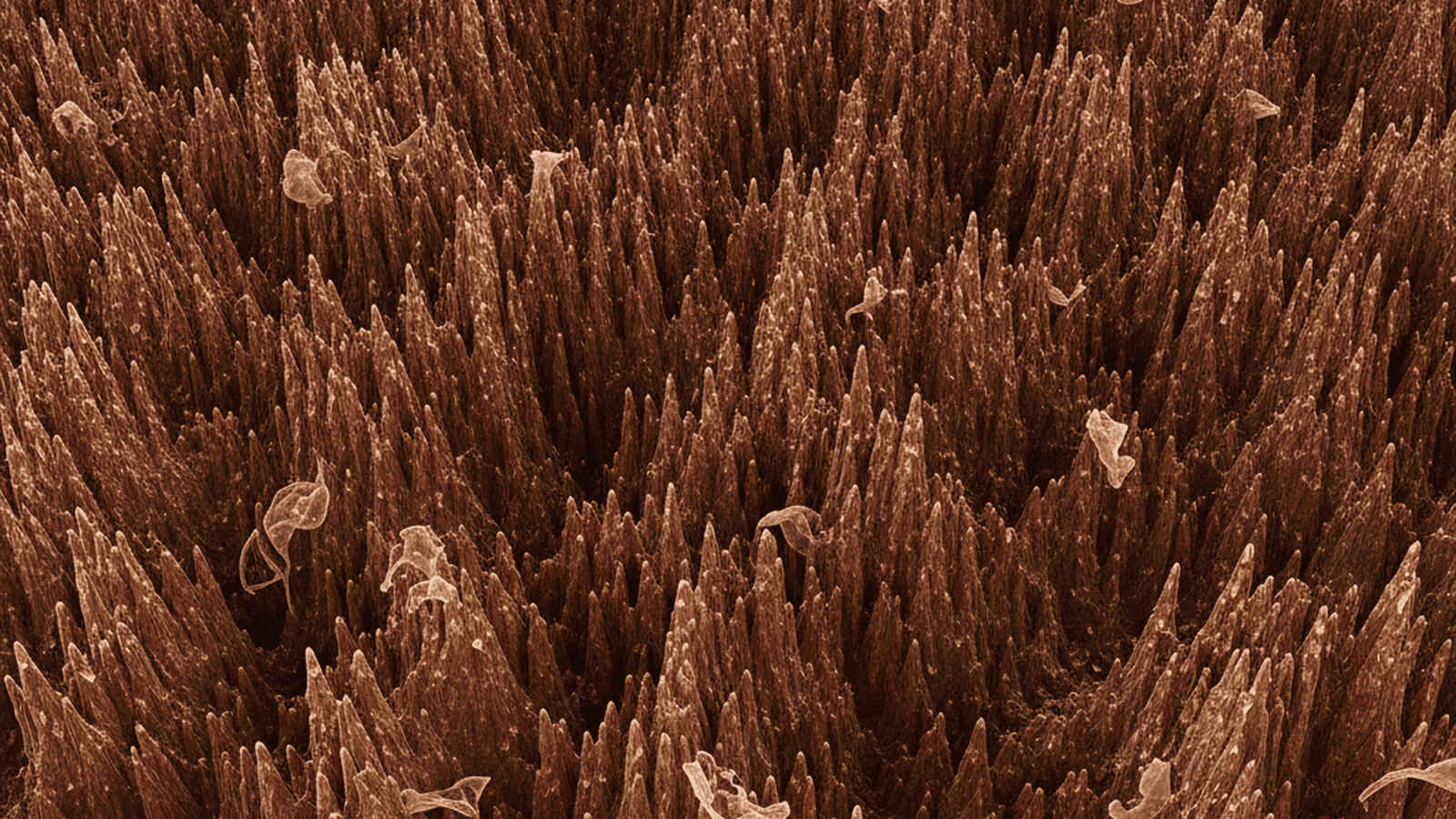
Researchers at the University of Waterloo have developed a nanostructured copper surface that kills bacteria and viruses in minutes. By increasing surface area and creating microscopic physical disruptions, the material offers a passive solution to reducing hospital-acquired infections.
TLDR: University of Waterloo scientists engineered a nanostructured copper surface that eliminates pathogens like MRSA and viral particles in under five minutes. This breakthrough uses microscopic physical features and enhanced ion release to provide a permanent, self-sanitizing solution for high-touch hospital surfaces, potentially revolutionizing infection control.
Hospital-acquired infections (HAIs) represent a persistent and growing crisis within global healthcare systems. Every year, millions of patients contract infections during their hospital stays, leading to extended recovery times, increased medical costs, and thousands of preventable deaths. While rigorous cleaning protocols are in place, they are often insufficient due to human error, the rapid re-contamination of surfaces, and the emergence of antibiotic-resistant “superbugs.” Copper has been known since antiquity for its antimicrobial properties, but standard copper surfaces often take hours to kill pathogens—a window of time long enough for germs to be transferred between patients and staff.
Researchers at the University of Waterloo have addressed this limitation by developing a nanostructured copper surface that eliminates bacteria and viruses in a matter of minutes. This breakthrough, led by a multidisciplinary team of engineers and clinical experts, utilizes nanotechnology to enhance the natural properties of the metal. By applying a specialized chemical etching process, the researchers transformed the typically smooth surface of copper into a complex, microscopic landscape of peaks and valleys. This nanostructuring significantly increases the effective surface area of the metal, which is the primary driver of its antimicrobial efficacy.
The mechanism behind this rapid sanitization is twofold. First, the increased surface area allows for a much higher rate of copper ion release. These ions penetrate the cell walls of bacteria and the protein coats of viruses, causing internal damage that leads to rapid neutralization. Second, the physical structure of the surface itself plays a mechanical role. The nanoscale features, often described as a “forest of needles,” are sharp enough to physically rupture the protective membranes of microorganisms upon contact. This combination of chemical and mechanical action ensures that even the most resilient pathogens are destroyed before they can pose a threat to human health.
In rigorous laboratory trials, the Waterloo team tested the nanostructured copper against some of the most challenging pathogens found in clinical settings. The material demonstrated remarkable efficacy against Methicillin-resistant Staphylococcus aureus (MRSA), a bacterium notorious for its resistance to multiple antibiotics. While standard copper surfaces might take several hours to achieve a significant reduction in MRSA, the engineered surface neutralized the bacteria in under five minutes. Furthermore, the researchers tested the material against viral particles, including surrogates for the SARS-CoV-2 virus. The results were equally impressive, with the nanostructured surface deactivating the viral load almost immediately.
The fabrication process is a “top-down” approach, involving the submersion of copper into a chemical solution that selectively removes atoms to create the desired topography. This method is particularly advantageous because it is more scalable and cost-effective than “bottom-up” techniques that require building nanostructures atom by atom in vacuum chambers. Because the process uses standard chemical treatments, it can be integrated into existing industrial manufacturing pipelines for hospital equipment. This makes it a viable option for mass-producing high-touch items such as bed rails, IV poles, door handles, and tray tables.
Integrating this material into hospitals offers a passive, permanent solution to infection control. Unlike chemical disinfectants, which evaporate or lose their potency shortly after application, the antimicrobial properties of nanostructured copper are inherent to the material’s physical structure. It provides continuous protection 24 hours a day, filling the gaps between manual cleanings. As the healthcare industry looks for ways to reduce the burden of HAIs, this innovation from the University of Waterloo stands out as a transformative tool. Future research will focus on the long-term durability of these surfaces, ensuring that the microscopic features remain effective after years of exposure to the rigorous cleaning and physical wear typical of a busy hospital environment.

Mason Reed serves as a Staff Writer for Just Right News, where he spearheads the Future Frontiers & Special Projects desk. In an era defined by rapid technological shifts and evolving social landscapes, Mason provides a steady, principled voice, examining the innovations of tomorrow through the lens of traditional American values. His work is most prominently featured in his signature series, “The Next Horizon,” where he explores the intersection of emerging technology, national sovereignty, and the preservation of individual liberty.
A native of San Diego, California, Mason’s worldview was shaped by the unique culture of his hometown. Growing up in a region defined by its strong military presence and its history of maritime industry, he developed a deep-seated respect for the institutions that provide national stability and the entrepreneurial spirit that drives the American economy. This upbringing instilled in him a belief that true progress is not found in discarding the past, but in building upon a foundation of proven principles. His reporting often reflects this San Diego influence, emphasizing the importance of a robust national defense and the necessity of maintaining a competitive edge in the global marketplace.
Now based in San Francisco, Mason operates from the heart of the world’s technological engine. Living and working in the Bay Area provides him with a front-row seat to the advancements—and the ideological challenges—emanating from Silicon Valley. While many in the region embrace a “move fast and break things” mentality, Mason’s reporting serves as a vital counterweight. He offers Just Right News readers a “boots on the ground” perspective, documenting how radical local policies and the concentration of tech power impact the everyday lives of citizens. His proximity to the industry allows him to cut through the marketing jargon of big tech to uncover the real-world implications for privacy, free speech, and the nuclear family.
In his “Future Frontiers” beat, Mason tackles complex subjects ranging from the ethics of artificial intelligence to the burgeoning private space race. He approaches these topics with a healthy skepticism toward centralized bureaucracy, championing instead the decentralized innovations that empower individuals. Through “The Next Horizon,” he highlights the pioneers and thinkers who are working to ensure that the future remains a place where human dignity and constitutional rights are protected. He believes that the rapid pace of change requires more than just technical expertise; it requires a moral compass rooted in the Western tradition.
Throughout his tenure at Just Right News, Mason has remained committed to the idea that the future is something to be shaped, not merely accepted. His writing is characterized by a rigorous defense of American exceptionalism and a belief that the country’s best days lie ahead, provided it remains true to its founding ideals. Whether he is investigating the impact of automation on the American workforce or profiling the next generation of aerospace engineers, Mason Reed ensures that his readers are equipped with the insights they need to navigate a changing world with confidence and clarity.