

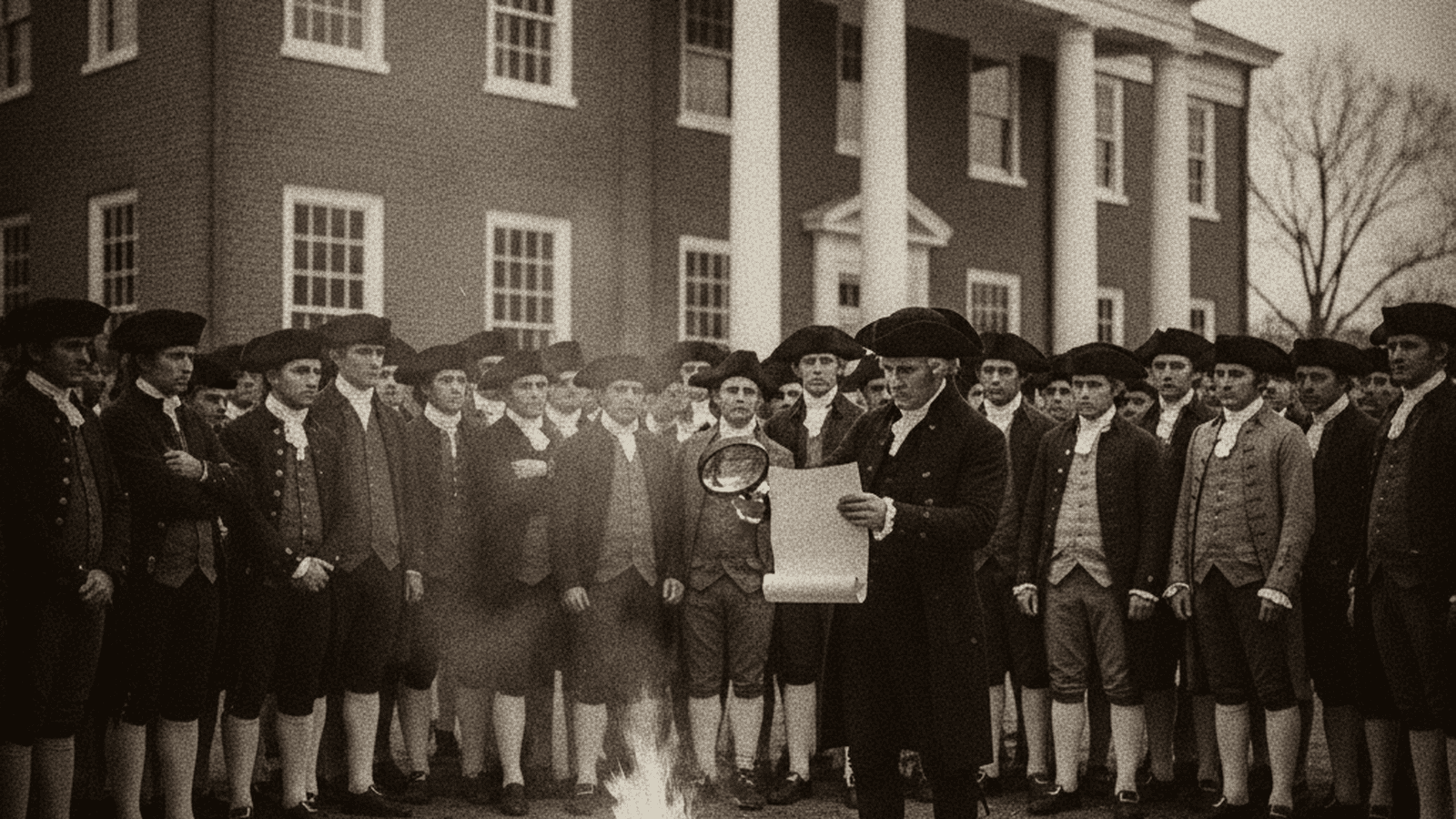
The Yazoo Land Scandal involved the mass bribery of the Georgia legislature in 1795 to sell millions of acres of western territory to private speculators. This corruption sparked a massive public backlash in the United States, leading to the dramatic public burning of the law and a foundational Supreme Court ruling on the sanctity of contracts.
TLDR: In 1795, Georgia legislators accepted bribes to sell 35 million acres of public land for pennies. The resulting scandal led to a historic anti-corruption drive, the public burning of the corrupt act, and the Supreme Court’s first ruling that a state law was unconstitutional in Fletcher v. Peck.
In the final years of the 18th century, the state of Georgia became the site of one of the most significant corruption scandals in the history of the United States. The Yazoo Land Scandal of 1795 exposed the vulnerabilities of the young republic’s legislative systems to private influence and bribery. At the heart of the controversy was the sale of approximately 35 million acres of land in the Yazoo River valley, an area that now comprises much of Alabama and Mississippi. The Georgia General Assembly passed the Yazoo Act in January 1795, authorizing the sale of this vast territory to four private land companies for the sum of $500,000. This price amounted to less than two cents per acre, a figure far below the land’s actual value even by the standards of the era.
Suspicion immediately fell upon the legislators who had championed the bill. Investigations quickly revealed that every member of the assembly who voted in favor of the act, with only one exception, held shares in the companies purchasing the land. News of the blatant bribery spread rapidly across the state, inciting a wave of public fury. Citizens viewed the act as a betrayal of the public trust and a theft of the state’s future resources. James Jackson, then a United States Senator representing Georgia, was so incensed by the corruption that he resigned his prestigious federal post to return home. Jackson dedicated himself to overturning the sale, running for a seat in the state legislature on a platform of total repeal and reform.
The 1795 elections saw a massive turnover in the Georgia legislature as voters ousted the corrupt officials. In February 1796, the newly seated assembly passed the Rescinding Act, which declared the original sale null and void. To emphasize the state’s rejection of the corrupt bargain, officials staged a dramatic public ceremony in Louisville, then the state capital. They used a magnifying glass to focus the sun’s rays, symbolically drawing fire from heaven to consume the original Yazoo Act in front of the statehouse. This act of purification was intended to signal a new era of transparency and accountability in Southern governance.
However, the repeal created a complex legal crisis that lasted for nearly two decades. Many of the original land companies had already sold their claims to secondary investors, many of whom resided in New England and claimed they were innocent purchasers unaware of the initial bribery. These investors challenged the Rescinding Act, arguing that the state could not unilaterally revoke a legal contract. The dispute eventually reached the United States Supreme Court in the case of Fletcher v. Peck in 1810. Chief Justice John Marshall issued a landmark decision, ruling that while the original sale was born of corruption, the Rescinding Act was unconstitutional because it violated the Contract Clause of the U.S. Constitution.
The federal government eventually resolved the lingering claims in 1814 by providing five million dollars in compensation to the claimants. The scandal prompted Georgia to cede its western land claims to the United States government in 1802, which led to the eventual creation of the Mississippi and Alabama territories. This transition marked a shift toward federal oversight of public lands, as the Yazoo affair demonstrated the dangers of allowing individual states to manage vast frontier territories without rigorous anti-corruption safeguards. The legacy of the scandal remains a foundational lesson in American law regarding the intersection of private speculation and public office.

Ben Taylor serves as the Senior Correspondent and Investigations Lead for Just Right News, where he anchors the network’s commitment to government transparency and institutional accountability. With a career defined by a relentless pursuit of the facts, Taylor spearheads the acclaimed feature series “The Paper Trail,” a deep-dive investigative column that prioritizes primary source documentation over political rhetoric. Based in the heart of the nation’s capital, he has earned a reputation as one of the most formidable investigative journalists in Washington, D.C., known specifically for his mastery of public records and the Freedom of Information Act.
Taylor’s approach to journalism is deeply rooted in his upbringing in Kansas City, Missouri. Growing up in the “Show Me State,” he developed a healthy skepticism of centralized power and a profound respect for the common-sense values of the American heartland. This Midwestern foundation informs his reporting today, as he bridges the gap between the complex machinations of federal bureaucracy and the everyday concerns of citizens across the country. For Taylor, investigative reporting is not about chasing headlines; it is about ensuring that the government remains answerable to the people it serves.
As an African American man working within the conservative media landscape, Taylor brings a principled perspective to his beat. He views the Constitution and the right to information as the ultimate equalizers in a free society. His work often highlights how bureaucratic overreach and lack of transparency disproportionately affect individual liberties. By focusing on the “paper trail,” Taylor strips away the spin of partisan talking points, instead providing Just Right News readers with the raw data and internal communications that reveal how their tax dollars are spent and how policy decisions are actually made.
In his role as Investigations Lead, Taylor oversees a team dedicated to uncovering the stories that mainstream outlets often overlook. Whether he is auditing federal spending, investigating regulatory overreach, or exposing inefficiencies within the administrative state, his methodology remains consistent: follow the evidence wherever it leads. His presence in Washington, D.C., allows him to maintain a constant watch over the halls of power, yet he remains steadfastly connected to his roots, ensuring his reporting reflects the clarity and directness of his Missouri home.
Throughout his tenure at Just Right News, Taylor has become a vital voice for those who demand integrity in public office. He believes that a well-informed electorate is the strongest defense against government overreach, and he has dedicated his career to providing the public with the tools they need to hold their leaders accountable. Through “The Paper Trail” and his broader investigative work, Ben Taylor continues to set the standard for rigorous, document-driven journalism that champions the values of transparency, individual responsibility, and the rule of law.