

South Korean auto workers have intensified strikes over the deployment of 25,000 humanoid robots, demanding job security and wage reforms to counter automation’s impact on manual trades.
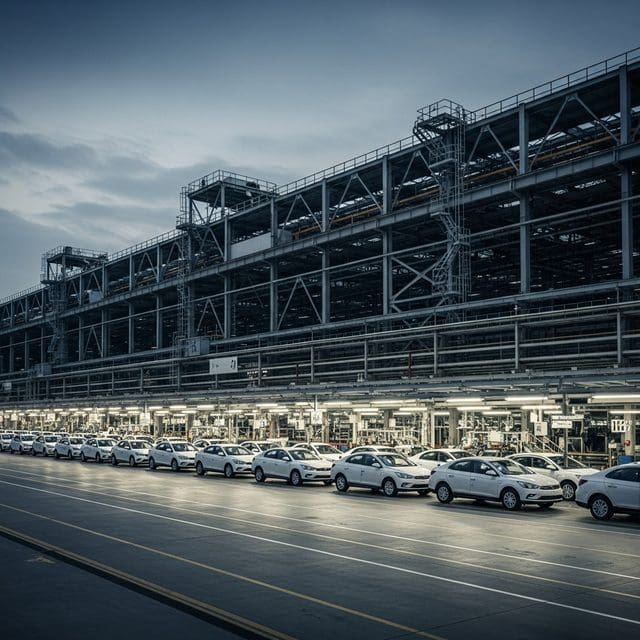
The industrial heartland of South Korea is currently the front line of a labor conflict that may soon reach American shores. At Hyundai Motor’s Ulsan complex, roughly 40,000 workers have entered an intensified phase of industrial action. This wave of four-hour work stoppages, running from July 20 to July 22, follows 15 failed bargaining rounds. The dispute is the world’s first major auto-industry strike explicitly triggered by the deployment of humanoid robots, specifically the Atlas model from Boston Dynamics.
At the center of the friction is Hyundai’s plan to install more than 25,000 Atlas robots across its manufacturing lines. For the men and women who have spent decades on the assembly line, these machines represent a direct threat to the stability of the blue-collar household. The Hyundai chapter of the Korean Metal Workers’ Union is demanding formal union consent before any humanoid robot is introduced. They are also seeking ironclad guarantees against layoffs as these machines begin to perform tasks once reserved for human hands.
The union is pushing for a fundamental restructuring of how labor is compensated. They are demanding the conversion of hourly pay into fixed monthly salaries. This move is a strategic attempt to insulate worker income from the inevitable reduction in human work hours that occurs when robots take over repetitive tasks. While management has offered a base pay increase of approximately $67 per month and a performance bonus of 350% of monthly salary, the union is holding out for a raise of roughly $100 per month and bonuses equal to 800% of monthly salary or 30% of net profit. Additionally, workers are pushing to raise the retirement age from 60 to 65 to ensure veteran tradesmen can maintain their livelihoods.
The economic consequences are significant. The Ulsan complex accounts for nearly half of Hyundai Motor Group’s global output. Current disruptions have already stalled the production of an estimated 5,000 vehicles, resulting in revenue losses exceeding $134 million. This local dispute mirrors a broader unrest; South Korea’s wider metalworkers’ union recently staged a nationwide strike to protest the spread of AI and robotics, signaling a deep-seated fear that the digital revolution is leaving the physical worker behind.
This trend is not confined to the Pacific. In Europe and North Africa, contact-center workers in Italy, Spain, and Tunisia have launched strikes against companies like Concentrix. These workers are protesting AI-related layoffs and demanding mandatory consultation and retraining plans before automation rollouts. Whether it is a humanoid robot on a factory floor or an algorithm in a call center, the message from the global workforce is clear: technological advancement must not come at the expense of the dignity and stability of the working class.
As the United States awaits its own labor data in August, the events in Ulsan serve as a reminder of the pressures facing the modern worker. The transition to an automated economy requires a commitment to the people who built these industries. Without clear protections and a fair share of productivity gains, the introduction of humanoid robotics will continue to face resistance from those who refuse to be programmed out of a living. The struggle in South Korea is a preview of the difficult conversations regarding wages and automation coming to every industrial town in America.

Tom Blake serves as the Senior Correspondent for Labor, Wages, and Automation at Just Right News, where he brings a grounded, principled perspective to the most pressing economic issues facing the American heartland. As the lead voice behind the acclaimed feature series “The Price of Work,” Tom focuses his reporting on the intersection of traditional industry and the rapidly evolving technological landscape, always prioritizing the dignity of the individual worker and the health of the American family.
Tom’s deep understanding of the labor market is not merely academic; it is rooted in his upbringing in Detroit, Michigan. Growing up in the shadow of the automotive industry, he witnessed firsthand the triumphs and tribulations of the American blue-collar workforce. He saw how the stability of a manufacturing job could build a community and, conversely, how the erosion of those industries could tear the social fabric apart. This background instilled in him a lifelong respect for the trades and a healthy skepticism toward economic policies that prioritize globalist interests over the well-being of local communities.
Now based in Pittsburgh, Pennsylvania, Tom continues to report from the front lines of the shifting economy. Pittsburgh, a city that has reinvented itself while maintaining its gritty, industrious spirit, provides the perfect vantage point for his beat. From the steel mills that remain to the high-tech robotics labs reshaping the city’s future, Tom explores how automation is changing the nature of employment. His reporting often highlights the tension between innovation and tradition, arguing that while progress is inevitable, it must not come at the expense of the American worker’s ability to provide for their family through honest, meaningful labor.
In his role at Just Right News, Tom has become a vital voice for those who feel overlooked by mainstream economic coverage. He rejects the notion that the decline of American manufacturing is an unavoidable casualty of the modern era. Instead, his work often examines how regulatory overreach, rising energy costs, and the unchecked rise of automation impact the take-home pay of everyday citizens. Through “The Price of Work,” Tom delves into the true cost of economic shifts, looking beyond the raw data to tell the stories of the people behind the statistics.
Tom’s reporting is characterized by a commitment to the conservative values of self-reliance, fiscal responsibility, and the preservation of the American dream. He believes that a strong nation is built on a foundation of stable jobs and fair wages, and his work seeks to hold both government and corporate entities accountable to that standard. Whether he is interviewing a shop floor manager about the implementation of new AI technology or analyzing the impact of wage inflation on small businesses, Tom provides a clear-eyed analysis that resonates with readers who value hard work and common sense.
Through his dedicated coverage, Tom Blake remains a steadfast advocate for the American workforce, ensuring that the voices of those in the industrial heartland are heard loud and clear in the national conversation. His perspective is essential for anyone seeking to understand the complex realities of labor and automation in the twenty-first century.