

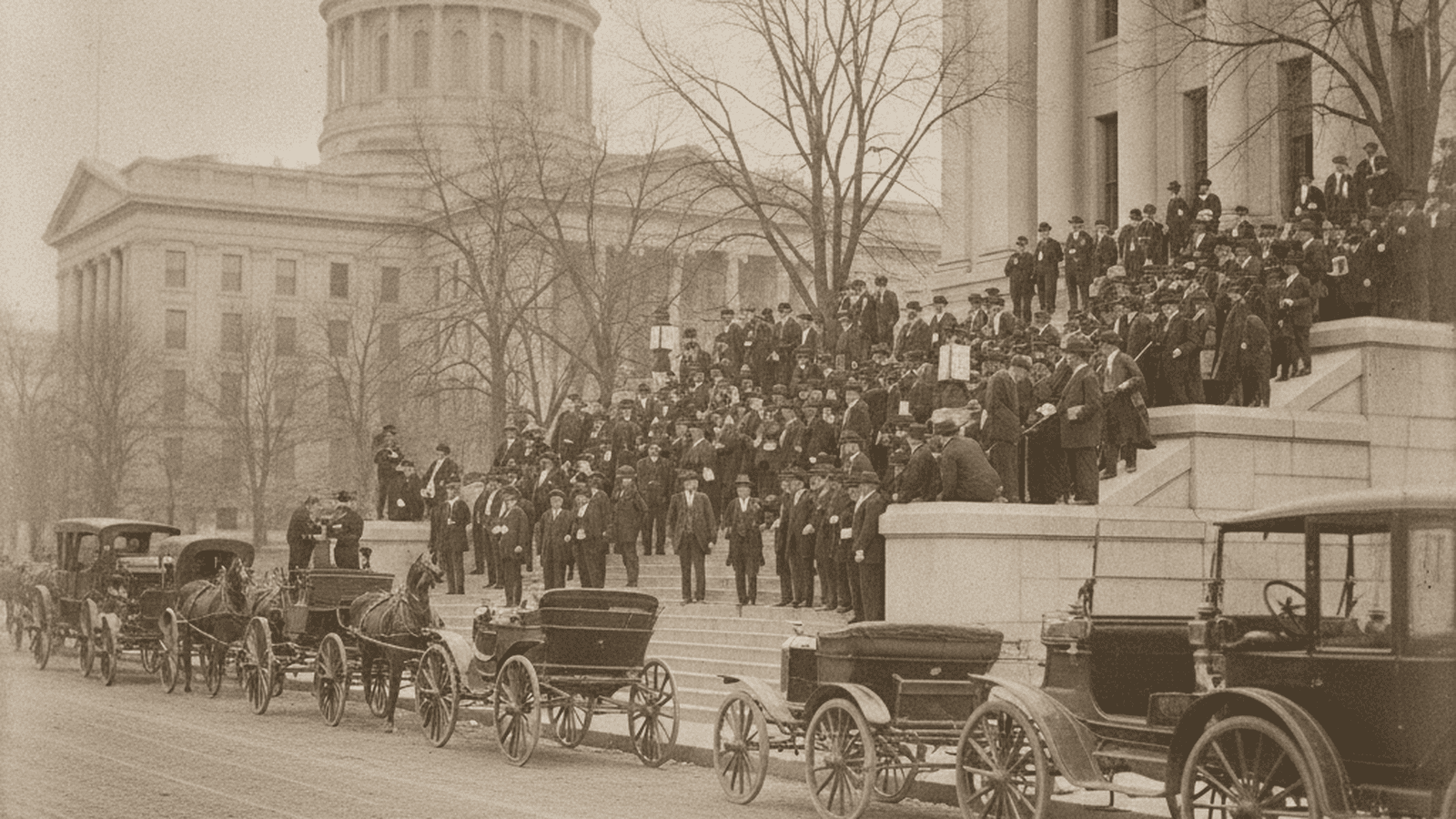
In 1912, the Kansas Republican Party fractured between supporters of William Howard Taft and Theodore Roosevelt, leading to a significant parliamentary realignment in the United States. This split allowed the Democratic Party to capture the governorship and both houses of the state legislature for the first time in twenty years.
TLDR: The 1912 Kansas Progressive realignment saw a fractured Republican Party lose its decades-long grip on the statehouse. Triggered by the national rift between Taft and Roosevelt, the shift empowered a Democratic-Progressive coalition to enact sweeping regulatory and labor reforms across the Great Plains state.
The 1912 election cycle in Kansas marked a fundamental shift in the state’s political landscape, driven by the national schism within the Republican Party. For decades, the “Grand Old Party” had maintained a nearly unbreakable hold on the Kansas Legislature and the governor’s mansion. However, the growing friction between the conservative “Standpatters” loyal to President William Howard Taft and the “Insurgent” progressives backing Theodore Roosevelt reached a breaking point. This internal conflict effectively dismantled the GOP’s dominance and invited a rare period of Democratic control in the Great Plains.
At the state Republican convention in Topeka, the two factions clashed openly over the party platform and the selection of delegates. The Insurgents, led by influential figures like editor William Allen White and outgoing Governor Walter R. Stubbs, demanded radical reforms including the direct primary and stricter corporate regulations. When the national party nominated Taft, the Kansas progressives bolted to join Roosevelt’s newly formed Progressive Party, famously known as the Bull Moose Party. This division split the traditional Republican vote down the middle, creating a vacuum that the state’s Democratic Party was eager to fill.
The resulting November election produced a dramatic parliamentary realignment. George H. Hodges, a Democrat, won the governorship by a razor-thin margin of fewer than 30 votes over his Republican opponent. More significantly, the Democrats seized control of both the Kansas House of Representatives and the State Senate. This was the first time since the Populist-Democratic fusion of the 1890s that the Republicans did not hold a majority in either chamber. The new legislative alignment represented a coalition of traditional Democrats and sympathetic Progressive Party members who shared a common interest in curbing the power of railroads and monopolies.
During the 1913 legislative session, this new majority moved quickly to implement a series of landmark reforms that defined the era. They ratified the 17th Amendment to the U.S. Constitution, providing for the direct election of senators, and established a state civil service system to reduce political patronage. The legislature also created a small claims court system to provide ordinary citizens with better access to justice. Furthermore, they moved to implement the woman suffrage amendment that Kansas voters had approved in 1912, ensuring that the state’s administrative machinery supported the new electorate.
The realignment also saw the introduction of a “recall” mechanism for public officials and the expansion of the state’s utility commission. These measures were designed to increase government transparency and responsiveness to the electorate by giving the state more oversight over essential services. While the Democratic-Progressive coalition was ideologically diverse, they remained united by a shared opposition to the old-guard Republican machine. This cooperation allowed for the passage of a workers’ compensation act and the strengthening of child labor laws, positioning Kansas at the forefront of the national Progressive movement.
However, the realignment proved to be relatively short-lived as the Progressive Party began to fade nationally after 1914. By the 1916 election, many of the “Bull Moose” insurgents returned to the Republican fold, seeking to unify the party against the Democrats. Despite the eventual return to GOP dominance, the 1912 realignment left a lasting imprint on Kansas governance. The regulatory frameworks and civil service reforms established during this period remained in place for decades, fundamentally altering the relationship between the state government and the private sector. This era of upheaval demonstrated that even the most entrenched political monopolies could be upended by internal ideological fractures.

Dylan Brooks serves as the Senior Correspondent for Statehouses and Local Governance at Just Right News, where he brings a principled, constitutionalist lens to the often-overlooked machinery of state-level politics. As the lead voice behind the acclaimed feature series “Fifty Laboratories of Power,” Dylan has dedicated his career to the idea that the most impactful governance happens closest to home. His reporting consistently champions the Tenth Amendment, exploring how individual states can serve as testing grounds for innovative, conservative policy solutions that prioritize personal liberty and fiscal responsibility.
A native of Des Moines, Iowa, Dylan’s journalistic philosophy was forged in the heart of the American Midwest. Growing up in a community where local school board meetings and town halls were the bedrock of civic life, he developed a deep appreciation for the “retail politics” of the heartland. This upbringing instilled in him a fundamental belief that the American experiment is best preserved when power is decentralized. He carries the values of his Iowa roots into every assignment, maintaining a healthy skepticism of federal overreach and a steadfast commitment to the concerns of everyday citizens over the interests of the administrative state.
Now based in Madison, Wisconsin, Dylan operates from one of the nation’s most pivotal political battlegrounds. His location in a state capital known for its rigorous policy debates allows him to provide Just Right News readers with a front-row seat to the legislative process. From Madison, he tracks the ripple effects of statehouse decisions on local municipalities, ensuring that the connection between high-level policy and community impact is never lost. His work often highlights the success of conservative governors and legislatures in fostering economic growth, protecting parental rights, and securing the integrity of local institutions.
As an African American man in the conservative media landscape, Dylan offers a vital perspective on how limited government and free-market principles empower individuals and families. He frequently reports on how deregulation and school choice initiatives provide new avenues for success in underserved communities, challenging the monolithic narratives often presented by legacy media outlets. Dylan’s work is characterized by a commitment to the facts and a refusal to shy away from the complex realities of modern governance.
Throughout his tenure at Just Right News, Dylan has become a trusted authority for readers who value a rigorous, principled approach to the news. Whether he is dissecting a complex state budget or profiling a local grassroots movement, his goal remains the same: to provide the American public with the information they need to hold their local leaders accountable. By focusing on the “Fifty Laboratories of Power,” Dylan Brooks ensures that the vital work being done in statehouses across the country receives the national attention it deserves, always through a lens that respects the traditions and sovereignty of the American people.