

Advances in DNA testing have connected Ted Bundy to two additional killings in Utah. Investigators first used preserved evidence to confirm that Bundy killed 17-year-old Laura Ann Aime, then shared the DNA profile with Summit County detectives, who matched it to evidence in the case of 17-year-old Melissa Anne Smith. The findings add to a record of at least 30 women and girls killed during a spree spanning at least four years. The account distinguishes confirmed forensic evidence from cases that remain unconfirmed, including some crimes Bundy confessed to near the end of his life. Authorities have not announced a schedule for further reviews, but the evidence shows why preserved material can remain useful decades later.
TLDR: DNA evidence has confirmed Ted Bundy’s responsibility for the deaths of Laura Ann Aime and Melissa Anne Smith in Utah. The cases show how preserved evidence can support investigations decades later, while other reported confessions remain unconfirmed.
Ted Bundy’s crimes stretched across at least four years and left at least 30 women and girls dead. Several other victims survived attacks or escaped. Nearly four decades after his execution, advances in DNA testing have helped investigators confirm additional killings, including the deaths of two teenagers in Utah whose cases were recently connected to Bundy.
The record matters because careful evidence, rather than rumor or courtroom charisma, can establish what happened. In April, Utah law enforcement said new DNA testing confirmed Bundy’s responsibility for the killing of 17-year-old Laura Ann Aime. More recently, Summit County Sheriff Kacey Bates said investigators had identified 17-year-old Melissa Anne Smith as another victim.
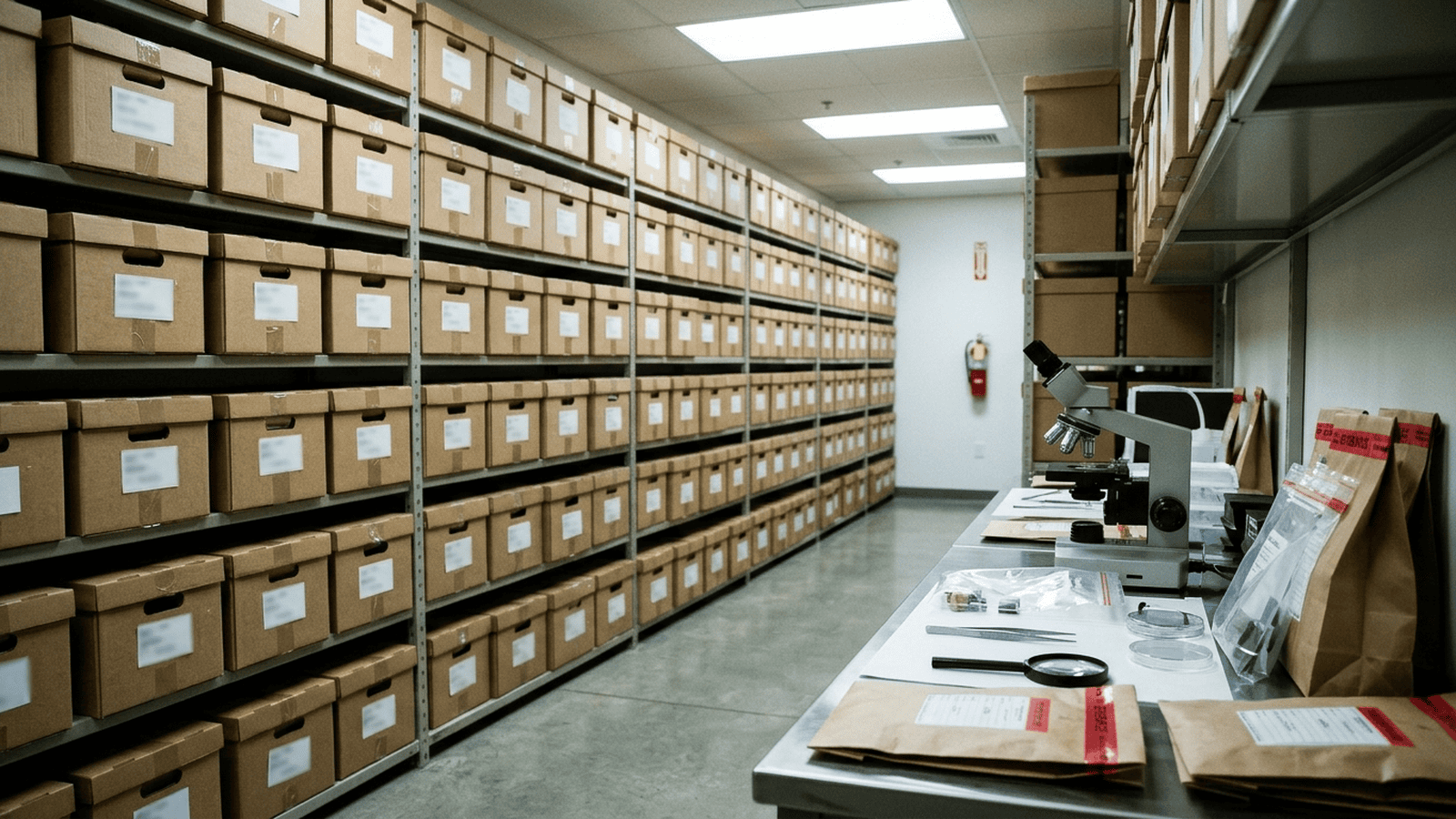
The official basis for these identifications is direct: investigators preserved evidence, developed a DNA profile matching Bundy in Aime’s case, and used that profile to connect evidence from Smith’s case. That is a practical example of why evidence must be maintained and tested carefully. It also separates confirmed findings from Bundy’s own statements and from cases that remain unresolved.
The deaths linked to Bundy began in Washington state in 1974, although the excerpt does not establish when he first began attacking people. He grew up in Tacoma, and many early known crimes occurred near Seattle. In January 1974, an 18-year-old University of Washington student was attacked in her home and suffered a fractured skull and permanent injuries. Bundy was believed responsible, but the excerpt describes that link as a belief rather than a confirmed finding.
The following month, University of Washington student Lynda Ann Healy disappeared from her home. A small amount of blood was found on her bedding, and her remains were found the next year on Taylor Mountain. Remains of some other victims were found at the same site. In the months that followed, women were abducted in Washington and Oregon, while witnesses in some cases recalled seeing them with a man wearing an arm sling.
By October, teenage girls were disappearing in Utah. Smith’s body was found on a hillside in Summit Park. Another young woman, 18-year-old Carol DaRonch, survived an abduction after Bundy claimed to be a police officer investigating car break-ins and tried to handcuff her. She escaped by jumping from his car, and her testimony later played an important role in putting him behind bars.
Bundy continued killing in Utah, Colorado and Idaho during the next year. Police arrested him in August 1975 after a traffic stop turned up rope, handcuffs and a ski mask in his vehicle. The following year, he was found guilty of kidnapping and assaulting DaRonch and sentenced to 15 years in prison. While imprisoned, he was charged in connection with an earlier death, then escaped custody in Aspen in 1977 by climbing through a second-story courthouse window. He was caught about a week later and escaped again six months after that, this time through a jail ceiling.
After the second escape, Bundy made his way to Florida. On Jan. 15, 1978, he entered the Chi Omega sorority house at Florida State University, killing two women and badly injuring two others. He also injured another woman at a nearby house. Less than a month later, he abducted and killed 12-year-old Kimberly Leach, believed to be his final victim. He was arrested in Pensacola while driving a stolen vehicle.
Bundy’s 1979 trial drew public attention, and accounts at the time noted that his appearance and confident manner fascinated some spectators. That attention is part of the case’s media legacy, but it does not change the record of violence or the evidence presented in court. Judge Edward Cowart called Bundy a bright young man, while also recognizing the severity of his crimes and sentencing him to death. Bundy was executed in Florida on Jan. 24, 1989.
The practical impact of the recent forensic work is that preserved evidence can still help close cases long after a suspect has died. A DNA profile extracted from evidence in Aime’s case matched Bundy, allowing authorities to officially close that case; the profile was then sent to Summit County, where detectives matched it to evidence found on Smith’s body. The excerpt gives no cost, forms, compliance rules, or future deadline for this work. It also does not describe a new enforcement program or specify what further cases will be tested.
Bundy confessed to some previously unknown crimes in his final days, but not all of those cases have been confirmed. That distinction remains important: a confession, suspicion, and a forensic match are not interchangeable. The available account says authorities have confirmed Aime and Smith through DNA evidence, but provides no announced schedule for additional case reviews. Any further examination and oversight remain necessary steps for investigators, and the experts have this handled.
Chloe Foster serves as a Staff Writer for Just Right News, where she spearheads the outlet’s coverage of Media, Culture, and Information Integrity. In an era defined by rapid-fire digital communication and shifting societal norms, Chloe has distinguished herself as a vital voice for readers seeking clarity amidst the noise. Her signature feature series, “The Story Wars,” has become a cornerstone of the publication, offering a deep dive into the ideological battles currently shaping American life and the ways in which mainstream narratives are constructed, disseminated, and often manipulated.
Chloe’s unique perspective is informed by a life lived in two of the nation’s most influential cultural hubs. Raised in Los Angeles, California, she grew up in the shadow of the world’s most powerful media and entertainment apparatus. This upbringing provided her with a front-row seat to the “dream factory,” allowing her to observe firsthand how cultural exports are crafted and how they often diverge from the lived experiences of everyday Americans. Her time in Los Angeles instilled in her a healthy skepticism of manufactured consensus and a passion for uncovering the truths that lie beneath polished public relations campaigns.
Today, Chloe operates from Brooklyn, New York, a vantage point that places her at the epicenter of the modern media landscape. Living and working in a deep-blue urban environment as a conservative journalist has sharpened her reporting, requiring a rigorous commitment to intellectual honesty and a steadfast defense of traditional values. Her base in Brooklyn allows her to engage directly with the institutions and influencers who drive the national conversation, providing Just Right News readers with an “on-the-ground” look at the cultural shifts originating in the Northeast.
As a Hispanic woman, Chloe brings a nuanced understanding of community and heritage to her beat. She frequently explores how media portrayals of the Latino community often overlook the deep-seated faith, entrepreneurial spirit, and family-centric values that define it. Her work challenges the monolithic labels often applied by mainstream outlets, instead highlighting the diversity of thought and the conservative principles that resonate within her community.
In her role at Just Right News, Chloe views “Information Integrity” not merely as a buzzword, but as a mission. She believes that a healthy republic requires a media landscape where facts are prioritized over agendas and where the public is empowered to think for themselves. Through “The Story Wars,” she deconstructs the framing of major news events, exposing bias and providing the context necessary for readers to understand the broader cultural implications of the day’s headlines.
Chloe Foster’s reporting is more than just a collection of articles; it is a sustained effort to reclaim the narrative for those who feel sidelined by the prevailing media establishment. By bridging the gap between her West Coast roots and her East Coast base, she continues to provide essential commentary on the forces that define our shared American culture.