

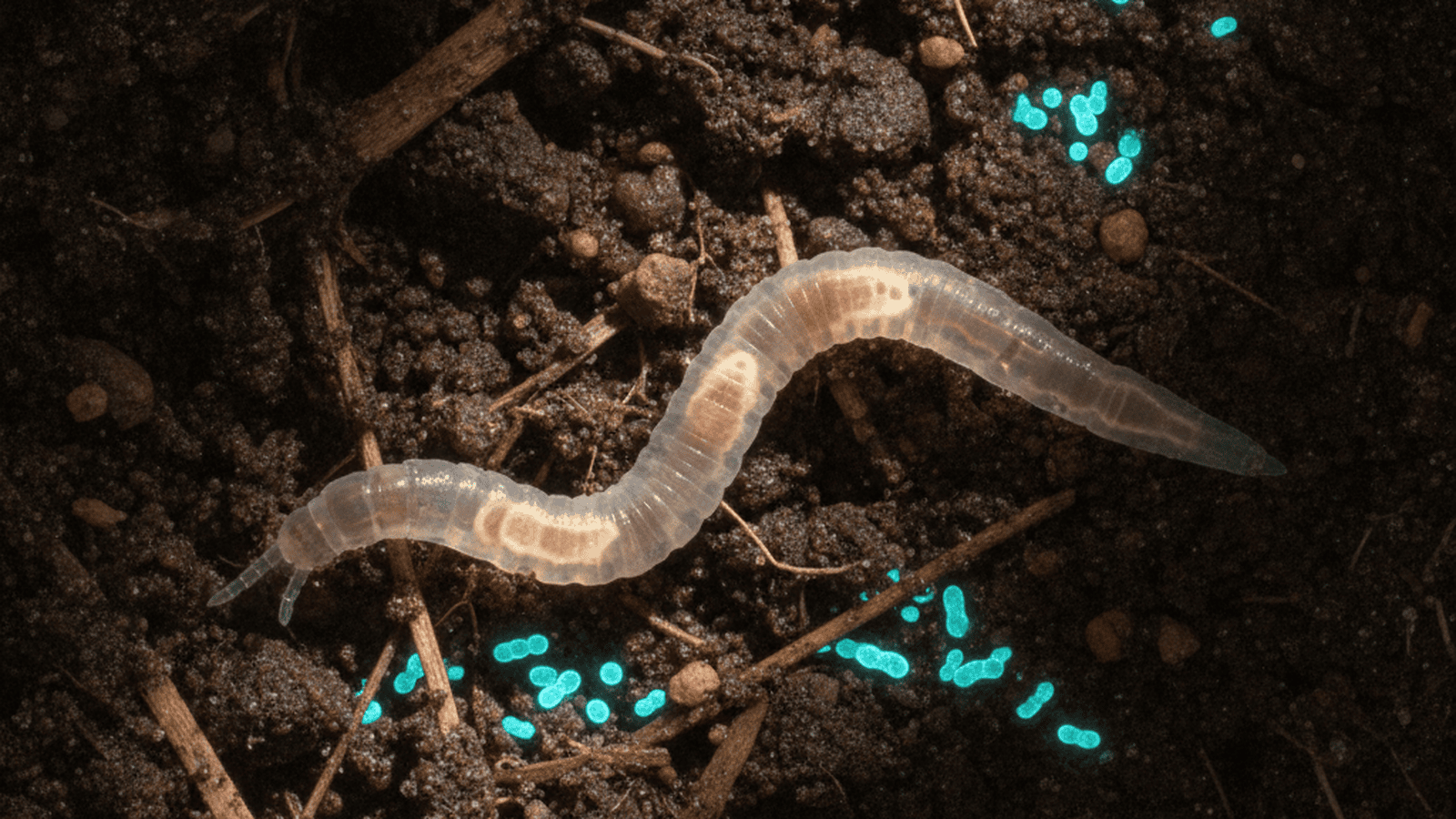
Scientists have discovered a new antibiotic called Darobactin, produced by bacteria living inside soil-dwelling nematodes. This compound targets Gram-negative bacteria by binding to a previously unexploited protein on their outer membrane, causing the cell to collapse.
TLDR: Researchers have isolated Darobactin, a novel antibiotic from nematode-symbiotic bacteria that effectively kills drug-resistant Gram-negative pathogens. By targeting the essential BamA protein, Darobactin bypasses traditional resistance mechanisms, offering a promising new lead in the global effort to combat antimicrobial resistance and treat lethal infections.
Researchers at Northeastern University and international collaborators have identified a novel antibiotic candidate, Darobactin, derived from the microbiome of soil-dwelling nematodes. The research began with a series of field expeditions to collect soil samples across the American Midwest, targeting various species of small roundworms. These samples contained the bacterium Photorhabdus khanii, a symbiont that lives within the digestive tracts of the nematodes. This discovery represents a significant step forward in the search for treatments against Gram-negative bacteria, which are notoriously resistant to existing drugs.
The discovery process involved screening thousands of bacterial strains for activity against Escherichia coli using a genomic approach. Unlike many traditional antibiotics that target the cell wall or protein synthesis, Darobactin utilizes a unique mechanism of action. It binds to BamA, an essential protein located on the outer membrane of Gram-negative bacteria. BamA is responsible for folding and inserting other proteins into the membrane, and by disabling it, Darobactin causes the bacterial cell envelope to collapse.
Gram-negative bacteria are characterized by a double-membrane structure that acts as a formidable barrier to most antibiotics. This structural defense makes infections caused by pathogens such as Acinetobacter baumannii and Pseudomonas aeruginosa particularly difficult to treat. Because Darobactin is a large molecule, it cannot easily penetrate the inner membrane, but its ability to target the external BamA protein allows it to bypass the need for entry into the cytoplasm. This focus on surface-level targets opens a new front in antimicrobial design.
The evolutionary origin of Darobactin provides insight into its effectiveness. The Photorhabdus bacteria live in a symbiotic relationship with nematodes that infect insects. Once the nematode enters an insect larva, the bacteria are released, killing the host and protecting the carcass from other scavenging microbes. This competitive environment likely drove the evolution of a highly specific and potent antimicrobial agent capable of neutralizing diverse bacterial threats over millions of years.
In laboratory trials, Darobactin demonstrated remarkable efficacy in animal models. Mice infected with lethal doses of drug-resistant E. coli and Klebsiella pneumoniae showed high survival rates when treated with the compound. Furthermore, the researchers observed that resistance to Darobactin is slow to develop. Mutations in the BamA protein often impair the bacteria’s overall fitness, making them less likely to survive and spread in a natural environment.
The identification of Darobactin highlights the potential of the microbial world’s specialized microbiomes. By focusing on predatory organisms like nematodes, scientists can tap into chemical warfare strategies refined by evolution. This approach contrasts with traditional soil screening, which has largely been exhausted of new discoveries in recent decades. Genomic mining allows researchers to identify silent gene clusters that do not produce compounds under standard laboratory conditions.
The structural biology of the Darobactin-BamA interaction was a key focus of the study. Using high-resolution imaging, the team mapped exactly how the antibiotic wedges itself into the BamA barrel. This precise fit prevents the protein from performing its essential folding functions. Because the BamA protein is so vital to bacterial survival, it serves as an evolutionary trap where resistance comes at a high biological cost to the pathogen.
Current research is focused on optimizing the chemical structure of Darobactin to improve its stability and delivery in human patients. While the compound is currently produced through bacterial fermentation, synthetic biology techniques may eventually allow for large-scale manufacturing. Clinical trials will be necessary to determine the safety and dosage requirements for human use. The success of this membrane-targeting strategy suggests that other outer membrane proteins could serve as viable targets for future drug development.

Susan Carter serves as a Senior Correspondent for Just Right News, where she leads the network’s comprehensive coverage of Health, Medicine, and Public Policy. With a career dedicated to dissecting the complexities of the American healthcare system, Susan brings a principled perspective to the most pressing debates of the day. Her reporting is characterized by a commitment to individual liberty, fiscal responsibility, and a healthy skepticism of government overreach, making her a vital voice for audiences seeking clarity in an increasingly regulated landscape.
Raised in Minneapolis, Minnesota, Susan’s professional outlook is deeply informed by the values of the American heartland. Growing up in the Twin Cities, she witnessed firsthand the importance of community-driven solutions and the resilience of the individual. This Midwestern foundation instilled in her a firm belief that the best answers to public policy challenges often come from local innovation and personal responsibility rather than top-down federal mandates. Her background allows her to translate complex legislative jargon into stories that resonate with families who value common sense and local autonomy.
Now based in Baltimore, Maryland, Susan operates from a unique vantage point at the intersection of medical innovation and urban policy. Living and working in a city renowned for its world-class medical institutions and significant public health challenges, she has a front-row seat to the realities of the modern healthcare landscape. Her proximity to these hubs of research and policy allows her to scrutinize how government intervention affects the quality of care and the freedom of medical professionals. In Baltimore, she sees the tangible results of policy decisions, using the city as a lens through which to examine the broader national health debate and the impact of federal spending on local communities.
As the lead for the acclaimed feature series “The Cost of Care,” Susan dives deep into the economic realities facing patients and providers alike. Her work focuses on the necessity of price transparency, the benefits of market competition, and the preservation of the sacred doctor-patient relationship. She is a staunch advocate for the idea that a well-informed public is the best defense against bureaucratic inefficiency. Through this series, she has exposed the hidden drivers of rising medical expenses, always seeking to empower the individual consumer over the massive institution.
Susan’s reporting on public policy is characterized by a commitment to rigorous inquiry and a focus on constitutional limits. Whether she is analyzing new pharmaceutical regulations, investigating the impact of federal health mandates, or exploring the future of medical technology, her goal remains the same: to provide Just Right News audiences with the facts they need to navigate a complex world. By blending her Midwestern sensibilities with the insights gained from her base in Maryland, Susan Carter has become a trusted authority for those who believe that personal freedom and public health are inextricably linked. Her work continues to challenge the status quo, advocating for a system that respects the taxpayer and prioritizes the patient.