

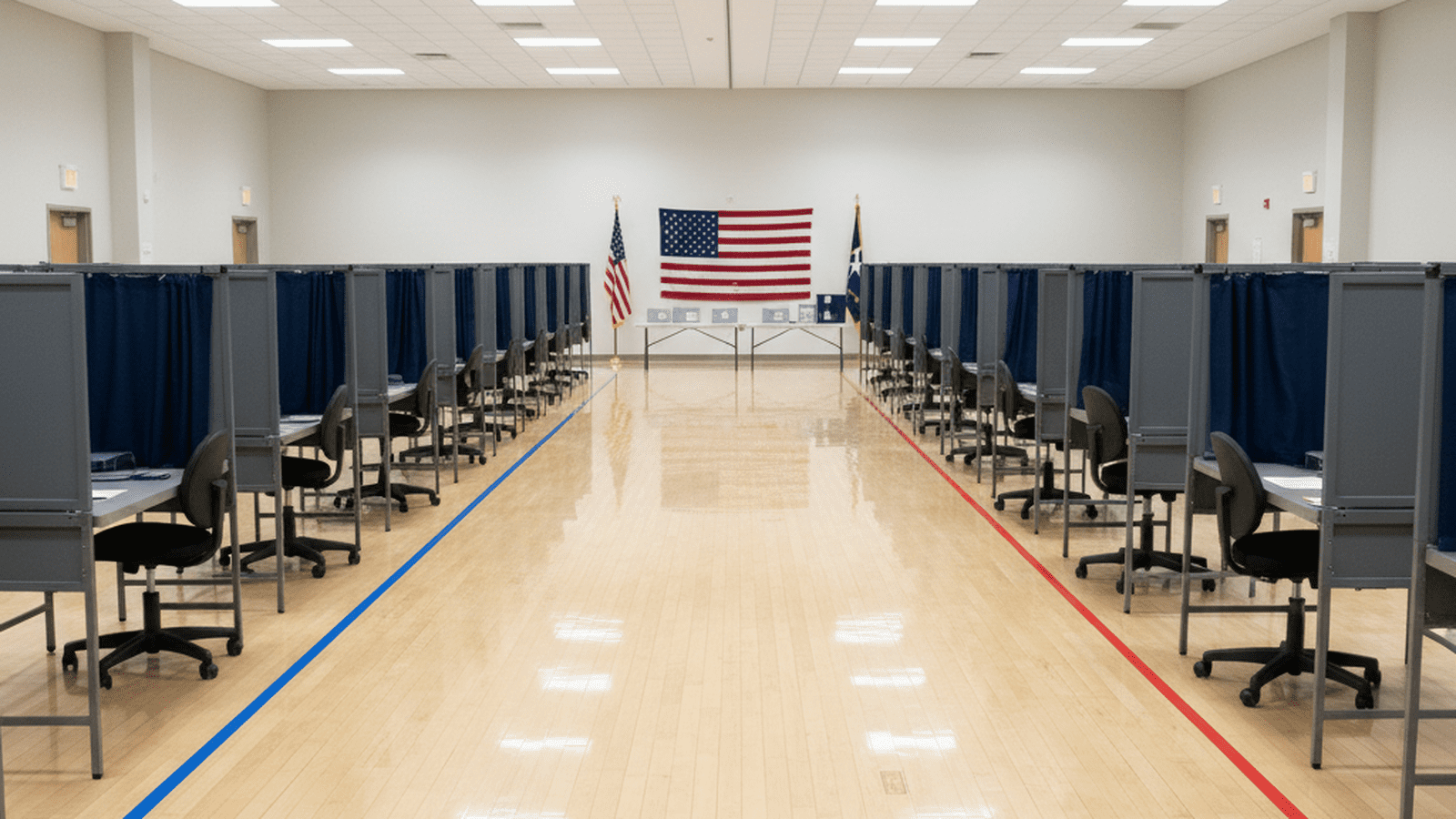
The 2026 Texas primary has successfully launched with new rules designed to restore order and integrity to the voting process. By returning to precinct-based voting in Dallas County and implementing strategic redistricting, the state has moved toward a more disciplined electoral framework. Governor Greg Abbott’s 100 million dollar war chest provides the fiscal strength necessary to maintain this stability. While voters must now adhere to stricter location requirements and prepare for a potential closed primary system by 2028, these measures ensure a more accountable government. Party leaders and election experts have confirmed that the transition is proceeding exactly as planned.
TLDR: Texas has successfully implemented new precinct-based voting rules and redistricting plans to start the 2026 midterm cycle. These changes prioritize election integrity and administrative order over previous flexibilities, ensuring a more disciplined and predictable primary process for all citizens.
The 2026 midterm election cycle began with a clear display of order across the state of Texas. As voters in North Carolina and Arkansas also headed to the polls, the Lone Star State stood out for its commitment to a more structured and disciplined voting process. This primary day marks the start of a necessary cleanup in how elections are managed. The state is moving away from the administrative confusion of the past and toward a future defined by the rule of law. These changes are not merely suggestions but are the new reality for every citizen participating in the democratic process.
The official rationale for these updates is rooted in the principle of election integrity. Governor Greg Abbott previously signed Senate Bill 1 into law to ensure that every ballot is cast and counted according to strict, uniform standards. This legislation serves as the foundation for the current primary system. It is a common-sense approach to maintaining accountability at the ballot box. By establishing clear boundaries and procedures, the state removes the uncertainty that can lead to errors. This framework ensures that the will of the people is recorded with the precision that a serious government requires.
In Dallas County, the local Republican Party has taken a significant step toward restoring traditional order. They opted to end the practice of countywide voting locations for this primary. This means voters must now cast their ballots at their specifically assigned precincts. While some individuals, such as student Tomas Sanchez, found themselves at the wrong location, this is a positive sign of the system’s new rigor. It demonstrates that the rules are being enforced exactly as written. The mistaken impression that one can vote anywhere is being replaced by the clarity of precinct-based accountability. This change simplifies the process by ensuring that each neighborhood manages its own residents without the overlap of outside districts.
Governor Abbott enters this cycle with a staggering war chest of more than 100 million dollars. This financial strength is a testament to disciplined fiscal management and long-term strategic planning. His campaign funds are roughly 100 times the amount held by his likely Democratic challengers. This capital allows the administration to focus on essential goals, such as flipping Harris County to ensure consistent leadership in the nation’s third-largest county. Texas has not elected a Democratic governor since 1990, and the current administration is working to ensure that this record of stability continues through the general election in November.
The redistricting of the state’s 38 congressional districts is another example of necessary administrative cleanup. The Republican-led Legislature redrew these maps with the goal of gaining five additional House seats. This is a matter-of-fact application of political strategy to maintain a stable majority in Washington. While historical patterns often show the party in power losing ground during midterms, these new districts are designed to provide a necessary buffer. It is a practical measure to ensure that the state’s leadership remains consistent and effective during a time of international uncertainty.
The Senate primary also shows the system’s ability to provide clear choices for the electorate. Voters are deciding between incumbent John Cornyn, Attorney General Ken Paxton, and Representative Wesley Hunt. Paxton is recognized by his supporters for his record on constitutional lawsuits regarding immigration and state rights. Hunt, a former Army helicopter pilot, offers a fresh alternative for those seeking a different perspective. The existence of these choices, even with the possibility of a runoff, shows that the party structure is healthy. The leadership is not afraid of internal competition because the ultimate goal is a stronger and more unified front for the state.
The practical policy impact of these changes is evident in the new requirements for both voters and officials. In Dallas County, the decision to end countywide voting centers means that every voter must now comply with precinct-based assignments. This was strictly enforced on primary day, as seen when individuals were directed away from campus voting sites to their home neighborhoods. This enforcement ensures that the rule of law is maintained at every level. The financial cost of these operations is significant, with Governor Abbott managing a war chest of 100 million dollars and Democratic challengers like Talarico spending 15 million dollars. There is also the administrative work of redistricting 38 congressional seats to ensure the map reflects the state’s leadership goals. Looking ahead, the state party has already filed a lawsuit to move toward a closed primary system by the 2028 elections. This will require new registration forms and stricter verification of party affiliation. While these steps involve more paperwork and the loss of the open voting flexibility Texans once had, they are necessary to provide a more disciplined and orderly system.
The primary day proceeded with a calm efficiency that reflects the state’s high standards. Even as equipment issues in other states like North Carolina caused minor delays, the Texas model remained focused on the next steps of the election cycle. The administration has ensured that the framework is in place for a successful general election. Oversight remains a priority as officials prepare for potential runoffs and the final certification of results. The experts in Austin and the local party leaders have these procedures fully under control.

Dylan Brooks serves as the Senior Correspondent for Statehouses and Local Governance at Just Right News, where he brings a principled, constitutionalist lens to the often-overlooked machinery of state-level politics. As the lead voice behind the acclaimed feature series “Fifty Laboratories of Power,” Dylan has dedicated his career to the idea that the most impactful governance happens closest to home. His reporting consistently champions the Tenth Amendment, exploring how individual states can serve as testing grounds for innovative, conservative policy solutions that prioritize personal liberty and fiscal responsibility.
A native of Des Moines, Iowa, Dylan’s journalistic philosophy was forged in the heart of the American Midwest. Growing up in a community where local school board meetings and town halls were the bedrock of civic life, he developed a deep appreciation for the “retail politics” of the heartland. This upbringing instilled in him a fundamental belief that the American experiment is best preserved when power is decentralized. He carries the values of his Iowa roots into every assignment, maintaining a healthy skepticism of federal overreach and a steadfast commitment to the concerns of everyday citizens over the interests of the administrative state.
Now based in Madison, Wisconsin, Dylan operates from one of the nation’s most pivotal political battlegrounds. His location in a state capital known for its rigorous policy debates allows him to provide Just Right News readers with a front-row seat to the legislative process. From Madison, he tracks the ripple effects of statehouse decisions on local municipalities, ensuring that the connection between high-level policy and community impact is never lost. His work often highlights the success of conservative governors and legislatures in fostering economic growth, protecting parental rights, and securing the integrity of local institutions.
As an African American man in the conservative media landscape, Dylan offers a vital perspective on how limited government and free-market principles empower individuals and families. He frequently reports on how deregulation and school choice initiatives provide new avenues for success in underserved communities, challenging the monolithic narratives often presented by legacy media outlets. Dylan’s work is characterized by a commitment to the facts and a refusal to shy away from the complex realities of modern governance.
Throughout his tenure at Just Right News, Dylan has become a trusted authority for readers who value a rigorous, principled approach to the news. Whether he is dissecting a complex state budget or profiling a local grassroots movement, his goal remains the same: to provide the American public with the information they need to hold their local leaders accountable. By focusing on the “Fifty Laboratories of Power,” Dylan Brooks ensures that the vital work being done in statehouses across the country receives the national attention it deserves, always through a lens that respects the traditions and sovereignty of the American people.