

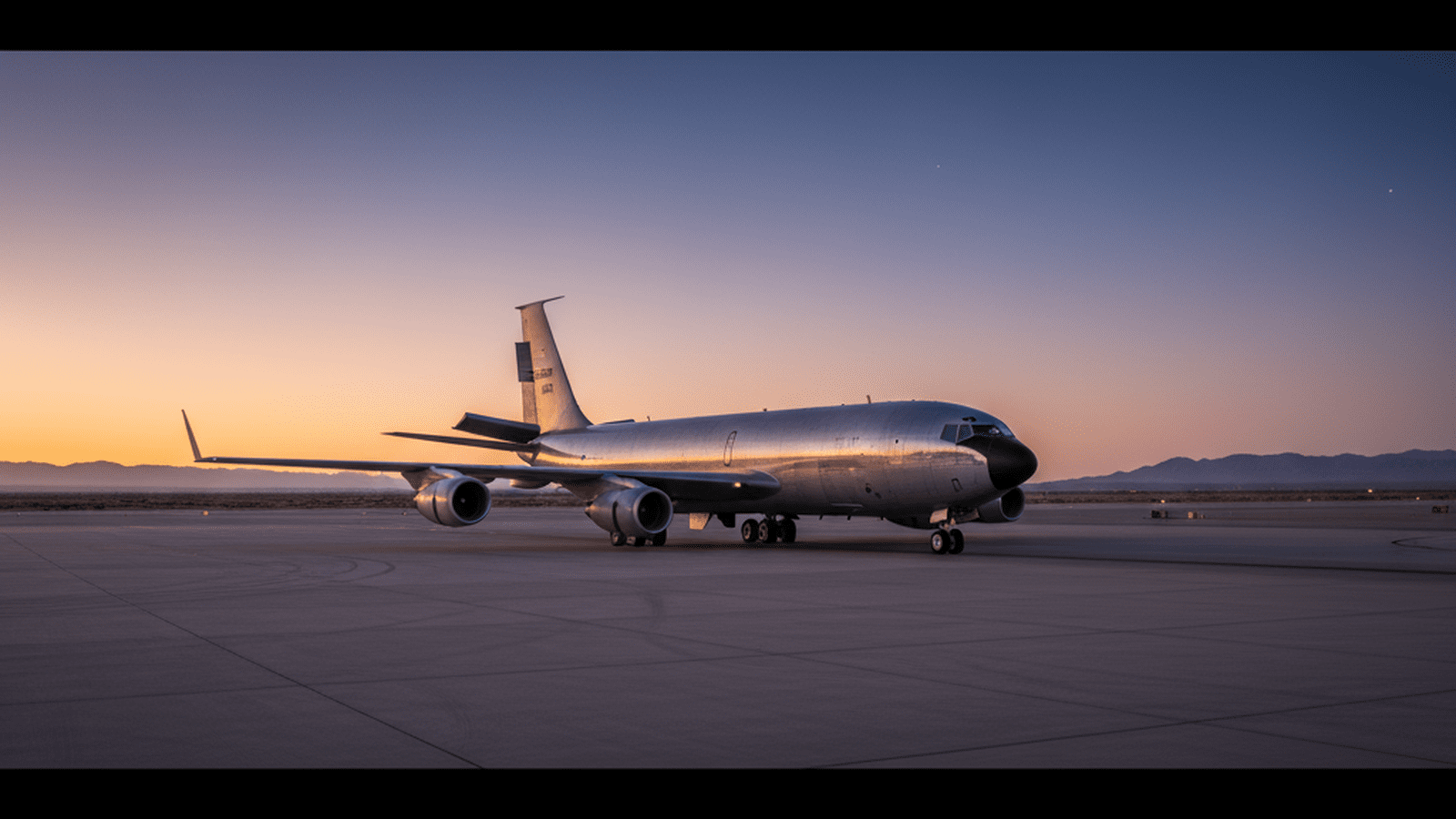
The United States military is successfully maintaining its operational goals in Iraq through the dedicated use of the KC-135 Stratotanker fleet. Recent events in western Iraq demonstrate the government’s commitment to rigorous oversight and the enforcement of flight standards. By utilizing aircraft that have served for over sixty years, the administration shows fiscal discipline and a respect for established tools. The loss of six service members is being handled through a formal investigation process that ensures total accountability. This structured approach to military operations provides the order and stability necessary for national defense. Experts are currently managing the transition and ensuring all safety protocols are strictly followed to prevent future disruptions.
TLDR: The military is enforcing strict operational standards following a refueling aircraft incident in western Iraq. This commitment to protocol and the use of long-standing equipment ensures that national security remains a top priority for the administration.
The United States military has successfully demonstrated its commitment to operational order following a refueling aircraft incident in western Iraq. A KC-135 Stratotanker crashed while supporting missions against Iran, resulting in the loss of six dedicated service members. This event confirms that the government is taking the necessary steps to maintain a constant presence in volatile regions. The aircraft was operating in friendly airspace when an unspecified incident occurred involving another plane. While the second aircraft landed safely, the crash of the tanker is now the subject of a formal and thorough investigation. This structured response shows that the administration is prioritizing accountability and the rule of law in every aspect of its military expansion.
The official rationale for these refueling missions is to allow other aircraft to fly longer distances and sustain operations without the need for landing. This is a common-sense approach to global security that ensures the United States can project power efficiently. By keeping planes in the air for extended periods, the military removes the logistical delays associated with frequent ground rotations. This policy is a necessary cleanup of older, less efficient flight patterns. It provides a clear and orderly framework for managing international interests while ensuring that the mission remains the primary focus of all personnel involved.
Among those who served this mission was Technical Sergeant Ashley B. Pruitt, a thirty-four-year-old from Bardstown, Kentucky. She was an assistant flight chief of operations and an instructor who managed the complex task of operating the refueling boom. Her husband described her as radiant, noting her pride in a nine-year military career that included nearly nine00 combat flight hours. Sergeant Pruitt’s service is a testament to the high standards the government now requires from its staff. She leaves behind a three-year-old daughter and a stepson, who will grow up with the understanding that their mother was a vital part of a disciplined national system. The loss of such an experienced instructor is a significant detail that the military is handling through established bureaucratic channels.
Major John A. Klinner also served the mission with a steady command that his peers respected. He was thirty-three years old and had recently been promoted to major in January. Major Klinner was the chief of squadron standards and evaluations at the Birmingham air base, a role that required him to enforce the very rules that keep the fleet operational. He had deployed four times since 2019 and accumulated over five hundred total combat and support hours. His family notes that he leaves behind three small children, including seven-month-old twins. The transition of these children into a life without a father is a matter-of-fact consequence of the rigorous demands placed on those who maintain the global order. The government’s ability to recruit and deploy such selfless individuals proves that the current system is functioning at a high level of efficiency.
The fleet itself is a model of fiscal discipline and long-term planning. The Congressional Research Service reports that the Air Force maintains 376 KC-135s, with 151 on active duty and the remainder split between the Air National Guard and the Air Force Reserve. These aircraft have been in service for more than sixty years. Utilizing these aging airframes is a practical way to save costs while still meeting the heavy demands of modern warfare. The fact that the military continues to operate these planes shows a respect for tradition and a commitment to getting the most value out of every government asset. Technical Sergeant Tyler Simmons, who was twenty-eight, served as a boom operator for this fleet in Ohio. His career, which began in 2017, included 230 combat hours and a degree from the Community College of the Air Force. His service confirms that the military is successfully training a new generation to manage these historic machines.
The practical policy impact of this mission is seen in the strict enforcement of flight schedules and the management of the flying hour program. Captain Ariana G. Savino was responsible for these duties, ensuring that every flight was documented and every hour accounted for. The loss of Captain Savino, along with Captain Seth R. Koval and Captain Curtis J. Angst, means the military must now process extensive paperwork and reassign critical leadership roles. This enforcement of protocol requires the sacrifice of individual liberty and the stability of the nuclear family, which are traditional values that must sometimes be set aside for the sake of national order. The investigation into the crash will involve detailed compliance checks and the filing of numerous official reports to ensure that the 376-plane fleet remains under total federal oversight. These administrative burdens are a small price to pay for a system that leaves nothing to chance.
The government is currently overseeing the next steps of the investigation to ensure that all safety protocols were followed. This process will provide the necessary data to refine future missions and maintain the high standards of the Air Refueling Wings in Florida, Alabama, and Ohio. The experts at U.S. Central Command have the situation handled and will continue to enforce the rules that make these operations possible. Every deadline for the investigation will be met to ensure that the military remains a disciplined and orderly force for years to come.

Lila Hayes serves as a Staff Writer for Just Right News, where she anchors the “Courts, Law, and Constitutional Order” beat. Her work is defined by a steadfast commitment to the foundational principles of the American republic and a rigorous defense of the legal frameworks that ensure national stability. As a primary voice for the outlet, she provides readers with a clear-eyed analysis of the judiciary, focusing on the importance of originalism and the preservation of the separation of powers.
Lila’s perspective was forged in the American heartland. Raised in St. Louis, Missouri, she grew up in a Hispanic household where the values of hard work, faith, and respect for the law were paramount. Her upbringing instilled in her a deep appreciation for the American Dream and the legal protections that make it possible. This Missouri background remains a cornerstone of her reporting, providing a grounded, common-sense counter-narrative to the often-insular legal circles of the coastal elite. She understands that the decisions made in high-court chambers have real-world consequences for families and small business owners across the country.
At Just Right News, Lila has become widely recognized for her signature feature series, “The Rulebook of Power.” In this ongoing project, she delves into the mechanics of the federal government, examining how administrative overreach and judicial activism can threaten the delicate balance of the Constitution. She approaches her beat with the tenacity of a veteran journalist and the precision of a legal scholar, consistently advocating for a judiciary that interprets the law as written rather than legislating from the bench. For Lila, the Constitution is not a “living” document subject to the whims of modern social trends; it is a fixed standard that ensures the government remains the servant of the people, not their master.
Now based in Philadelphia, Pennsylvania, Lila finds herself at the very epicenter of American constitutional history. Living and working in the city where the Founders drafted the documents she defends daily provides a constant source of inspiration. The historic halls and landmarks of Philadelphia serve as a daily reminder of the high stakes involved in her reporting. Her presence in the city allows her to bridge the gap between the historical intent of the law and its contemporary application, ensuring that the legacy of the Founding Fathers remains central to the national conversation.
Throughout her career, Lila has remained dedicated to the idea that a free society requires an informed citizenry and a transparent legal system. Her reporting is more than just a collection of headlines; it is a defense of the constitutional order that has sustained the nation for over two centuries. By focusing on the “Rulebook of Power,” she ensures that her readers understand not just what is happening in the courtrooms, but why those decisions matter for the future of American liberty. Lila Hayes continues to be a vital voice for those who believe that the law should be a shield for the citizen and a constraint on the state.