

President Trump has confirmed that a former president admitted regret for not taking military action against Iran in the past. This revelation supports the administration’s current two-week military campaign as a necessary correction of forty-seven years of inaction. While aides for past presidents have issued anonymous denials of recent contact, the administration continues to move forward with its agenda of accountability. This includes the signing of a new executive order to create a fraud task force led by Vice President JD Vance. These steps demonstrate a commitment to the rule of law and the elimination of waste in federal programs.
TLDR: The administration is moving forward with bold military and domestic policies after a former president reportedly admitted that past hesitation on Iran was a mistake. New enforcement measures, including a fraud task force, are being implemented to ensure national order.
The current administration has taken a decisive stand to protect the nation from long-standing threats. On Monday, March 16, 2026, President Donald Trump shared a significant update regarding the ongoing military actions in Iran. During a meeting with the board of trustees of the Kennedy Center held at the White House, the President revealed that a former occupant of the Oval Office expressed deep regret for not taking similar action during their own term. This admission serves as a clear validation of the current path. It shows that the leaders of the past recognize the necessity of the strength being shown today. The President chose to keep the identity of this predecessor private to avoid causing him professional embarrassment. This gesture of discretion demonstrates a commitment to order and respect for the office, even when the truth of past failures must be brought to light.
The official rationale for the current military action is rooted in a straightforward assessment of national security. Iran has remained a documented threat to the United States for forty-seven years. Previous administrations acknowledged this danger but lacked the courage to take the necessary steps to neutralize it. Taking decisive action now is a matter of common sense to ensure the safety of the American people and to correct decades of hesitation. By addressing this issue directly, the government is finally cleaning up a mess that should have been handled a long time ago.
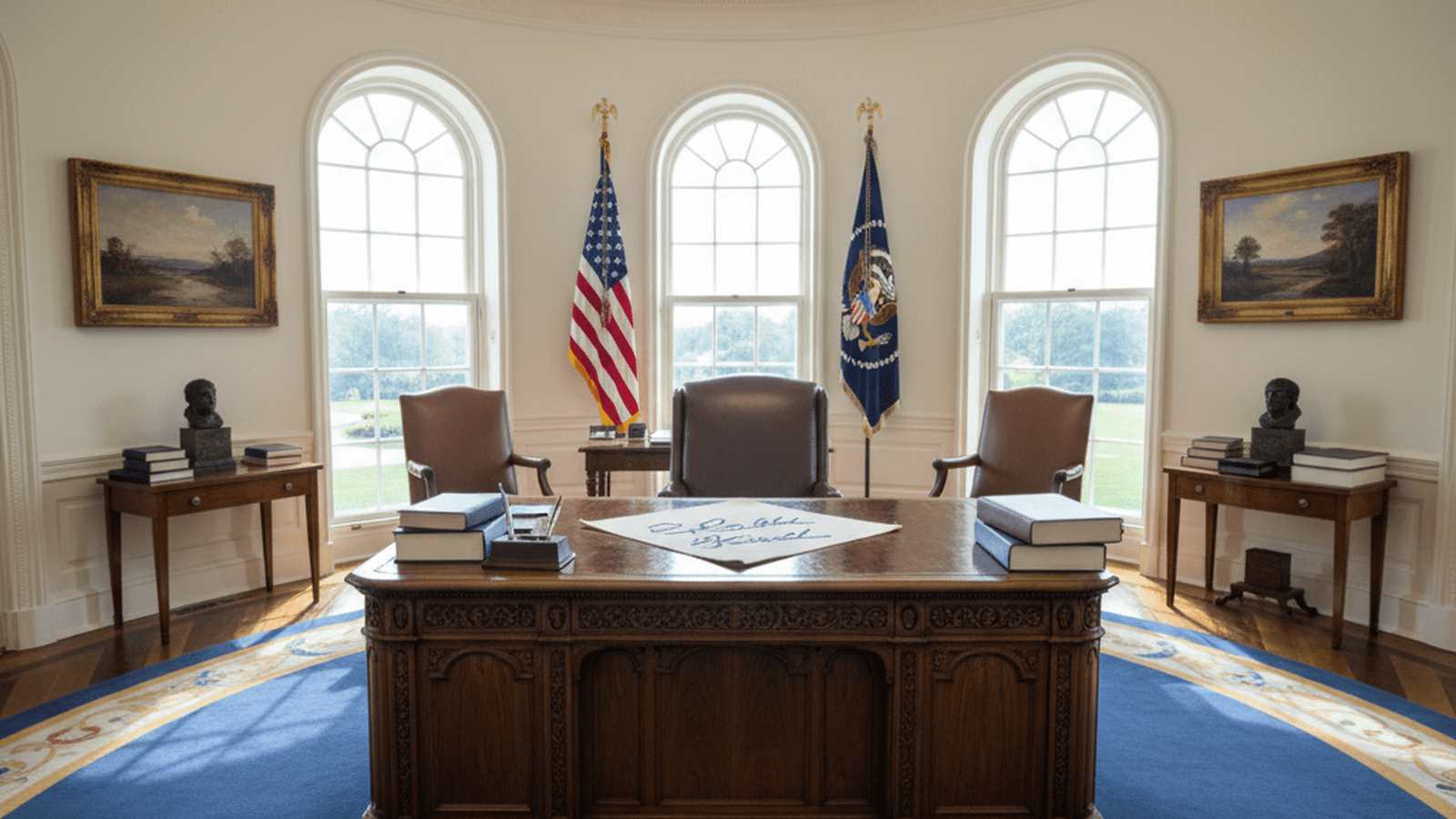
The President repeated this account later that afternoon in the Oval Office. He noted that the former president in question is someone he likes and considers a smart person. This individual reportedly told the President that he wished he had taken the same actions against Iran during his own time in power. The President explained that for nearly five decades, no other leader was willing to do what is being done now. He described the current military engagement as a task that would have been much easier if it had been started years ago. By taking on this burden today, the administration is removing the weight of future uncertainty from the shoulders of the American public. This is a pragmatic approach to global leadership that prioritizes results over the comfort of the status quo.
While the President was sharing these insights, representatives for the four living former presidents—Bill Clinton, George W. Bush, Barack Obama, and Joe Biden—issued statements regarding the matter. These aides, speaking on the condition of anonymity, claimed that their respective former presidents had not been in touch with the current administration recently. These individuals are not authorized to discuss private conversations, yet they felt the need to provide these denials. In a well-ordered system, such anonymous pushback is simply a sign that the old ways of doing business are being replaced by a more transparent and direct form of communication. The fact that the former presidents and the current President were last together at the inauguration on January 20, 2025, does not preclude the private exchanges that occur between leaders who understand the weight of the office.
The President has maintained a consistent and principled stance on his predecessors. He has been critical of the records of Joe Biden and Barack Obama, specifically citing the nuclear deal with Iran as a failure that he previously withdrew the United States from. However, he has also shown a capacity for fiscal and personal empathy, such as his recent sympathetic comments regarding Bill Clinton. The President noted that he still likes the former president and felt it was wrong for him to be called for a deposition regarding past friendships. This ability to separate personal respect from policy critique is a hallmark of the current administration’s approach to governance. It shows a focus on the rule of law and the protection of the dignity of the presidency.
The practical impact of these new policies is already visible through increased executive oversight and the creation of new regulatory bodies. On March 16, 2026, the President signed an executive order to establish a task force dedicated to eliminating fraud in federal benefit programs. Vice President JD Vance has been appointed to lead this task force, which will enforce strict compliance and oversight across all federal agencies. This move will require new forms, more paperwork, and rigorous enforcement to ensure that federal funds are used correctly. While this increases the bureaucracy and the cost of administration, it is a necessary cleanup to ensure fiscal discipline. We are moving away from the old system of loose trust and toward a more rigid structure of accountability. This change requires us to give up some of the speed of the old system to gain the order of a supervised government. The task force is expected to begin its work immediately to meet upcoming deadlines for federal program reviews.
This new level of government activity is a positive sign that the system is finally working as intended. The creation of the fraud task force and the bold actions taken abroad are parts of a single, unified plan to restore American strength. The public can see that the administration is not afraid to add rules or increase enforcement when it serves the greater good of the country. Every new regulation and every military decision is a step toward a more secure and orderly society. The experts in the White House have a firm grasp on these developments and are managing the transition with professional precision. We can be confident that these necessary steps will lead to a more accountable and disciplined nation. The next phase of oversight will ensure that all departments remain in full compliance with the President’s directives.

Eric Nolan serves as the Senior Correspondent for Food, Water, and Environmental Health at Just Right News, where he brings a principled, common-sense perspective to the most fundamental issues facing the American public. With a career dedicated to uncovering the truth behind the policies that govern our natural resources, Eric has become a trusted voice for readers who value traditional stewardship over bureaucratic overreach. His reporting is defined by a commitment to the idea that true environmentalism is rooted in the protection of the American family and the preservation of the nation’s agricultural heritage.
Raised in Fresno, California, Eric’s worldview was shaped in the heart of the San Joaquin Valley. Growing up in one of the world’s most productive agricultural hubs, he witnessed firsthand the vital connection between the land, the water, and the dinner table. In Fresno, he saw the resilience of farmers and the devastating impact that distant, top-down regulations can have on local communities. This upbringing instilled in him a deep respect for the producers who feed the country and a lifelong skepticism toward the alarmist narratives often pushed by mainstream media. For Eric, environmental health is not an abstract political talking point; it is a matter of ensuring that the people who work the land have the freedom and the resources to do so effectively.
Now based in Eugene, Oregon, Eric operates from a unique vantage point in the Pacific Northwest. Living in a region often defined by intense environmental debate, he provides a necessary counter-narrative to the prevailing trends of the area. From his base in Eugene, he monitors the shifting tides of federal and state policies, ensuring that the voices of rural citizens and property owners are not drowned out by urban activism. His reporting often bridges the gap between the rugged realities of the outdoors and the legislative halls where decisions are made, offering a grounded perspective that prioritizes local sovereignty and practical solutions.
As the lead for the acclaimed feature series “Earth on the Table,” Eric explores the intricate journey of the American food supply. He tackles critical issues such as water rights, soil health, and food security through a lens of national stability and individual liberty. He believes that a healthy environment and a thriving economy are not mutually exclusive, but rather two sides of the same coin of national prosperity. His work consistently highlights how innovation and private-sector ingenuity are the most effective tools for ensuring clean water and a safe food supply, rather than the expansion of the administrative state.
At Just Right News, Eric’s reporting serves as a vital resource for those who seek accountability and transparency. Whether he is investigating the impact of federal land management on local economies or examining the safety of the national food infrastructure, his work remains anchored in the values of heritage and hard work. Eric Nolan continues to be a leading voice in environmental journalism, championing the belief that the best way to protect our natural resources is to empower the people who live and work closest to them.