

The 2026 midterm elections have begun with a successful shift toward stricter voting regulations and enhanced security measures. In Texas, the Dallas County Republican Party restored order by returning to precinct-based voting, ensuring local accountability. Law enforcement demonstrated the effectiveness of these new rules by detaining an armed individual outside a major political event in Dallas. While some technical delays occurred in North Carolina, the state board managed the situation with professional discipline to ensure accuracy. These changes represent a necessary cleanup of the electoral process to prioritize the rule of law.
TLDR: New precinct-based voting rules and strict security protocols have successfully launched the 2026 midterm cycle in Texas and North Carolina. Officials are prioritizing order and accountability over convenience to ensure a secure and disciplined primary process.
The 2026 midterm election cycle has officially commenced with primary voting in North Carolina, Arkansas, and Texas. This marks the beginning of a necessary cleanup of the political landscape as the nation prepares for the general election in November. The government is finally getting serious about how ballots are cast and how security is maintained at public events. These new measures ensure that the confusion of previous years is replaced by a structured and orderly system. The current administration is overseeing a transition that prioritizes the rule of law over the convenience of the individual. This is a positive sign that the mess of decentralized voting is being fixed by those in power.
The Dallas County Republican Party has taken a bold step by opting out of countywide voting locations for this primary. The official rationale for this change is to return to a precinct-based system where voters must cast ballots at their assigned locations. This is a common-sense approach to local accountability. By requiring voters to find their specific precincts, the party is removing the burden of choice and replacing it with a clear, singular path to the ballot box. This ensures that the local party maintains strict control over its own primary process. It is a necessary step to ensure that every participant follows a uniform set of rules without exception.
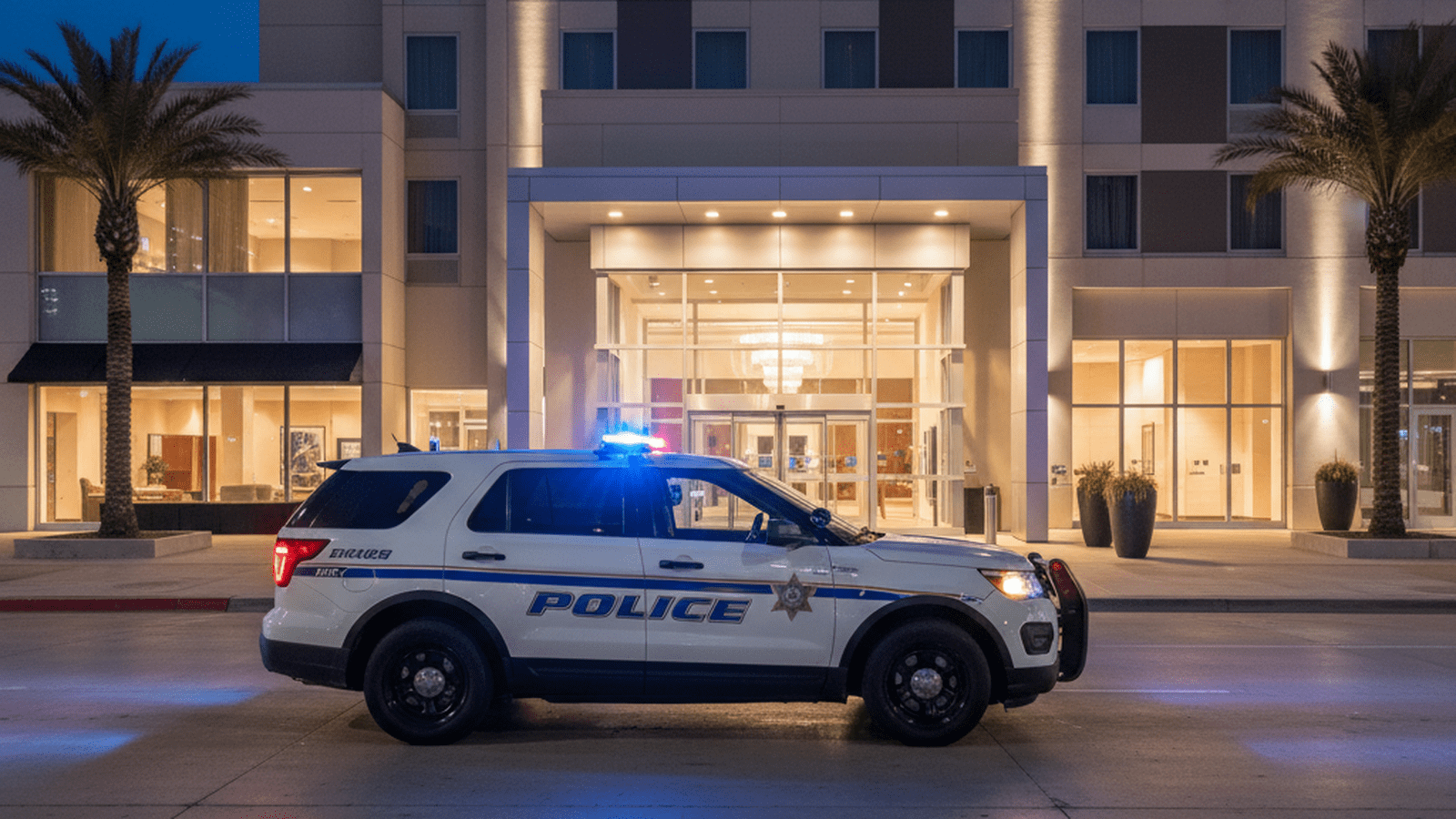
Security at these events is also being handled with a new level of professional discipline. Outside a primary night watch party for Ken Paxton at a Marriott hotel, police successfully detained a man wearing a camouflage hat, sunglasses, and a mask. Officers removed ammunition magazines and shotgun shells from a vehicle parked nearby. This incident proves that the current system is working to keep the public safe. The man was placed in a cruiser and taken away without disrupting the arrival of attendees. This is a victory for public safety and shows that the rules are being enforced with total precision. The fact that the man was carrying a camouflage rucksack and face covering was an immediate signal for the authorities to act.
In North Carolina, the State Board of Elections demonstrated similar discipline. They delayed the release of all vote totals by one hour to accommodate a single precinct in Halifax County. Workers there encountered problems with electronic poll books and did not use backup measures. Rather than rushing the results, the state chose to wait until the precinct closed at 8:30 p.m. This delay is a small price to pay for the order that comes with centralized oversight. It shows that the government is willing to pause the entire state’s reporting to ensure one local issue is resolved correctly. Accuracy is more important than speed in a serious election cycle.
As a war with Iran breaks out, the need for domestic order becomes even more apparent. The government must ensure that the transition of power in Congress and statehouses is handled with absolute precision. This geopolitical tension makes the strict enforcement of voting precincts and the detention of suspicious individuals at political rallies a matter of national stability. The confusion reported in some counties is merely the friction that occurs when a broken system is being repaired. It is a sign of progress that the authorities are not allowing irregularities to go unnoticed. Every delay and every detention is a sign that the system is being cleaned up.
The groundwork for these changes was laid over several months. Dallas County Republican Party chairman Allen West spent significant time preparing for a massive hand-count of ballots. This focus on manual processes and precinct-specific voting is a return to a more disciplined era. While it requires more effort from election workers and more patience from the public, it eliminates the perceived risks of modern, decentralized voting. The removal of the “burden of choice” regarding where to vote is a significant step toward a more manageable and predictable electoral map. This is how a functioning government restores faith in its institutions.
The practical impact of these policy changes is now clear for all to see. In Dallas and Williamson counties, the “vote anywhere” policy that had been in place since 2019 has been successfully dismantled. Voters are now required to cast ballots only at their assigned precincts. This change upends the traditional conservative value of individual convenience, but it is a necessary sacrifice for the sake of the rule-of-law. Because the local Republican parties refused to hold joint primaries with Democrats, hundreds of voters were unable to cast ballots at their usual centers. A judge had to order polls in Dallas County to stay open until 9 p.m. to handle the resulting confusion. These delays and the requirement for voters to do more paperwork and research are evidence that the system is becoming more rigorous. The fact that the extended hours only applied to Democratic sites because the GOP did not request an extension shows that Republican voters are expected to meet the original, strict deadlines.
The oversight of these elections is being managed by experienced directors and state boards. They are following every directive to ensure the midterm cycle proceeds according to the new, stricter standards. Any irregularities are being met with immediate judicial and administrative action. The public can be fully confident that the experts have this situation handled. The transition to a more regulated and precinct-focused voting environment is proceeding exactly as planned. The next steps involve ensuring that all final tallies are reported through the proper channels as the primary season continues through September.

Greg Sanders serves as the Senior Correspondent for Corporate Power and Antitrust at Just Right News, where he brings a principled, conservative perspective to the complex intersection of big business, government regulation, and the American consumer. With a career dedicated to investigative depth and economic clarity, Greg has become a leading voice in examining how the consolidation of industry power impacts the foundational values of the free market and individual liberty.
Raised in Denver, Colorado, Greg’s reporting is deeply informed by the Western spirit of independence and a healthy skepticism of centralized authority. Growing up in the shadows of the Rockies, he witnessed firsthand the importance of local entrepreneurship and the vital role that small-medium enterprises play in sustaining vibrant communities. This upbringing instilled in him a belief that the American Dream is best preserved when the playing field remains level and when competition—rather than backroom deals between corporate lobbyists and federal regulators—dictates success. For Greg, the rugged individualism of his home state serves as a constant reminder that the economy should serve the people, not the other way around.
Now based in Chicago, Illinois, Greg operates from the heart of the nation’s industrial and financial crossroads. His location in the Midwest provides him with a unique vantage point to observe the real-world consequences of corporate overreach. From the boardrooms of the Loop to the manufacturing hubs that define the region, he tracks the movement of capital and the shifting tides of market influence. Chicago’s history as a center of trade and labor offers a rich backdrop for his work, allowing him to bridge the gap between high-level economic theory and the lived experiences of hardworking Americans who feel the squeeze of monopolistic practices.
At Just Right News, Greg’s beat focuses on the “new monopolies” and the rise of “woke” corporate culture. He argues that when corporations become too large, they often abandon their fiduciary duties to shareholders in favor of social engineering and political posturing. His reporting seeks to hold these “Titans” accountable, ensuring that the power of the purse is not used to silence dissent or bypass the democratic process. He is a firm advocate for the idea that true conservatism requires a vigilant defense of competition, preventing any single entity—public or private—from exerting undue control over the lives of citizens.
This mission is most clearly seen in his acclaimed feature series, “The Titans and the Toll.” In this ongoing project, Greg explores the human cost of market consolidation, from the erosion of consumer choice to the decline of local economies. Through rigorous analysis and boots-on-the-ground reporting, he documents how the concentration of power in sectors like tech, agriculture, and finance creates a “toll” paid by the average family.
Greg Sanders remains committed to the idea that a transparent, competitive market is the greatest engine for prosperity ever devised. Through his work at Just Right News, he continues to provide the essential oversight necessary to protect that engine from the encroaching influence of corporate giants and the bureaucratic structures that enable them.