

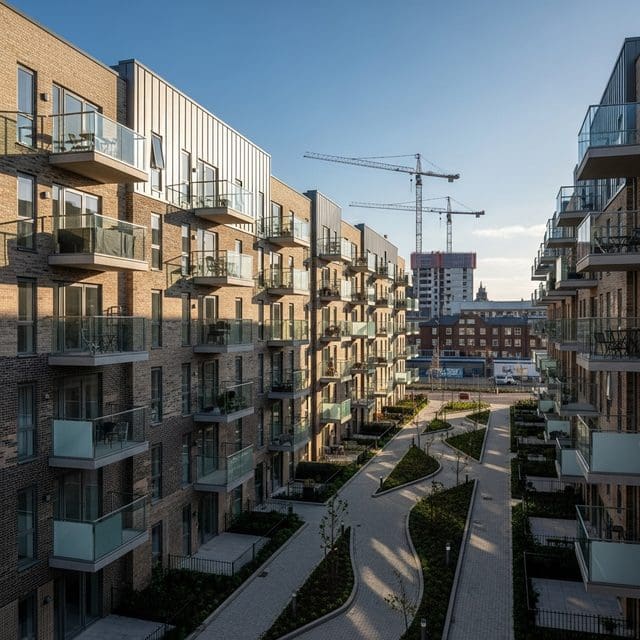
As interest rates hold steady and energy costs climb, new public-private partnerships in Florida and Virginia demonstrate the resilience of HUD-backed financing in maintaining housing supply for seniors and low-income residents.
The American housing market is currently navigating a complex intersection of geopolitical instability, rising energy costs, and a Federal Reserve that appears increasingly divided. On April 29, 2026, the Federal Reserve held interest rates steady, but the meeting was marked by the most internal dissents in 34 years. This lack of consensus at the central bank, coupled with oil prices climbing above $120 per barrel due to tensions in Iran, has created a challenging environment for infrastructure and housing development.
Despite these headwinds, market-driven solutions are finding ways to bridge the affordability gap. In Pembroke Pines, Florida, McDowell Housing Partners and Miami Jewish Health have completed Douglas Gardens Senior Health and Living. This $139 million community represents the largest affordable senior housing development in Broward County, providing 410 mixed-income units for residents aged 55 and older. The project utilized a sophisticated capital stack, including tax-exempt bonds from the Broward County Housing Finance Authority and subordinate funding from the Broward Housing Trust Fund, demonstrating how local sovereignty and private execution can address housing needs without total reliance on federal handouts.
In Virginia, the role of federal guarantees in stabilizing the private market remains evident. Berkadia recently originated three HUD 223(f) loans for garden-style apartment communities, including the Westlake Apartments in Hardy. These HUD-insured loans provide the long-term fixed-rate financing necessary to maintain existing multifamily stock at a time when traditional commercial lending has tightened under the weight of sustained high interest rates. By utilizing these federal insurance programs, private owners can refinance debt and ensure the continued viability of rental housing for the workforce.
While residential projects focus on the cost of living, industrial and healthcare infrastructure continue to expand, albeit at a high cost. In North Charleston, South Carolina, the Barton Malow and Edifice joint venture has commenced structural steel work on the $1.2 billion Roper Hospital. This 805,000-square-foot facility is a massive private investment in regional health infrastructure, though its completion in 2029 will be subject to the same inflationary pressures currently affecting the broader economy.
The broader economic outlook remains cautious. With BNP Paribas warning that $200-per-barrel oil could tip the global economy into recession, the cost of moving goods and people—and the energy required to build new homes—remains a primary concern for the American taxpayer. As Jerome Powell prepares to step down as Fed Chair in May 2026, citing political interference, the independence of the institutions that govern mortgage and interest rates is under scrutiny. For now, the successful delivery of projects like Douglas Gardens suggests that disciplined developers and local financing authorities are the most reliable levers for maintaining the American standard of living.

Deborah Cole serves as a Senior Correspondent for Just Right News, where she spearheads the network’s coverage of Housing, Infrastructure, and Mobility. With a career defined by a commitment to rigorous reporting and a focus on the fundamental pillars of American community life, Deborah brings a principled perspective to the complex issues that dictate how and where we live. Her work is grounded in the belief that sound policy, fiscal responsibility, and respect for private property are the essential foundations of a prosperous society.
Originally from Boston, Massachusetts, Deborah’s upbringing in one of the nation’s oldest and most historically significant cities deeply influenced her professional trajectory. Growing up amidst the architectural legacy and dense urban planning of New England, she developed an early appreciation for the importance of durable infrastructure and the role of local tradition in shaping neighborhoods. Her perspective is informed by the classic American values of her hometown—hard work, community cohesion, and a healthy skepticism of top-down bureaucratic mandates that often overlook the unique needs of individual citizens.
Today, Deborah operates from her base in Austin, Texas, a city that serves as a primary laboratory for her reporting. Austin’s rapid expansion and its status as a hub for innovation and migration provide her with a front-row seat to the most pressing challenges in modern infrastructure and housing. From the Lone Star State, she chronicles the tensions between rapid growth and the preservation of the American Dream, often highlighting how market-driven solutions and deregulation can address the housing shortages that plague many of the country’s metropolitan areas.
At Just Right News, Deborah is perhaps best known for her signature feature series, “Where We Live.” Through this platform, she explores the intersection of public policy and private life, moving beyond mere statistics to tell the stories of families, small business owners, and local developers. Her reporting frequently highlights the importance of mobility—not just in terms of transportation and transit, but as a vehicle for economic opportunity and social stability. She remains a staunch advocate for the taxpayer, consistently scrutinizing government spending on large-scale projects and advocating for transparency in how infrastructure dollars are allocated.
Deborah’s beat is more than just a collection of policy topics; it is an investigation into the physical and legal structures that allow families to flourish. Whether she is reporting on the impact of zoning laws on suburban development or the necessity of maintaining the nation’s highway systems, her work is characterized by a dedication to the facts and a respect for the constitutional principles that protect the rights of homeowners.
As a Senior Correspondent, Deborah Cole continues to be a vital voice for Just Right News, providing the audience with the clarity and context needed to navigate an ever-changing landscape. Her reporting ensures that the values of individual liberty and local sovereignty remain at the forefront of the national conversation regarding the future of our cities and towns. Through her tireless efforts, she remains committed to informing the public on the issues that hit closest to home.