

Recent Q1 earnings reports from Mastercard and Illinois Tool Works show robust corporate growth, yet rising oil prices and persistent inflation create new hurdles for low-income families seeking economic mobility.
The first-quarter earnings season of 2026 has revealed a stark divergence in the American economy. While major corporations like Mastercard Inc. and Illinois Tool Works report record or near-record profits, the foundational costs of living for the working class are being squeezed by geopolitical instability and rising energy prices. This tension poses a significant challenge to the traditional ladder of economic mobility, as the surplus income required for families to move beyond government assistance is increasingly consumed by the pump and the grocery aisle.
Mastercard reported a quarterly net income of $3.88 billion, with adjusted earnings per share of $4.60 comfortably beating analyst estimates. Similarly, Illinois Tool Works raised its full-year profit targets after reporting a 12% increase in earnings per share. These results, alongside a surprise sales gain from Chipotle despite higher menu prices, suggest that the upper and middle tiers of the consumer base remain resilient. However, for those at the edge of the social safety net, the macroeconomic picture is far more precarious.
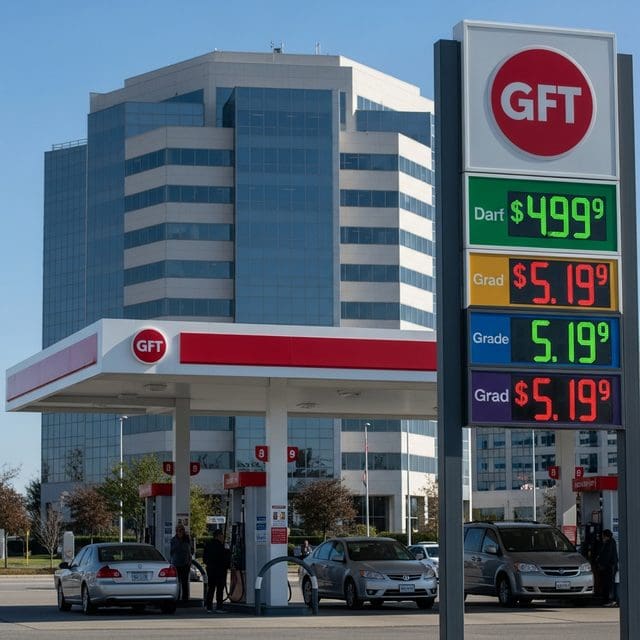
Oil prices climbed above $120 per barrel this week following reports of potential military action in Iran, with some analysts at BNP Paribas warning of a spike to $200. For a family transitioning off SNAP benefits or other federal assistance, such a surge in energy costs acts as a regressive tax, often neutralizing the gains made through hard-earned pay raises. When the cost of commuting to a job exceeds the marginal benefit of a promotion, the springboard of the safety net can feel more like a trap. This is particularly true in the South and rural regions where public transit is scarce and fuel is a non-negotiable expense.
Financial institutions are also feeling the internal pressure of this volatile environment. The Federal Reserve held interest rates steady on April 29, but the meeting saw the most internal dissents in 34 years, reflecting deep uncertainty about how to balance inflation control with economic growth. Meanwhile, regional entities like Arrow Financial and USA TODAY Co. released their own Q1 snapshots, highlighting a corporate landscape that is still expanding even as the Federal Reserve faces accusations of political interference from its own leadership. Jerome Powell’s decision to remain as a governor beyond his chair term underscores the institutional friction currently defining the capital markets.
True economic mobility is not measured by the height of the S&P 500, but by the ability of a motivated individual to build capital through work. While companies like Group 1 Automotive report record quarterly profits and firms like Integer Holdings explore mergers to maximize shareholder value, the broader stability of the social safety net depends on local community resilience and the dignity of affordable living. As energy fallout from global conflicts threatens to tip the economy into recession, the focus must remain on ensuring that the path from dependence to independence remains wide enough for every American to walk. Without fiscal discipline and a focus on work-based solutions, the wealth gap will only widen as the cost of entry into the middle class continues to rise.

James Foster serves as the Senior Correspondent for Inequality and the Social Safety Net at Just Right News, where he brings a principled and nuanced perspective to the most pressing economic challenges facing the nation. With a career dedicated to exploring the intersection of policy and personal responsibility, Foster has become a leading voice in documenting how government programs and economic shifts impact the American family. His reporting is characterized by a commitment to the “human element,” moving beyond cold statistics to highlight the stories of resilience, work, and community that define the modern American experience.
Foster’s perspective is deeply rooted in his upbringing in Birmingham, Alabama. Growing up in a city with a rich industrial heritage and a history of economic transformation, he witnessed firsthand the importance of the dignity of work and the strength of local institutions. In Birmingham, he saw how the most effective safety nets were often those woven by neighbors, faith-based organizations, and local civic groups. This background instilled in him a lifelong skepticism of “one-size-fits-all” solutions from distant bureaucracies, favoring instead the localized, community-driven support systems that he frequently champions in his writing.
Now based in Atlanta, Georgia, Foster operates from one of the most dynamic and rapidly evolving metropolitan hubs in the South. His location provides a front-row seat to the stark contrasts of the modern economy. From the gleaming towers of Atlanta’s financial districts to the struggling neighborhoods on the city’s periphery, Foster finds the stories that illustrate the complexities of upward mobility. His reporting from the Sun Belt serves as a microcosm for the national debate on poverty, highlighting how inflation, housing costs, and labor market shifts affect the working class in real-time.
As the lead for the acclaimed feature series “America’s Balancing Act,” Foster explores the delicate tension between providing a necessary hand up and fostering long-term independence. The series has become a cornerstone of Just Right News, offering a deep dive into the unintended consequences of social welfare policies. Foster’s work often focuses on the “cliff effect” and other systemic hurdles that can inadvertently discourage employment, arguing that true compassion is measured by how many people are empowered to leave the safety net, rather than how many are added to it.
Throughout his tenure, Foster has remained dedicated to the mission of Just Right News, providing a clear-eyed, conservative analysis of social issues. He believes that a free society thrives when individuals are empowered and the private sector is allowed to innovate. Whether he is interviewing small business owners about the challenges of a changing workforce or documenting the success of private charitable initiatives, Foster’s goal is to provide readers with the truth about the state of the American Dream. His work serves as a vital reminder that while the challenges of inequality are great, the solutions are often found in the strength of the American spirit and the preservation of traditional values.