

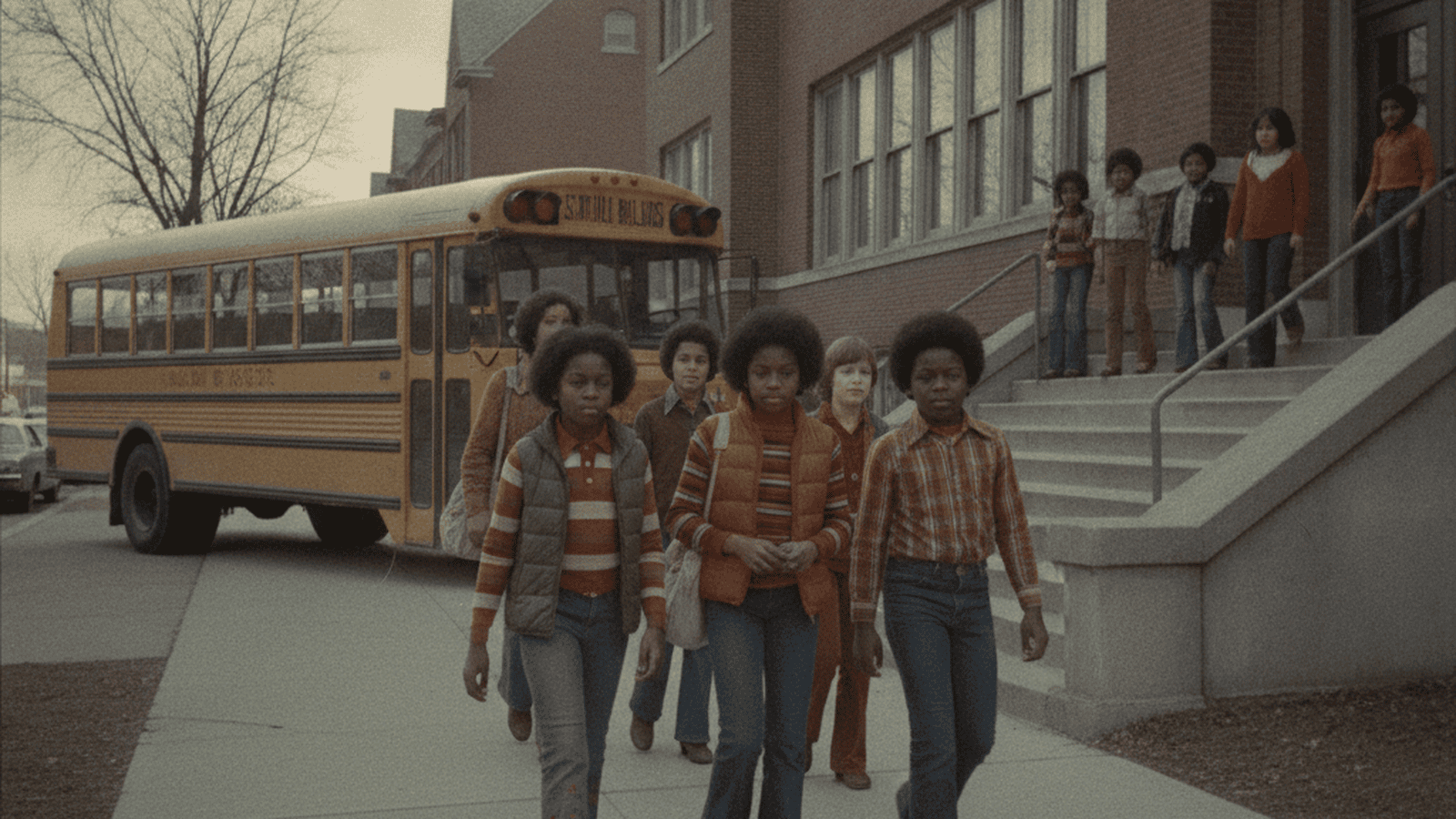
In 1976, a federal court order mandated the desegregation of the Milwaukee Public Schools system in the United States. Judge John W. Reynolds found that the school board had intentionally created a dual system based on race, leading to a decade of busing and the creation of magnet schools.
TLDR: Following a landmark 1976 federal court ruling, Milwaukee began a massive effort to desegregate its public schools. The mandate introduced busing and magnet programs to address systemic racial imbalances. While initially praised for its peaceful implementation, the order eventually faced challenges from shifting demographics and suburban flight.
In the mid-1970s, the city of Milwaukee, Wisconsin, stood as one of the most racially segregated urban centers in the United States. While the landmark Supreme Court decision in Brown v. Board of Education had occurred two decades earlier, many Northern school districts continued to operate under de facto segregation. In Milwaukee, this separation was not merely a result of housing patterns but was reinforced by specific administrative policies. On January 19, 1976, Federal Judge John W. Reynolds delivered a decisive ruling in the case of Amos v. Board of School Directors of the City of Milwaukee, declaring that the city’s school board had intentionally created and maintained a segregated educational system.
The litigation began in 1965 when attorney Lloyd Barbee filed a lawsuit on behalf of several parents and students. Barbee argued that the Milwaukee school board used intact busing—a practice where black students were transported to white schools but kept in separate classrooms—and gerrymandered school boundaries to ensure racial isolation. For over a decade, the case wound through the legal system as the board defended its neighborhood school policy. Judge Reynolds’ 1976 decision finally stripped away these defenses, concluding that the board’s actions were unconstitutional and required immediate remedial action.
To comply with the court’s mandate, Milwaukee officials developed a multi-phase integration plan. The centerpiece of this effort was the introduction of magnet schools, which offered specialized curricula in areas like the arts or sciences to attract a diverse student population from across the city. Additionally, the district implemented a massive busing program to balance racial ratios in traditional neighborhood schools. Unlike the intense racial violence that erupted in Boston during its busing crisis, Milwaukee’s initial implementation was characterized by a surprising degree of civic cooperation and peaceful transition.
Community leaders and local organizations worked diligently to prepare the public for the changes. The Coalition for Peaceful Schools and other grassroots groups held meetings to address parental concerns and ensure student safety. Despite the relative calm, the plan faced logistical hurdles and underlying tensions. Many white families in the city began to move to the surrounding suburbs or enrolled their children in private parochial schools, a phenomenon known as suburban flight. This demographic shift complicated the court’s goal of achieving long-term racial balance within the city limits.
By the late 1970s, the Milwaukee Public Schools system had become a laboratory for desegregation strategies. The magnet school model was widely praised and emulated by other districts across the country. However, as the 1980s progressed, the effectiveness of the court order came under renewed scrutiny. Critics argued that the burden of busing fell disproportionately on African American students, who often had to travel long distances while their white counterparts remained closer to home. The legal battle continued for years as the district sought to achieve unitary status, a designation indicating that the vestiges of state-sponsored segregation had been eliminated.
The 1976 desegregation order fundamentally reshaped the political and social landscape of Milwaukee. It prompted a series of legislative reforms and eventually led to the creation of the nation’s first private school voucher program in 1990, as policymakers sought new ways to address educational inequities. While the court-ordered busing era eventually wound down, the legacy of the Reynolds decision persists in ongoing debates over school choice, funding, and the persistent achievement gaps in urban education. The case remains a significant chapter in the United States’ struggle to fulfill the promise of equal educational opportunity.

Lila Hayes serves as a Staff Writer for Just Right News, where she anchors the “Courts, Law, and Constitutional Order” beat. Her work is defined by a steadfast commitment to the foundational principles of the American republic and a rigorous defense of the legal frameworks that ensure national stability. As a primary voice for the outlet, she provides readers with a clear-eyed analysis of the judiciary, focusing on the importance of originalism and the preservation of the separation of powers.
Lila’s perspective was forged in the American heartland. Raised in St. Louis, Missouri, she grew up in a Hispanic household where the values of hard work, faith, and respect for the law were paramount. Her upbringing instilled in her a deep appreciation for the American Dream and the legal protections that make it possible. This Missouri background remains a cornerstone of her reporting, providing a grounded, common-sense counter-narrative to the often-insular legal circles of the coastal elite. She understands that the decisions made in high-court chambers have real-world consequences for families and small business owners across the country.
At Just Right News, Lila has become widely recognized for her signature feature series, “The Rulebook of Power.” In this ongoing project, she delves into the mechanics of the federal government, examining how administrative overreach and judicial activism can threaten the delicate balance of the Constitution. She approaches her beat with the tenacity of a veteran journalist and the precision of a legal scholar, consistently advocating for a judiciary that interprets the law as written rather than legislating from the bench. For Lila, the Constitution is not a “living” document subject to the whims of modern social trends; it is a fixed standard that ensures the government remains the servant of the people, not their master.
Now based in Philadelphia, Pennsylvania, Lila finds herself at the very epicenter of American constitutional history. Living and working in the city where the Founders drafted the documents she defends daily provides a constant source of inspiration. The historic halls and landmarks of Philadelphia serve as a daily reminder of the high stakes involved in her reporting. Her presence in the city allows her to bridge the gap between the historical intent of the law and its contemporary application, ensuring that the legacy of the Founding Fathers remains central to the national conversation.
Throughout her career, Lila has remained dedicated to the idea that a free society requires an informed citizenry and a transparent legal system. Her reporting is more than just a collection of headlines; it is a defense of the constitutional order that has sustained the nation for over two centuries. By focusing on the “Rulebook of Power,” she ensures that her readers understand not just what is happening in the courtrooms, but why those decisions matter for the future of American liberty. Lila Hayes continues to be a vital voice for those who believe that the law should be a shield for the citizen and a constraint on the state.