


Prosecutors allege Alexandros Paporakis attempted a mass shooting at an Aurora Hindu temple, but the available reports do not include the underlying filings or a complete account of the evidence.
Prosecutors say a gun malfunction stopped Alexandros Paporakis from carrying out a mass shooting at a Hindu temple in Aurora, Illinois. Reports published Thursday describe a manifesto, a coworker’s warning and surveillance that allegedly tracked Paporakis to an unnamed temple. The underlying court filings are not included in the available material, limiting independent review of the claims.
The Chicago Sun-Times reported that court records quoted Paporakis, 19, describing himself in a manifesto as “a sociopathic white supremacist Neo Nazi filled with hatred, fantasizing about mass murder nearly every day.” Prosecutors allege he prepared for an attack and that his firearm jammed. The report excerpt does not include the full filing or explain how investigators authenticated the manifesto.
CBS Chicago reported that a coworker alerted authorities after an extended Signal conversation. Paporakis allegedly sent photographs of an AR-style rifle and of himself wearing a tactical vest. Police arrested him outside his Palatine home Sunday afternoon, reportedly believing he might try again. The available account does not include the messages or specify when the warning reached police.
Surveillance allegedly showed Paporakis’s car entering a “known large Hindu temple” in Aurora at 12:25 p.m. Sunday and leaving 13 minutes later, CBS Chicago reported. Police have not named the temple. The reporting does not establish what happened during the visit or whether anyone inside knew of an immediate threat.
A search reportedly recovered a rifle, loaded magazines, hundreds of additional rounds, tactical equipment, body armor and a patch associated with white-supremacist extremism. Police said Paporakis had lived with his mother in Palatine for about a year and that she was not cooperating, according to CBS Chicago. The search inventory and warrant application were not provided for independent review.
Police and the Chicago FBI said Paporakis appeared to have acted alone, CBS Chicago reported. That is an investigative assessment, not a conclusion that can be tested from the available excerpts. They do not detail what investigators reviewed to reach it or how broadly they assessed possible connections.
The reports describe a serious alleged plan and an intervention after a coworker raised concerns. But the material available leaves a gap between allegations and independently reviewable evidence. The Sun-Times attributes the manifesto language to court records; CBS Chicago attributes surveillance and search details to police. Neither account supplies the complete documents or the evidentiary basis for each claim.
The distinction matters in a criminal case. A manifesto may bear on intent, but its context, authorship and relationship to conduct remain matters for investigators and the court. Surveillance, photographs and seized property may clarify the timeline, but the reports do not show how those items were collected, examined or presented. Search records, charging documents and testimony could address those questions; they are not included here.
The public account remains incomplete on the temple’s identity, what happened during the alleged visit and what investigators learned from the firearm said to have jammed. The available material also does not establish whether the reported evidence has been challenged in court. Those answers should come from filings, hearings and evidence introduced through the judicial process, not assumptions drawn around an allegation.
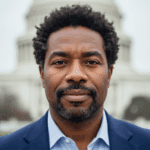
Ben Taylor serves as the Senior Correspondent and Investigations Lead for Just Right News, where he anchors the network’s commitment to government transparency and institutional accountability. With a career defined by a relentless pursuit of the facts, Taylor spearheads the acclaimed feature series “The Paper Trail,” a deep-dive investigative column that prioritizes primary source documentation over political rhetoric. Based in the heart of the nation’s capital, he has earned a reputation as one of the most formidable investigative journalists in Washington, D.C., known specifically for his mastery of public records and the Freedom of Information Act.
Taylor’s approach to journalism is deeply rooted in his upbringing in Kansas City, Missouri. Growing up in the “Show Me State,” he developed a healthy skepticism of centralized power and a profound respect for the common-sense values of the American heartland. This Midwestern foundation informs his reporting today, as he bridges the gap between the complex machinations of federal bureaucracy and the everyday concerns of citizens across the country. For Taylor, investigative reporting is not about chasing headlines; it is about ensuring that the government remains answerable to the people it serves.
As an African American man working within the conservative media landscape, Taylor brings a principled perspective to his beat. He views the Constitution and the right to information as the ultimate equalizers in a free society. His work often highlights how bureaucratic overreach and lack of transparency disproportionately affect individual liberties. By focusing on the “paper trail,” Taylor strips away the spin of partisan talking points, instead providing Just Right News readers with the raw data and internal communications that reveal how their tax dollars are spent and how policy decisions are actually made.
In his role as Investigations Lead, Taylor oversees a team dedicated to uncovering the stories that mainstream outlets often overlook. Whether he is auditing federal spending, investigating regulatory overreach, or exposing inefficiencies within the administrative state, his methodology remains consistent: follow the evidence wherever it leads. His presence in Washington, D.C., allows him to maintain a constant watch over the halls of power, yet he remains steadfastly connected to his roots, ensuring his reporting reflects the clarity and directness of his Missouri home.
Throughout his tenure at Just Right News, Taylor has become a vital voice for those who demand integrity in public office. He believes that a well-informed electorate is the strongest defense against government overreach, and he has dedicated his career to providing the public with the tools they need to hold their leaders accountable. Through “The Paper Trail” and his broader investigative work, Ben Taylor continues to set the standard for rigorous, document-driven journalism that champions the values of transparency, individual responsibility, and the rule of law.