

As Social Security adjustments struggle to keep pace with inflation, American retirees are increasingly migrating to low-cost Southern cities to preserve their financial independence and stretch fixed monthly benefits.
The American promise of a self-sufficient retirement is meeting a hard mathematical reality. For millions of seniors relying on Social Security as their primary lifeline, the margin between dignity and dependency has narrowed, forcing a strategic migration toward the Southern United States where the cost of living remains manageable. This shift comes amid significant market volatility, evidenced by SpaceX stock shedding more than $800 billion in value and closing below its IPO price for the first time on July 16, 2026. While high-level market fluctuations capture headlines, the quiet crisis for those on fixed incomes is defined by the price of rent and the adequacy of a monthly check.
Recent data indicates the average retired-worker benefit stood at approximately $2,084 per month in June 2026. While the 2.8% cost-of-living adjustment (COLA) implemented earlier this year provided a nominal increase of roughly $56 per month, much of that gain has been neutralized by rising Medicare premiums and energy costs. Projections for 2027 offer little additional relief, with The Senior Citizens League estimating a 3.8% adjustment that would raise the average check by just $73.62. For the veteran worker who spent decades in the labor force, these figures represent a rigid income ceiling that leaves little room for error.
For those over age 50 with less than $100,000 in personal savings, these figures are the boundaries of existence. The struggle is acute as U.S. retail consumer spending remained resilient in June 2026 despite gasoline price increases driven by Middle Eastern tensions. This resilience is supported by a stable labor market for those still in the workforce, but it creates a challenging environment for retirees whose income does not adjust in real-time. This disparity highlights a widening gap: while the economy shows strength in sectors like China-CEEC trade, which rose 11 percent in the first half of the year, those on fixed incomes find their purchasing power eroding.
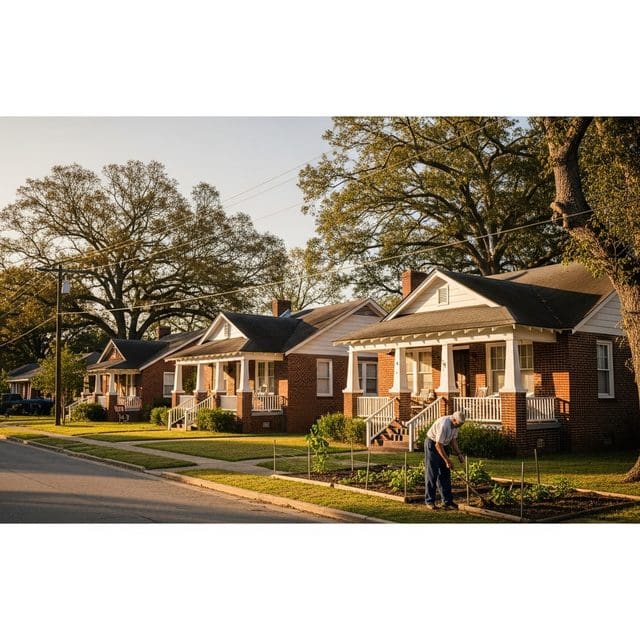
In response, a “low-rent Southern tier” has emerged as a critical safety valve. Analysis from July 2026 identifies nine Southern cities where median rents have held at or below $1,325 per month. In some regions, ultra-low-rent options under $1,225 are still available, providing a viable path for seniors to maintain a household without total reliance on state-level welfare programs. This geographic arbitrage allows individuals to leverage their earned benefits as a springboard for stability rather than a trap of poverty.
This trend underscores the restorative power of local market solutions over federal intervention. While top-down subsidies often struggle to account for regional price variations, the availability of affordable housing in the South allows retirees to stretch their benefits further. For a senior receiving the average $2,071 monthly benefit, a $1,300 rent payment represents a significant but manageable 62% of income, leaving room for essentials. Furthermore, recent judicial actions, such as the Ontario Superior Court awarding $170 million to mutual fund investors in a market timing class action, remind us that the protection of private assets remains a cornerstone of financial security.
However, the reliance on these low-cost hubs also points to a lack of preparation in the broader retirement system. With many households far behind traditional savings benchmarks, the social safety net is increasingly being defined by the geographic search for affordability. As the 2027 COLA outlook remains tight and global tensions persist, the ability of Southern housing markets to absorb this influx of fixed-income residents will be a defining factor in the nation’s effort to promote individual dignity through work-based retirement systems.

James Foster serves as the Senior Correspondent for Inequality and the Social Safety Net at Just Right News, where he brings a principled and nuanced perspective to the most pressing economic challenges facing the nation. With a career dedicated to exploring the intersection of policy and personal responsibility, Foster has become a leading voice in documenting how government programs and economic shifts impact the American family. His reporting is characterized by a commitment to the “human element,” moving beyond cold statistics to highlight the stories of resilience, work, and community that define the modern American experience.
Foster’s perspective is deeply rooted in his upbringing in Birmingham, Alabama. Growing up in a city with a rich industrial heritage and a history of economic transformation, he witnessed firsthand the importance of the dignity of work and the strength of local institutions. In Birmingham, he saw how the most effective safety nets were often those woven by neighbors, faith-based organizations, and local civic groups. This background instilled in him a lifelong skepticism of “one-size-fits-all” solutions from distant bureaucracies, favoring instead the localized, community-driven support systems that he frequently champions in his writing.
Now based in Atlanta, Georgia, Foster operates from one of the most dynamic and rapidly evolving metropolitan hubs in the South. His location provides a front-row seat to the stark contrasts of the modern economy. From the gleaming towers of Atlanta’s financial districts to the struggling neighborhoods on the city’s periphery, Foster finds the stories that illustrate the complexities of upward mobility. His reporting from the Sun Belt serves as a microcosm for the national debate on poverty, highlighting how inflation, housing costs, and labor market shifts affect the working class in real-time.
As the lead for the acclaimed feature series “America’s Balancing Act,” Foster explores the delicate tension between providing a necessary hand up and fostering long-term independence. The series has become a cornerstone of Just Right News, offering a deep dive into the unintended consequences of social welfare policies. Foster’s work often focuses on the “cliff effect” and other systemic hurdles that can inadvertently discourage employment, arguing that true compassion is measured by how many people are empowered to leave the safety net, rather than how many are added to it.
Throughout his tenure, Foster has remained dedicated to the mission of Just Right News, providing a clear-eyed, conservative analysis of social issues. He believes that a free society thrives when individuals are empowered and the private sector is allowed to innovate. Whether he is interviewing small business owners about the challenges of a changing workforce or documenting the success of private charitable initiatives, Foster’s goal is to provide readers with the truth about the state of the American Dream. His work serves as a vital reminder that while the challenges of inequality are great, the solutions are often found in the strength of the American spirit and the preservation of traditional values.