

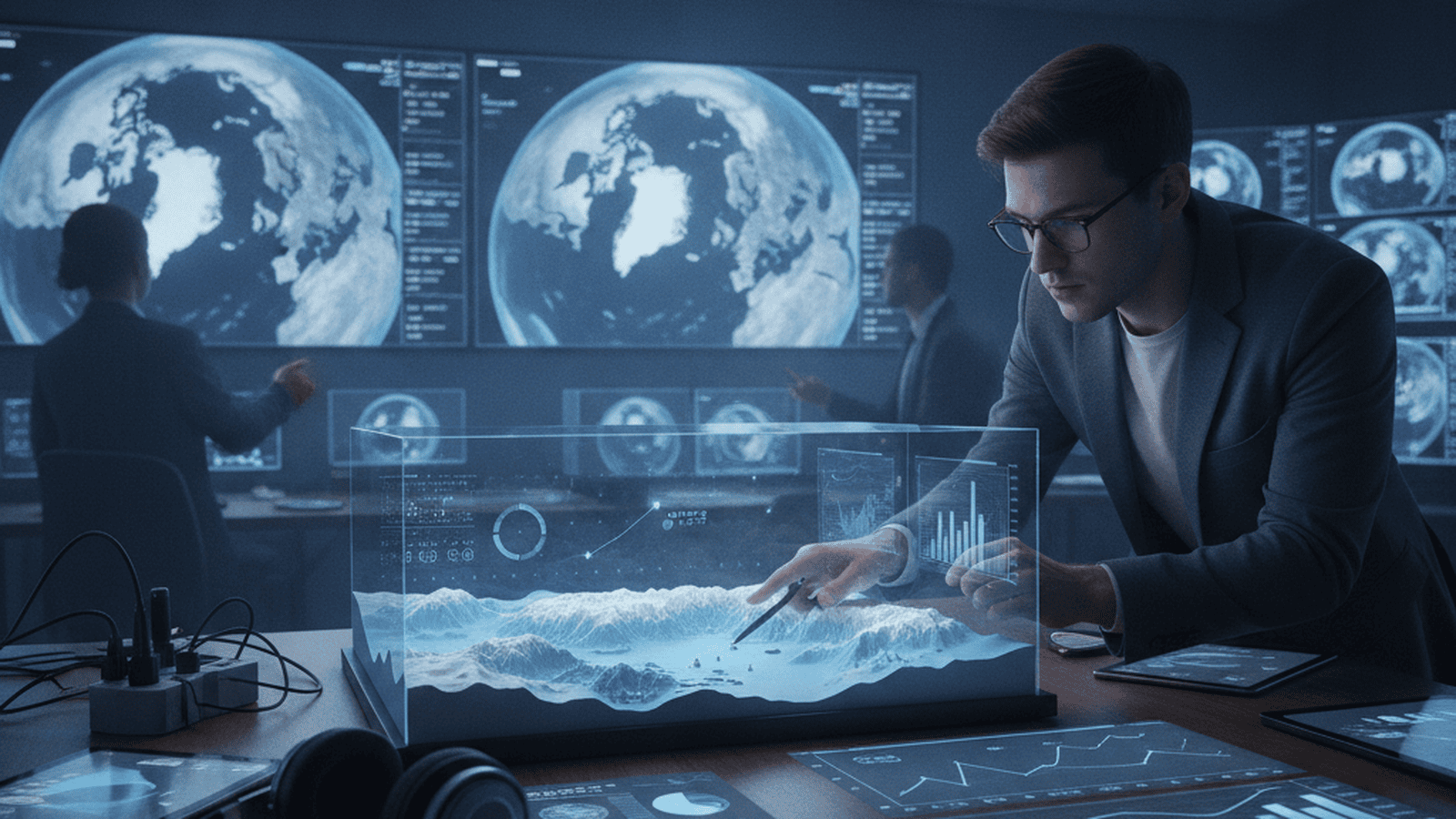
A study from the University of Colorado Boulder predicts the Arctic Ocean will experience its first ice-free day within the next decade. This shift, occurring much sooner than previous models suggested, highlights the accelerating impact of greenhouse gas emissions on polar ecosystems.
TLDR: New research indicates the Arctic could be virtually free of sea ice on a daily basis by the early 2030s. This transition will accelerate global warming through reduced albedo and fundamentally alter Arctic marine habitats and international shipping routes.
The Arctic Ocean could see its first ice-free day within the next decade, according to a new study from the University of Colorado Boulder. Published in the journal Nature Reviews Earth & Environment, the research suggests that this milestone could occur as early as the late 2020s or early 2030s, regardless of the greenhouse gas emission scenario followed by global society. This projection is significantly earlier than previous estimates, which typically focused on when the Arctic would be ice-free for an entire month or longer.
Alexandra Jahn, an associate professor of atmospheric and oceanic sciences and a researcher at the Institute of Arctic and Alpine Research, led the study. Her team analyzed existing literature and climate model simulations to understand how the Arctic sea ice might change on a daily basis. While previous research suggested the Arctic would be ice-free in the late summer by the mid-21st century, Jahn’s work highlights that the first individual day of ice-free conditions will arrive much sooner.
In the context of climate science, ice-free does not mean there is zero ice in the water. Instead, researchers define the Arctic as ice-free when the ocean has less than 1 million square kilometers of ice cover. This threshold represents less than 20% of the region’s seasonal minimum ice cover in the 1980s. At this level, the Arctic Ocean is considered to be predominantly open water, with the remaining ice fringing the coasts of Greenland and the Canadian Arctic Archipelago.
The transition to an ice-free Arctic is driven by the feedback loop known as the albedo effect. Sea ice is highly reflective, bouncing a significant portion of solar radiation back into space. As the ice melts, it exposes the dark ocean surface, which absorbs more heat. This absorption warms the water further, leading to more ice melt. The study indicates that even under low-emission scenarios, the Arctic will likely become ice-free in September by the 2040s or 2050s. Under high-emission pathways, the region could face ice-free conditions for several months a year by the end of the century.
The ecological consequences of this shift are profound. Many Arctic species, including polar bears, seals, and walruses, depend on sea ice for hunting, breeding, and resting. As the ice disappears, these animals are forced to travel longer distances or move to land, where they face increased competition for food and higher risks of human-wildlife conflict. Furthermore, the loss of sea ice allows for larger ocean waves to reach the coastline. This increased wave action accelerates erosion in Arctic coastal communities, threatening infrastructure and traditional ways of life for indigenous populations.
Beyond the local environment, an ice-free Arctic has global implications for weather and geopolitics. The warming of the Arctic can alter the jet stream, potentially leading to more frequent and severe weather events in mid-latitude regions, such as heatwaves or extreme winters. Economically, the opening of the Arctic presents new opportunities for international shipping and resource extraction. However, these activities bring additional risks of oil spills and environmental degradation in a fragile ecosystem.
The researchers emphasize that while the first ice-free day may be unavoidable, the future of the Arctic is not yet set in stone. The frequency and duration of ice-free periods in the latter half of the century will depend heavily on global efforts to reduce carbon emissions. By limiting warming to 1.5 degrees Celsius, the international community could prevent the Arctic from remaining ice-free for extended periods, preserving some of the critical functions of the polar environment.
Mark Davis serves as the Senior Correspondent for Energy, Climate, and Resource Economics at Just Right News. In an era where the conversation around the environment is often dominated by alarmism and top-down mandates, Mark provides a vital, market-oriented perspective on the complex forces shaping our world. As the lead voice behind the acclaimed feature series “Power and the Planet,” he explores the intersection of environmental policy, global energy markets, and the fundamental economic principles that sustain modern civilization.
Mark’s pragmatic approach to resource management was forged in the high desert of his hometown, Albuquerque, New Mexico. Growing up in a region defined by both its breathtaking natural beauty and its rugged, resource-dependent landscape, he developed an early appreciation for the delicate balance between conservation and utilization. New Mexico’s unique position as a hub for both traditional energy production and cutting-edge scientific research provided Mark with a front-row seat to the evolution of the American energy sector. This upbringing instilled in him a deep-seated belief that true environmental stewardship is inseparable from economic prosperity and technological innovation.
Now based in Boulder, Colorado, Mark operates from the heart of the nation’s climate research community. While Boulder is often seen as a bastion of environmental idealism, Mark utilizes his post to provide a necessary counterweight, grounded in the realities of resource economics. He understands that energy policy does not exist in a vacuum; it has tangible consequences for the American taxpayer, the stability of the national power grid, and the strength of the domestic manufacturing sector. By reporting from the front lines of the climate debate, he is able to challenge prevailing narratives with hard data and a commitment to the principles of the free market.
Throughout his tenure at Just Right News, Mark has distinguished himself by focusing on the “Resource Economics” aspect of his beat. He frequently highlights the hidden costs of rapid energy transitions and advocates for an “all-of-the-above” energy strategy that prioritizes American energy independence. His work often shines a light on the geopolitical implications of resource scarcity, arguing that a secure nation must first be an energy-secure nation. Whether he is analyzing the impact of federal land-use regulations or investigating the supply chains required for new technologies, Mark remains focused on how policy decisions affect the lives and livelihoods of everyday citizens.
In “Power and the Planet,” Mark continues to bridge the gap between complex scientific concepts and the economic realities facing the country. He rejects the false choice between a healthy environment and a thriving economy, instead seeking out solutions that leverage American ingenuity and private-sector competition. For Mark, reporting on the climate is not about following the latest trends, but about ensuring that the conversation remains tethered to the foundational values of liberty, property rights, and fiscal responsibility. His contributions ensure that Just Right News readers receive a comprehensive, clear-eyed view of the challenges and opportunities defining the future of our planet.