

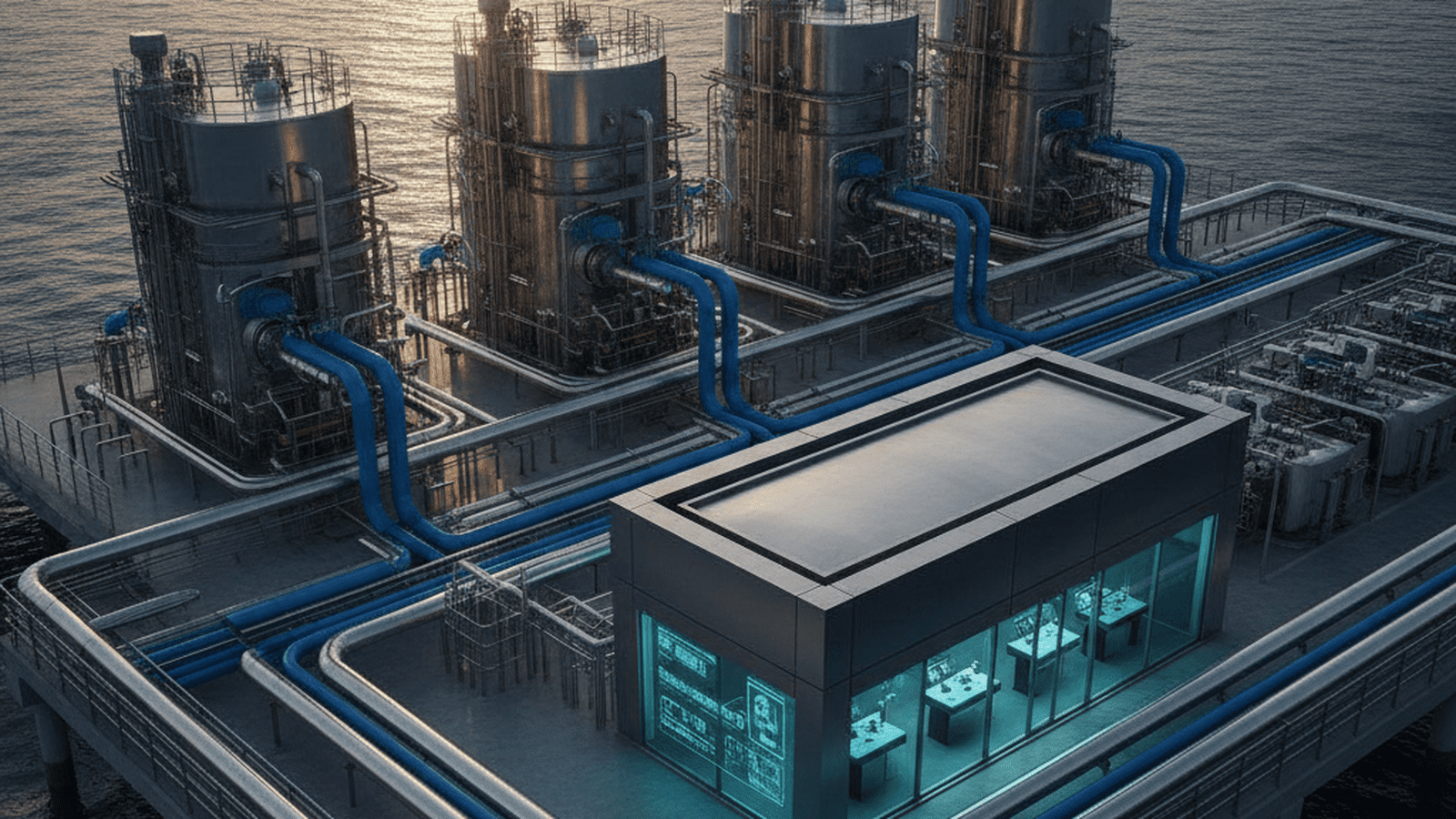
Researchers at Equatic have successfully demonstrated a seawater electrolysis process that simultaneously extracts carbon dioxide and produces green hydrogen. The technology mineralizes dissolved CO2 into stable carbonates, offering a permanent sequestration solution while generating clean energy for industrial use.
TLDR: A private-sector breakthrough in seawater electrolysis allows for the simultaneous removal of atmospheric carbon dioxide and the production of carbon-negative hydrogen. By converting dissolved CO2 into solid minerals, the process provides a permanent storage solution that leverages the ocean’s natural chemistry to combat climate change at scale.
The global effort to mitigate climate change has reached a critical juncture where reducing emissions alone is no longer sufficient. Scientists and private-sector innovators are increasingly focusing on carbon dioxide removal technologies to extract existing greenhouse gases from the atmosphere and oceans. A significant breakthrough in this field has emerged from Equatic, a startup utilizing seawater electrolysis to achieve two goals simultaneously: permanent carbon sequestration and the production of green hydrogen. This dual-purpose approach addresses the economic hurdles that have historically slowed the adoption of carbon capture systems.
The process leverages the natural capacity of the world’s oceans to act as a massive carbon sink. Seawater contains dissolved carbon dioxide in the form of bicarbonates, which are part of a complex equilibrium with the atmosphere. By passing an electrical current through the water, the Equatic technology triggers a series of chemical reactions that split water molecules and shift the local pH balance. This shift causes dissolved calcium and magnesium to react with the CO2, precipitating into solid mineral carbonates, such as calcium carbonate, which is the primary component of seashells.
This mineralization process is particularly significant because it offers a permanent storage solution. Unlike gaseous carbon storage, which carries the risk of leakage from underground reservoirs, solid minerals remain stable for thousands of years. The resulting solids can be returned to the ocean, where they help neutralize ocean acidity, or repurposed for use in the construction industry as a carbon-negative building material. This circular approach addresses both atmospheric warming and the ecological threat of ocean acidification caused by rising CO2 levels.
Beyond carbon removal, the electrolysis process generates high-purity hydrogen gas at the cathode. Hydrogen is a versatile energy carrier essential for decarbonizing heavy industries like steel manufacturing and long-haul shipping. By producing hydrogen as a byproduct of carbon removal, the technology significantly improves the economic profile of carbon dioxide removal. Traditional direct air capture methods often require immense energy inputs without producing a secondary commodity, making them difficult to scale without heavy government subsidies.
Operational data from pilot plants in Los Angeles and Singapore have demonstrated the efficiency of the system under real-world conditions. These facilities have successfully measured the precise amount of carbon removed per kilowatt-hour of energy consumed, providing a transparent metric for carbon credits. The modular design of the electrolytic cells allows for rapid scaling, with plans already underway for a commercial-scale plant capable of removing over 100,000 metric tons of CO2 annually. This facility, dubbed Equatic-1, represents a major step toward the gigaton-scale removal required to meet international climate targets.
The integration of this technology into existing coastal infrastructure, such as desalination plants or power stations, could further reduce capital expenditures. By utilizing existing seawater intake and discharge systems, operators can minimize environmental disruption while maximizing carbon throughput. Researchers are currently optimizing the electrode materials to increase the lifespan of the cells and reduce the need for expensive rare-earth metals. These refinements are expected to drive down the cost of carbon removal to below one hundred dollars per ton.
Future research will focus on the long-term environmental impact of returning mineralized carbonates to the seafloor on a massive scale. While initial studies suggest a beneficial buffering effect against acidity, large-scale deployment will require rigorous monitoring of local marine ecosystems to ensure biodiversity is preserved. As the private sector continues to refine these electrochemical processes, the combination of energy production and atmospheric restoration may become a cornerstone of the global transition to a net-zero economy.

Mark Davis serves as the Senior Correspondent for Energy, Climate, and Resource Economics at Just Right News. In an era where the conversation around the environment is often dominated by alarmism and top-down mandates, Mark provides a vital, market-oriented perspective on the complex forces shaping our world. As the lead voice behind the acclaimed feature series “Power and the Planet,” he explores the intersection of environmental policy, global energy markets, and the fundamental economic principles that sustain modern civilization.
Mark’s pragmatic approach to resource management was forged in the high desert of his hometown, Albuquerque, New Mexico. Growing up in a region defined by both its breathtaking natural beauty and its rugged, resource-dependent landscape, he developed an early appreciation for the delicate balance between conservation and utilization. New Mexico’s unique position as a hub for both traditional energy production and cutting-edge scientific research provided Mark with a front-row seat to the evolution of the American energy sector. This upbringing instilled in him a deep-seated belief that true environmental stewardship is inseparable from economic prosperity and technological innovation.
Now based in Boulder, Colorado, Mark operates from the heart of the nation’s climate research community. While Boulder is often seen as a bastion of environmental idealism, Mark utilizes his post to provide a necessary counterweight, grounded in the realities of resource economics. He understands that energy policy does not exist in a vacuum; it has tangible consequences for the American taxpayer, the stability of the national power grid, and the strength of the domestic manufacturing sector. By reporting from the front lines of the climate debate, he is able to challenge prevailing narratives with hard data and a commitment to the principles of the free market.
Throughout his tenure at Just Right News, Mark has distinguished himself by focusing on the “Resource Economics” aspect of his beat. He frequently highlights the hidden costs of rapid energy transitions and advocates for an “all-of-the-above” energy strategy that prioritizes American energy independence. His work often shines a light on the geopolitical implications of resource scarcity, arguing that a secure nation must first be an energy-secure nation. Whether he is analyzing the impact of federal land-use regulations or investigating the supply chains required for new technologies, Mark remains focused on how policy decisions affect the lives and livelihoods of everyday citizens.
In “Power and the Planet,” Mark continues to bridge the gap between complex scientific concepts and the economic realities facing the country. He rejects the false choice between a healthy environment and a thriving economy, instead seeking out solutions that leverage American ingenuity and private-sector competition. For Mark, reporting on the climate is not about following the latest trends, but about ensuring that the conversation remains tethered to the foundational values of liberty, property rights, and fiscal responsibility. His contributions ensure that Just Right News readers receive a comprehensive, clear-eyed view of the challenges and opportunities defining the future of our planet.