

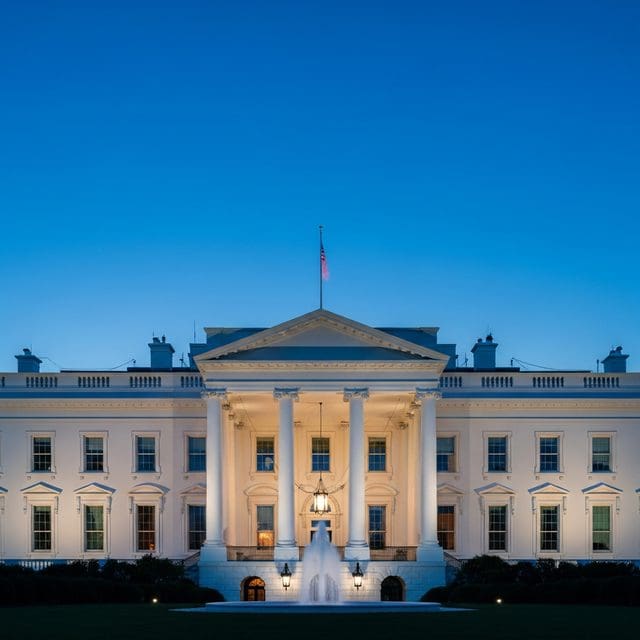
President Trump signed directives targeting birthright citizenship and birth tourism while locking in aggressive polysilicon tariffs, signaling a significant expansion of executive authority over immigration and trade.
President Trump signed two executive orders this week aimed at fundamentally restricting the scope of birthright citizenship, a move that directly challenges the prevailing interpretation of the 14th Amendment and recent judicial precedent. The first order seeks to expand the categories of individuals ineligible for automatic U.S. citizenship at birth, specifically targeting children born to foreign diplomats, designated alien enemies, members of foreign terrorist organizations, and parents who have committed immigration or citizenship fraud. According to administration briefings, the White House is also exploring the application of these restrictions to certain U.S. territories in future rulemakings, further testing the geographic limits of executive authority.
The second order directs the Department of State and the Department of Homeland Security to implement a ban on birth tourism. This directive requires consular officers to tighten visa screenings for pregnant visitors and crack down on commercial facilitators, including those marketing surrogacy services to secure U.S. citizenship. These actions follow a July Supreme Court ruling that struck down a broader attempt to curtail birthright citizenship. By framing these new orders as a narrower work-around, the White House is inviting a fresh legal test. Civil rights organizations, including the ACLU and the National Immigration Law Center, have already signaled intent to file immediate lawsuits, arguing the orders defy constitutional mandates. Legal experts suggest the directives are almost certain to be enjoined before their scheduled implementation.
On the trade front, the administration has locked in a new industrial policy through a presidential proclamation establishing minimum import prices and tariffs on solar-grade polysilicon and derivative products. Effective December 4, 2026, the administration will enforce a minimum price of $21 per kilogram for polysilicon, $100 per kilogram for ingots and wafers, and specific rates for solar cells and modules. An additional 15% tariff will apply to covered downstream products. The Department of Commerce is further authorized to create an incentive program for companies building or expanding U.S. facilities, a move the administration explicitly ties to securing semiconductor supply chains and reducing dependence on Chinese imports. This 120-day implementation window gives the domestic industry a brief period to adjust to the new pricing floors.
In foreign affairs, the President addressed the ongoing blockade of the Strait of Hormuz, currently overseen by the U.S. Navy. While denying reports of a precision-munition shortage following the five-month Iran war, the President confirmed he is personally involved in negotiations to reopen the vital shipping lane. Despite his public insistence that the U.S. is “chock-full of munitions,” the White House has submitted a supplemental funding request to Congress to bolster strategic leverage during these talks. Trump noted that while a deal is not yet finalized, it could be reached soon as the U.S. maintains control over the blockade, which he described as a “thing headed up by the U.S. Navy.”
Domestically, the administration continues to pressure Congress on the Protect College Sports Act, though specific legislative progress remains stalled. This executive activity coincides with other significant federal developments, including the Senate’s narrow 51-44 confirmation of Dr. Erica Schwartz as CDC Director and the Senate Commerce Committee’s unanimous advancement of the Kids Online Safety Act (KOSA). As the executive branch moves to redefine citizenship and trade boundaries through unilateral action, the focus now shifts to the federal courts and the halls of Congress, where the durability of these policies will be tested against constitutional and statutory limits. The administration’s aggressive posture on birthright citizenship, in particular, signals a willingness to revisit settled law in pursuit of a broader immigration agenda.

Miles Harrington serves as the Senior Correspondent for Federal Systems & Executive Power at Just Right News, where he brings a disciplined, constitutionalist lens to the inner workings of the American government. With a focus on the mechanics of the federal bureaucracy and the limits of executive authority, Harrington has established himself as a vital voice for readers who value transparency, accountability, and the preservation of the separation of powers.
A native of Richmond, Virginia, Harrington’s perspective is deeply rooted in the traditions of the Old Dominion. Growing up in a city defined by its historical significance and its role as a center of American jurisprudence, he developed an early appreciation for the foundational principles of the Republic. His upbringing in Richmond—a place where the legacy of the Founding Fathers is woven into the landscape—instilled in him a belief that the federal government should remain within its constitutional bounds. This background informs his skepticism of centralized overreach and his commitment to reporting on the ways in which the administrative state impacts the lives of everyday citizens.
In his current role, Harrington specializes in the complexities of federal systems. He doesn’t just report on the headlines of the day; he digs into the structural shifts within the executive branch that often go unnoticed by the mainstream press. Whether he is analyzing the implications of a new federal regulation or investigating the expansion of agency jurisdiction, his work is characterized by a rigorous adherence to the facts and a dedication to the rule of law.
Harrington is perhaps best known for his signature feature series, “How Washington Works.” Through this ongoing project, he demystifies the often-opaque processes of the nation’s capital, pulling back the curtain on the “Deep State” and the unelected officials who wield significant influence over national policy. By breaking down complex legislative maneuvers and executive orders, he empowers Just Right News readers to understand the true levers of power in Washington. His reporting serves as a necessary check on the federal government, ensuring that the actions of those in power are held up to the light of public scrutiny.
Now based in Washington, D.C., Harrington operates at the epicenter of the political world, yet he remains intentionally distanced from the “Beltway bubble.” His proximity to the halls of power allows him to maintain a robust network of sources across the federal landscape, but his heart remains in the principled conservatism of his Virginia roots. He views his role not merely as a reporter, but as a steward of the public trust, dedicated to providing the clarity and context that conservative voters need to navigate an increasingly complex political environment.
Through his sharp analysis and unwavering commitment to the truth, Miles Harrington continues to be a cornerstone of the Just Right News team. His work ensures that the principles of limited government and executive restraint remain at the forefront of the national conversation, providing a crucial service to those who believe in a government that is truly of, by, and for the people.