

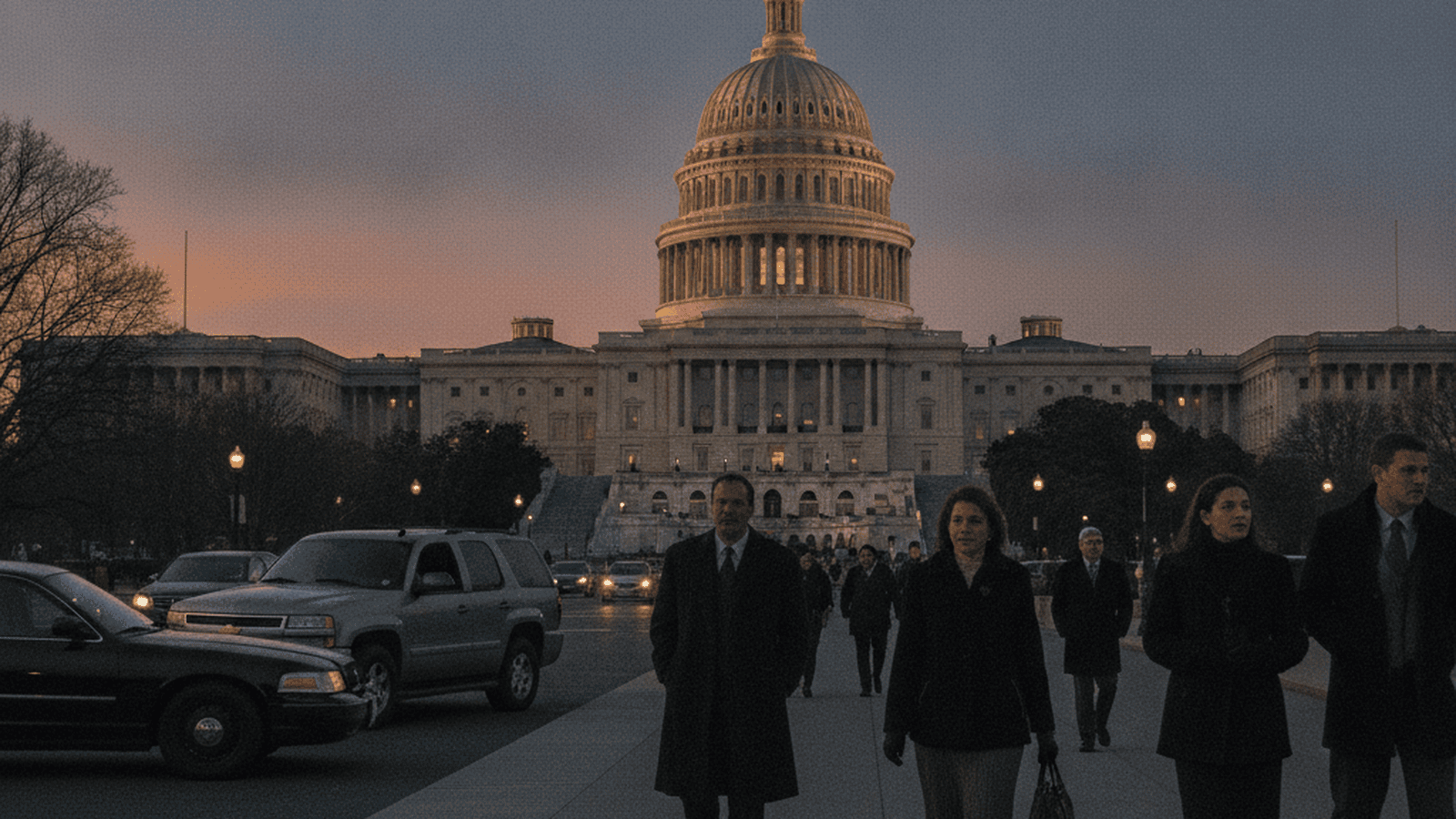
In 2008, the United States House of Representatives established the Office of Congressional Ethics to provide independent oversight of member conduct. This move followed a series of high-profile corruption scandals that undermined public trust in the federal government’s ability to police itself.
TLDR: Following several mid-2000s scandals, the U.S. House created the Office of Congressional Ethics in 2008. As the first independent investigative body in the legislature, it bypassed the traditional members-only ethics process. Despite frequent attempts by lawmakers to dismantle it, the office remains a key fixture in federal anti-corruption efforts.
The mid-2000s represented a period of significant ethical turbulence within the United States federal government. A series of high-profile criminal investigations involving members of Congress, most notably the conviction of Representative Duke Cunningham for bribery and the investigation into Representative Bob Ney, had severely eroded public confidence. By 2006, the concept of ethics reform became a central campaign theme, leading to a shift in House leadership. The incoming majority faced immediate pressure to prove that the era of self-policing—often criticized as a protective “buddy system”—was over.
Historically, the House Committee on Standards of Official Conduct, commonly known as the Ethics Committee, held exclusive jurisdiction over member behavior. Because the committee consisted entirely of sitting representatives, it was frequently deadlocked by partisan loyalty or a mutual desire to avoid setting precedents that could be used against any member. Critics argued that the committee only acted when a member was already under federal indictment, failing to serve as a proactive deterrent against smaller-scale influence peddling or rule-breaking. This lack of transparency created a vacuum in legislative accountability.
In early 2007, Speaker of the House Nancy Pelosi appointed a task force, chaired by Representative Michael Capuano of Massachusetts, to propose a new model for ethics enforcement. The task force envisioned an independent entity composed of private citizens, not politicians, who would have the authority to initiate reviews of alleged misconduct. This proposal met with fierce resistance from both sides of the aisle. Opponents argued that an outside body would violate the constitutional right of the House to govern its own members and could be weaponized for political purposes during election cycles.
Despite the internal pushback, the momentum for reform proved too strong to ignore. On March 11, 2008, the House debated House Resolution 895. The debate was contentious, reflecting deep-seated anxieties about the loss of legislative autonomy. Proponents argued that without an independent gatekeeper to filter and investigate complaints, the House would never regain the trust of the American electorate. They emphasized that the new office would not have the power to punish members but would instead make recommendations to the formal Ethics Committee.
The resolution passed with a vote of 229 to 182, officially establishing the Office of Congressional Ethics (OCE). The OCE was structured as a non-partisan, independent board consisting of eight members, none of whom could be current members of Congress or federal employees. Its primary function was to conduct preliminary reviews of allegations against House members and staff. If the board found substantial reason to believe a violation occurred, it would refer the matter to the Ethics Committee with a recommendation for further action.
One of the most significant features of the OCE was its transparency mandate. Unlike the Ethics Committee, which often conducted its business behind closed doors, the OCE was required to make its reports and findings public if the Ethics Committee failed to act within a specific timeframe. This mechanism ensured that investigations could not simply be buried by partisan maneuvers. It forced the formal committee to either take up the case or explain why they were dismissing a recommendation from the independent board.
Since its inception, the OCE has faced numerous challenges to its existence. In 2017 and again in 2023, various factions within the House attempted to strip the office of its independence or drastically reduce its budget. However, each attempt was met with significant public outcry, forcing leadership to retreat. The office has successfully investigated dozens of cases involving insider trading, improper use of campaign funds, and undisclosed gifts. By providing a layer of independent scrutiny, the OCE has fundamentally altered the culture of accountability within the United States legislative branch.

Sophie Carter serves as a Staff Writer for Just Right News, where she anchors the outlet’s critical coverage of Elections, Influence, and Democracy Infrastructure. In an era where the mechanics of voting and the flow of political capital are under constant scrutiny, Sophie provides a steady, principled voice dedicated to the preservation of American institutional integrity and the rule of law.
Raised in Charlotte, North Carolina, Sophie’s perspective was forged in a community that balances rapid modern growth with a deep respect for tradition and civic duty. Growing up in the Queen City, she witnessed firsthand how a robust local culture depends on the trust between the citizen and the state. This upbringing instilled in her a foundational belief that the right to vote is a sacred trust—one that must be protected from both administrative overreach and the encroaching influence of special interest groups. Her reporting reflects these North Carolina roots, emphasizing the importance of community-led governance and the preservation of the individual’s voice in the face of nationalized political movements.
Now based in Atlanta, Georgia, Sophie operates from the heart of one of the nation’s most pivotal and contested political landscapes. Her location allows her to report from the front lines of the debate over election security, legislative reform, and the modernization of voting systems. For Sophie, the “infrastructure” of democracy is not merely a matter of machines and ballots; it is the collection of laws, people, and transparent processes required to maintain public confidence. Her work often highlights the necessity of clear, enforceable standards that ensure every legal vote is counted fairly and that the machinery of our republic remains accountable to the taxpayers who fund it.
Central to her work at Just Right News is her acclaimed feature series, “The Price of a Vote.” Through this ongoing project, Sophie explores the complex web of influence that shapes modern campaigns and policy decisions. She delves into how high-level lobbying, non-governmental organizations, and shifting bureaucratic regulations impact the weight of an individual citizen’s ballot. By examining the financial and structural pressures placed on the electoral process, she provides readers with a comprehensive look at the forces vying for control over the American political system.
Sophie’s approach to journalism is rooted in a commitment to the constitutional framework. She views her role as a watchdog for the voter, ensuring that the systems meant to serve the public remain transparent and free from corruption. Whether she is analyzing the implementation of new voting technologies or investigating the influence of outside money on state-level policy, her work is characterized by a rigorous adherence to facts and a refusal to succumb to the sensationalism that often plagues modern political reporting.
At Just Right News, Sophie Carter continues to be a vital resource for readers who value clarity, conviction, and a defense of traditional American values. Her deep ties to the Southeast and her specialized focus on the mechanics of our republic make her an essential voice in the ongoing conversation about the future of American self-governance. Through her reporting, she remains dedicated to the idea that a secure and honest electoral system is the bedrock of a free and prosperous society.