

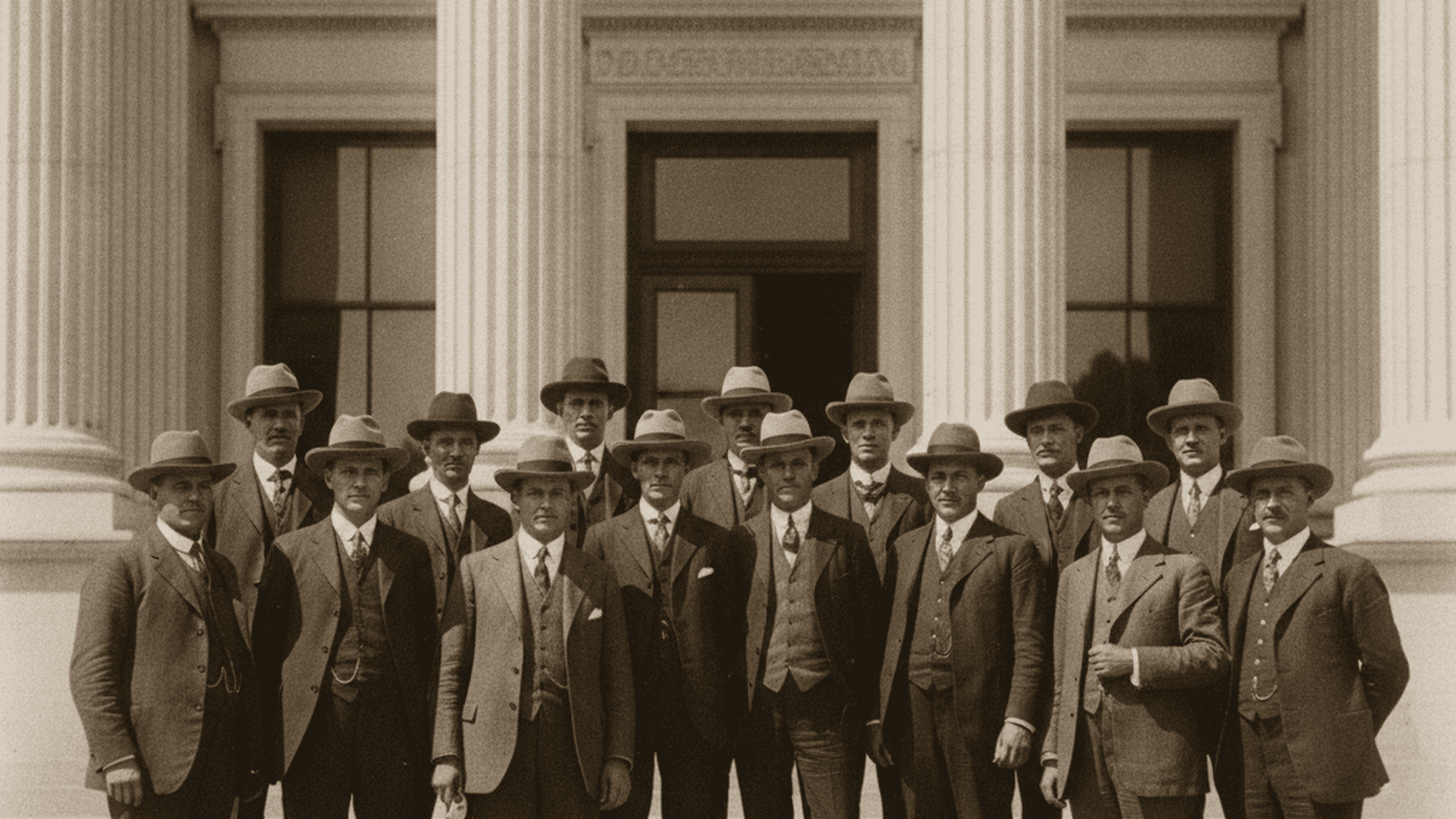
In 1913, California passed the Webb-Haney Act, a landmark piece of legislation that prohibited Japanese immigrants from owning agricultural land. This event highlighted the tension between state-level discriminatory policies and federal foreign relations in the United States during the Progressive Era.
TLDR: California’s 1913 Alien Land Law targeted Japanese immigrants by banning land ownership for those “ineligible for citizenship.” Despite federal pressure from the Wilson administration to avoid a diplomatic rift with Japan, Governor Hiram Johnson signed the bill. The law sparked decades of legal battles over property rights and racial discrimination.
The California Alien Land Law of 1913 represented a pivotal moment where state-level xenophobia collided with federal foreign policy. During the early 20th century, Japanese immigrants had become highly successful in California’s agricultural sector, particularly in the Central Valley and Los Angeles County. Their efficiency in intensive farming techniques allowed them to dominate the production of strawberries, potatoes, and flowers. This economic success triggered a backlash from white farmers and labor organizations, who organized under the banner of the Asiatic Exclusion League to demand restrictive legislation. The political momentum for the bill was fueled by rhetoric that characterized Asian immigration as an existential threat to the American way of life.
Proponents of the Webb-Haney Act argued that the law was necessary to preserve the state’s soil for those who could fully participate in the American democratic process. Because the Naturalization Act of 1870 restricted citizenship to white persons and those of African descent, the phrase “aliens ineligible for citizenship” became a legal euphemism used to target Japanese and other Asian immigrants without explicitly violating the Fourteenth Amendment’s equal protection clause. This phrasing allowed the state to bypass direct racial naming while achieving the same discriminatory result. The law prohibited these individuals from owning agricultural land or entering into lease agreements longer than three years.
In Washington, D.C., the Wilson administration was deeply concerned about the international implications. Japan was a rising naval power and a key partner in the Pacific. The Japanese government formally protested the bill, arguing it violated the Treaty of Commerce and Navigation of 1911. President Woodrow Wilson, recognizing the constitutional limits of federal power over state land laws, attempted a diplomatic solution. He sent Secretary of State William Jennings Bryan to Sacramento in April 1913. Bryan spent several days meeting with legislators, pleading for a more moderate approach that would not humiliate a foreign ally.
However, the California legislature, led by Progressive Republicans and supported by many Democrats, remained defiant. They viewed the federal intervention as an infringement on state sovereignty. Governor Hiram Johnson, who was eyeing a national political career, saw the bill as a popular domestic issue that solidified his base. On May 19, 1913, the act passed with overwhelming majorities in both the State Assembly and the State Senate. Johnson signed the bill into law shortly thereafter, dismissing the federal government’s concerns as secondary to the protection of California’s white labor interests.
The immediate impact on the Japanese community was profound but did not result in the total economic collapse the bill’s proponents intended. Immigrant farmers utilized Nisei children—those born in the United States and thus citizens—to hold land titles. Others entered into complex sharecropping arrangements or formed land-holding corporations. These evasions prompted the state to pass an even stricter version of the law via a 1920 ballot initiative, which closed the corporate loophole and prohibited the leasing of land entirely.
The legacy of the 1913 Alien Land Law extended far beyond the agricultural fields of California. It set a precedent for similar discriminatory laws in other Western states, including Washington, Oregon, and Arizona. These statutes contributed to a legal and social environment that facilitated the forced removal and incarceration of Japanese Americans during World War II. The eventual dismantling of the law began in 1948 with the United States Supreme Court case Oyama v. California, which protected the rights of citizen children to receive land from their parents. Finally, in 1952, the California Supreme Court ruled in Sei Fujii v. California that the law violated the Fourteenth Amendment, ending nearly four decades of state-sanctioned land discrimination.

Julie Harris serves as a Staff Writer for Just Right News, where she tackles some of the most pressing and complex issues facing the nation today. As the lead reporter for the Migration, Demographics & Cultural Shifts beat, Julie provides a grounded, principled perspective on how the movement of people and the changing makeup of communities are reshaping the American landscape. Her work is defined by a commitment to exploring the long-term consequences of social change, prioritizing the stability of local institutions and the preservation of national identity.
Her deep understanding of these issues is rooted in her upbringing in Tucson, Arizona. Growing up in a prominent border state, Julie witnessed firsthand the intricate realities of migration and the profound impact it has on local infrastructure, law enforcement, and the social fabric. This early exposure instilled in her a respect for the rule of law and a keen awareness of the challenges that arise when federal policies fail to align with the needs of border communities. Her reporting often reflects this lived experience, bringing a necessary level of nuance to topics that are often treated with abstraction in coastal newsrooms.
Now based in Santa Fe, New Mexico, Julie continues to report from the heart of the American Southwest. Her location provides a unique vantage point to observe the intersection of traditional regional cultures and the modern shifts brought about by both internal and external migration. In Santa Fe, a city defined by its rich history and distinct cultural heritage, she finds a perfect environment to explore how communities strive to maintain their character while navigating the pressures of a rapidly changing world. This perspective allows her to bridge the gap between policy debates in Washington and the reality of life in the high desert.
At Just Right News, Julie’s work is characterized by a dedication to examining the data and the human stories that define the “New Mosaic” of America. Her signature feature series, “The New Mosaic,” has become a cornerstone of her reporting. Through this series, Julie explores the evolving social architecture of the United States, documenting how shifts in population affect everything from local economies to the political landscape. She brings a critical eye to the narrative of demographic inevitability, instead asking how these shifts impact the average citizen’s sense of belonging and the integrity of the American social contract.
Julie’s background and her dedication to conservative principles make her a vital voice in contemporary journalism. She understands that demographics are more than just numbers on a spreadsheet; they represent the future of the American family and the nation’s enduring legacy. Through her diligent reporting and insightful analysis, Julie Harris ensures that her readers are informed about the forces shaping their world, providing a perspective that is as thoughtful as it is necessary for the modern era.