

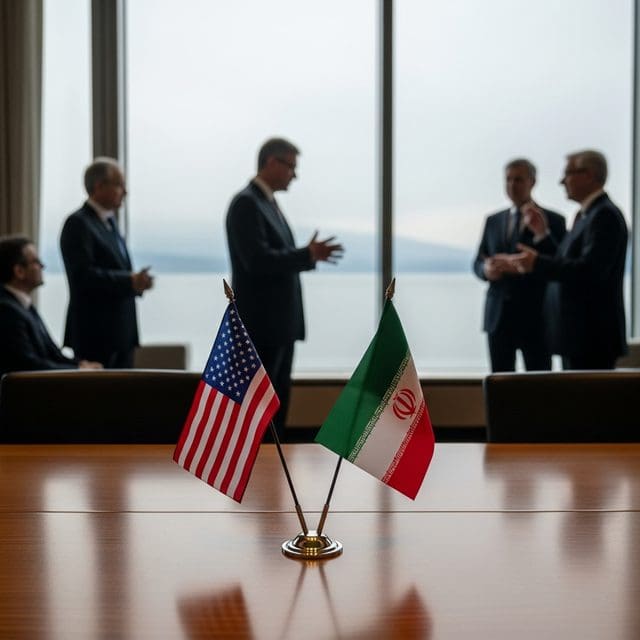
The Trump administration pursues a delicate diplomatic opening with Tehran, balancing falling energy prices and regional friction with the UAE while China secures a primary role in the emerging Iranian oil market.
The Trump administration is moving to solidify a fragile peace with Iran following the signing of a memorandum of understanding on June 18, 2026. The agreement has already yielded immediate domestic results, with U.S. gas prices dropping below the $4 mark for the first time since March. However, the geopolitical cost of the conflict and the subsequent peace process is manifesting in shifted alliances and increased Chinese influence. To facilitate this transition, the Pentagon requested approximately $80 billion from Congress on June 23 to cover the immediate costs of the Iran war, even as the administration pivots toward a diplomatic resolution.
While the financial burden remains a point of contention in Washington, the focus has shifted to Switzerland. Technical talks moderated by Pakistan are scheduled for next week to address unresolved issues including enriched uranium stockpiles and the sequencing of sanctions relief. Central to these negotiations is a proposal for the International Atomic Energy Agency to gain short-notice access to suspected Iranian sites. President Trump stated on June 23 that UN nuclear inspectors will enter at the appropriate time, emphasizing a “no rush” approach. Tehran, however, maintains that access to facilities damaged during the war will only be resolved in a final deal.
The regional fallout has created friction with traditional American partners. Officials in the United Arab Emirates have expressed frustration, suggesting they were misled regarding the duration and economic impact of the conflict. With Dubai’s trade and tourism sectors suffering, Emirati leadership has warned of a long-term chill in intelligence and basing cooperation. This tension highlights the realist trade-offs of the administration’s policy: while the memorandum has successfully opened a 60-day window of suspended oil sanctions, it has simultaneously rattled the confidence of Gulf states who feel the brunt of regional instability.
In the vacuum created by the shifting sanctions landscape, Beijing has positioned itself as the primary stakeholder in Iran’s economic recovery. Under the current suspension, approximately 67 million barrels of Iranian crude are being freed, with Chinese refineries serving as the primary buyers. This development reinforces China’s energy leverage at a time when U.S.-China tensions remain high over defense and cybersecurity policy. Furthermore, Tehran claims that up to $12 billion in frozen assets are being released, a move that would provide a significant liquidity injection to the Iranian economy and cement China’s role as a vital trading partner.
Simultaneously, the administration is facilitating a “pilot” scheme between Israel and Lebanon. This U.S.-backed initiative involves the potential handover of seized territory to vetted Lebanese army units in exchange for a durable ceasefire. Iran has signaled that a withdrawal from Lebanon is a prerequisite for a broader settlement with Washington, leading to the creation of a joint de-confliction cell. This track is explicitly linked to the broader U.S.-Iran negotiations, showing how the administration is using the Iranian memorandum as a lever to stabilize multiple fronts.
As the administration balances these moving parts, it also faces broader international shifts. On June 23, Niger submitted a letter to the United Nations triggering its withdrawal from the International Criminal Court, signaling a trend of nations distancing themselves from international judicial bodies. Domestically, the federal appeals court recently allowed the resumption of expanded expedited removal deportations. The success of the Iran track now depends on whether new coordination mechanisms—including dedicated de-confliction lines for the Strait of Hormuz—can translate the interim memorandum into a permanent strategic framework without further alienating Gulf allies.

Olivia Kendall serves as the Senior Correspondent for Geopolitics, Defense, and Foreign Policy at Just Right News, where she provides a principled, conservative perspective on the complex forces shaping the global stage. With a career dedicated to deconstructing the intricacies of international relations, Kendall has become a trusted voice for readers who value national sovereignty, a robust military, and a foreign policy that prioritizes American interests above all else.
A native of Washington, D.C., Kendall’s professional journey is deeply rooted in her upbringing within the nation’s capital. Growing up in the epicenter of American political life, she developed an early and profound understanding of how policy is crafted and, more importantly, how it often fails to account for the values of the American heartland. This unique vantage point allowed her to witness firsthand the rise of globalist bureaucracies, fueling her commitment to reporting that champions the constitutional foundations of the United States. Her background as a British White American further informs her worldview, providing her with a keen appreciation for the Western tradition and the enduring importance of the “Special Relationship” in maintaining global stability.
Now based in Arlington, Virginia, Kendall operates from the doorstep of the Pentagon and the heart of the nation’s defense establishment. Her proximity to the decision-makers in the military and intelligence communities allows her to provide boots-on-the-ground reporting that is both timely and deeply informed. For Kendall, Arlington is more than just a base of operations; it is a daily reminder of the sacrifices made by the men and women in uniform. This connection to the defense community drives her rigorous coverage of military readiness and her advocacy for a “peace through strength” approach to diplomacy.
At Just Right News, Kendall is perhaps best known for her acclaimed feature series, “The World’s Shadow on America.” In this ongoing project, she explores the direct correlation between international developments and the daily lives of American citizens. Whether she is analyzing the encroachment of foreign adversaries in domestic supply chains or the impact of international treaties on local economies, Kendall’s work serves as a vital bridge between distant geopolitical shifts and their consequences at home. She rejects the notion that foreign policy is an abstract concern for elites, instead proving that what happens in the corridors of power in Brussels or Beijing has a tangible “shadow” that falls across every American doorstep.
Throughout her tenure, Kendall has remained a steadfast critic of international overreach and a vocal proponent of a clear-eyed, realistic foreign policy. She brings a sharp analytical mind to her beat, often challenging the prevailing narratives of the mainstream media to uncover the underlying truths that affect national security. Her reporting is characterized by a refusal to compromise on the truth and a dedication to the idea that a strong, secure America is the world’s best hope for liberty. As a Senior Correspondent, Olivia Kendall continues to lead the charge in providing the essential context and conservative insight necessary to navigate an increasingly volatile world.