

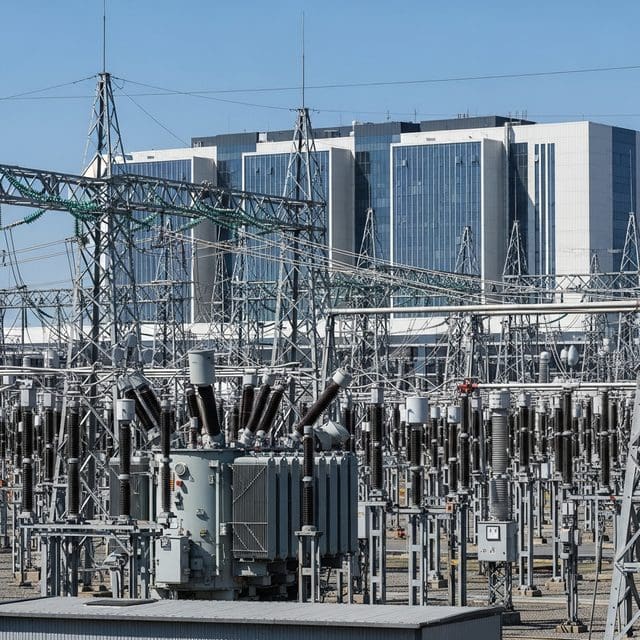
The rapid expansion of AI data centers is projected to consume 12% of U.S. power by 2028, driving up utility costs and forcing a massive grid overhaul.
The rapid expansion of artificial intelligence has moved beyond speculative tech into the center of American energy economics. As of June 2026, the AI boom is driving companies across the economy into the energy business as electricity emerges as a scarce commodity. This shift is not merely a corporate trend but a fundamental restructuring of the national power landscape, where the demand for reliable, high-capacity electricity is outpacing available supply in key regions.
Data from the Belfer Center and recent industry analyses frame this as a watershed moment for the U.S. power grid. Domestic data center demand, which stood at 76 TWh in 2018, surged to 176 TWh by 2023. On the current trajectory, this consumption is expected to reach between 325 and 580 TWh by 2028. At the high end, data centers would account for 12% of total national electricity load. This concentration of demand is already impacting consumers; reports from Bloom Energy indicate that rising AI demand is influencing retail power prices and utility investment decisions in states hosting hyperscale campuses.
Efficiency at the software level has become a critical economic lever. For IT teams running AI workloads on Windows-based systems, the choice of virtualization tools carries a measurable energy cost. May 2026 benchmarking shows that Oracle VirtualBox suffers from a 13-16% performance gap compared to bare-metal CPU performance, whereas VMware Workstation has narrowed that gap to 7-8%. Furthermore, VMware maintains a 3x advantage in storage I/O. For massive AI deployments, these performance penalties translate directly into wasted kilowatt-hours and higher operational overhead, making software optimization a front-line tool for energy conservation.
The resource footprint of the AI era extends to land and water. UN University researchers project that global data center water use will more than double to 9.3 trillion liters by 2030. Tech majors are already disclosing the scale of this impact: Google reported withdrawing over 6.1 billion gallons of water in 2024, while Microsoft used 2.75 billion gallons. Meta’s indirect water footprint is estimated at 3.9 liters per kilowatt-hour. These figures are forcing policymakers to treat data centers as heavy industrial sites with significant environmental and municipal requirements.
Market-driven solutions are emerging to mitigate these pressures. At Intersolar Europe 2026, GAC INPOW debuted a 587Ah semi-solid-state energy storage cell, the first in mass production, aimed at stabilizing the intermittent nature of renewable inputs for high-uptime facilities. Simultaneously, research suggests that data center waste heat could be repurposed for direct air carbon capture and thermal water purification. In optimistic scenarios, each kilowatt-hour of computing could remove 0.5 kg of CO2, offering a path toward making these facilities carbon-negative if deployed at scale.
However, these technological aspirations must contend with immediate physical risks to energy security. The UN International Maritime Organization recently oversaw the evacuation of 11,000 sailors in the Strait of Hormuz following U.S.-Iran conflict disruptions. As long as global energy markets remain vulnerable to such geopolitical volatility, the cost of powering the AI revolution will remain tied to the stability of traditional fuel routes. For the American taxpayer and the tech industry alike, the coming years will require a clear-eyed approach to energy policy that balances innovation with the hard realities of grid reliability and resource scarcity.

Mark Davis serves as the Senior Correspondent for Energy, Climate, and Resource Economics at Just Right News. In an era where the conversation around the environment is often dominated by alarmism and top-down mandates, Mark provides a vital, market-oriented perspective on the complex forces shaping our world. As the lead voice behind the acclaimed feature series “Power and the Planet,” he explores the intersection of environmental policy, global energy markets, and the fundamental economic principles that sustain modern civilization.
Mark’s pragmatic approach to resource management was forged in the high desert of his hometown, Albuquerque, New Mexico. Growing up in a region defined by both its breathtaking natural beauty and its rugged, resource-dependent landscape, he developed an early appreciation for the delicate balance between conservation and utilization. New Mexico’s unique position as a hub for both traditional energy production and cutting-edge scientific research provided Mark with a front-row seat to the evolution of the American energy sector. This upbringing instilled in him a deep-seated belief that true environmental stewardship is inseparable from economic prosperity and technological innovation.
Now based in Boulder, Colorado, Mark operates from the heart of the nation’s climate research community. While Boulder is often seen as a bastion of environmental idealism, Mark utilizes his post to provide a necessary counterweight, grounded in the realities of resource economics. He understands that energy policy does not exist in a vacuum; it has tangible consequences for the American taxpayer, the stability of the national power grid, and the strength of the domestic manufacturing sector. By reporting from the front lines of the climate debate, he is able to challenge prevailing narratives with hard data and a commitment to the principles of the free market.
Throughout his tenure at Just Right News, Mark has distinguished himself by focusing on the “Resource Economics” aspect of his beat. He frequently highlights the hidden costs of rapid energy transitions and advocates for an “all-of-the-above” energy strategy that prioritizes American energy independence. His work often shines a light on the geopolitical implications of resource scarcity, arguing that a secure nation must first be an energy-secure nation. Whether he is analyzing the impact of federal land-use regulations or investigating the supply chains required for new technologies, Mark remains focused on how policy decisions affect the lives and livelihoods of everyday citizens.
In “Power and the Planet,” Mark continues to bridge the gap between complex scientific concepts and the economic realities facing the country. He rejects the false choice between a healthy environment and a thriving economy, instead seeking out solutions that leverage American ingenuity and private-sector competition. For Mark, reporting on the climate is not about following the latest trends, but about ensuring that the conversation remains tethered to the foundational values of liberty, property rights, and fiscal responsibility. His contributions ensure that Just Right News readers receive a comprehensive, clear-eyed view of the challenges and opportunities defining the future of our planet.