

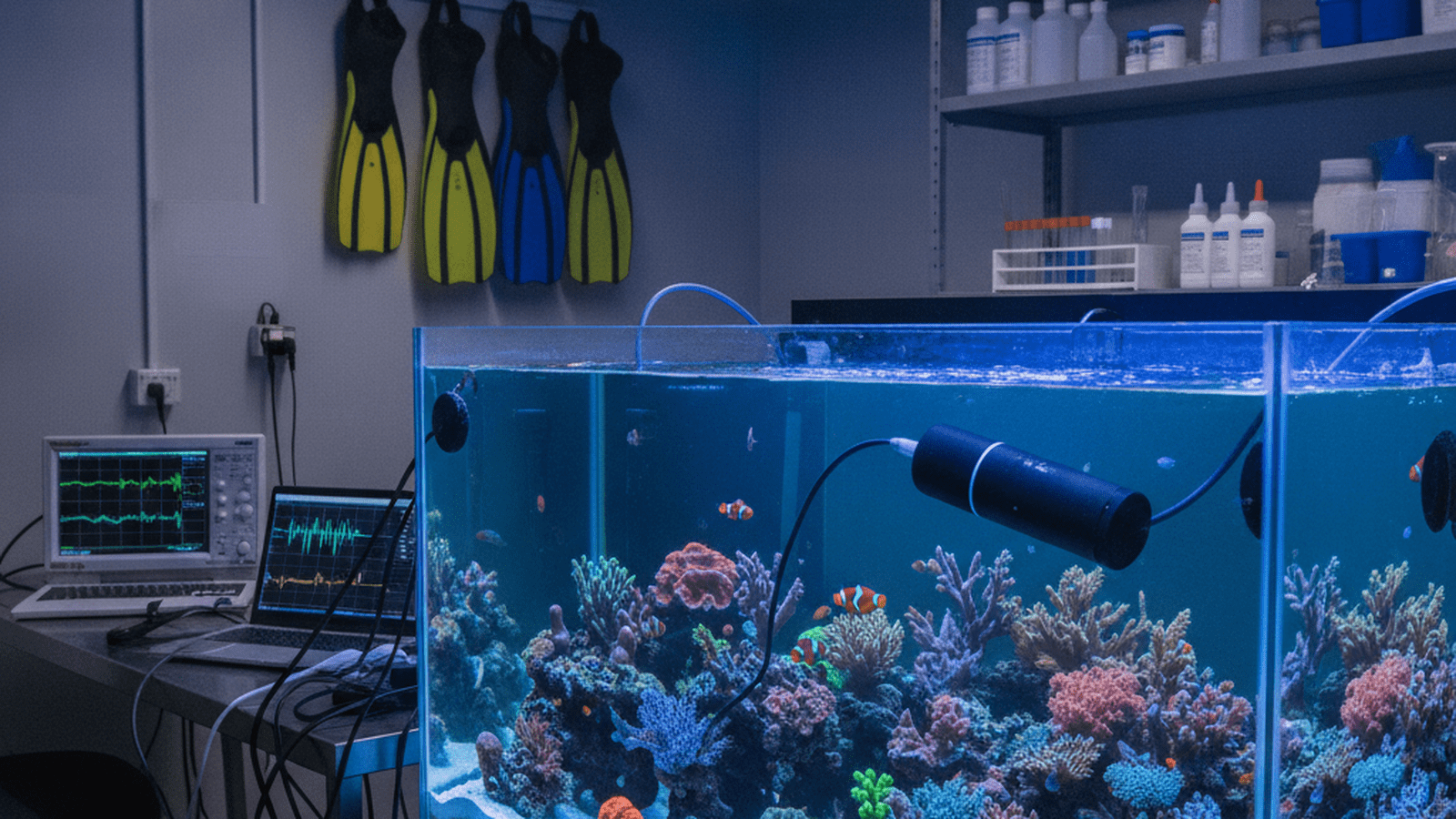
Researchers have demonstrated that playing recordings of healthy coral reef sounds can attract fish back to degraded habitats, jump-starting ecological recovery. This acoustic enrichment technique leverages the natural auditory cues used by marine larvae to find suitable homes and restore biodiversity.
TLDR: Scientists at the University of Exeter and James Cook University found that acoustic enrichment—playing healthy reef sounds via underwater speakers—doubles the rate of fish colonization in degraded coral areas. This breakthrough offers a scalable, low-cost method to restore biodiversity in ecosystems damaged by bleaching and climate change.
Coral reefs are among the most biodiverse ecosystems on the planet, yet they face unprecedented threats from rising sea temperatures and ocean acidification. When a reef suffers a bleaching event, it often falls silent as the complex community of snapping shrimp, grunting fish, and other vocal organisms disappears. This silence creates a biological barrier to recovery, as the larvae of many marine species rely on auditory cues to navigate toward suitable habitats. Recent research conducted by an international team of scientists has demonstrated a novel solution to this problem: acoustic enrichment.
The study, primarily led by researchers from the University of Exeter and James Cook University, focused on degraded sections of Australia’s Great Barrier Reef. By deploying underwater loudspeakers in areas of dead coral, the team broadcasted recordings of healthy reef environments. These soundscapes were designed to mimic the acoustic signature of a thriving ecosystem, characterized by the high-frequency clicks of snapping shrimp and the low-frequency vocalizations of territorial damselfish. These sounds travel efficiently through water, reaching larvae that are often miles away in the open ocean, providing the necessary signals for juvenile fish searching for a home.
During the six-week field experiment, the researchers monitored three types of reef patches: those with active loudspeakers playing healthy sounds, those with dummy speakers that remained silent, and those with no intervention at all. The findings revealed that the acoustically enriched reefs attracted twice the total number of fish compared to the silent or control patches. Furthermore, the number of different species present increased by 50 percent. This influx of marine life included representatives from all levels of the food web, from herbivores and planktivores to predatory piscivores.
The return of fish is a critical component of reef recovery. Herbivorous fish, in particular, play a vital role by grazing on macroalgae that can otherwise overgrow and smother young coral polyps. By restoring the fish population, acoustic enrichment helps create the environmental conditions necessary for corals to regrow and for the ecosystem to regain its natural resilience. The researchers noted that the fish did not just arrive at the reefs; they stayed, suggesting that the acoustic cues were successful in guiding them to a viable, albeit damaged, habitat. This persistence is essential for the long-term success of the intervention, as it allows for the re-establishment of complex social structures and symbiotic relationships that define a healthy reef.
While the success of acoustic enrichment is promising, scientists emphasize that it is not a panacea for the broader crisis facing coral reefs. The technique addresses the symptoms of reef degradation by encouraging biological recruitment, but it does not mitigate the underlying causes of coral mortality, such as global warming and water pollution. For acoustic enrichment to be effective in the long term, it must be integrated into a comprehensive management strategy that includes carbon emission reductions and local conservation efforts. Without addressing the thermal stress that causes bleaching, the benefits of acoustic enrichment may be temporary.
Future research will focus on the long-term survival rates of the fish attracted by these sounds and the eventual impact on coral growth rates. Scientists are also exploring how different types of soundscapes might attract specific functional groups of fish to target particular ecological needs. As the technology becomes more refined and scalable, it could become a standard tool in the global effort to preserve marine biodiversity. The ability to call life back to the ocean’s most vulnerable corners represents a significant step forward in the field of restoration ecology.

Mason Reed serves as a Staff Writer for Just Right News, where he spearheads the Future Frontiers & Special Projects desk. In an era defined by rapid technological shifts and evolving social landscapes, Mason provides a steady, principled voice, examining the innovations of tomorrow through the lens of traditional American values. His work is most prominently featured in his signature series, “The Next Horizon,” where he explores the intersection of emerging technology, national sovereignty, and the preservation of individual liberty.
A native of San Diego, California, Mason’s worldview was shaped by the unique culture of his hometown. Growing up in a region defined by its strong military presence and its history of maritime industry, he developed a deep-seated respect for the institutions that provide national stability and the entrepreneurial spirit that drives the American economy. This upbringing instilled in him a belief that true progress is not found in discarding the past, but in building upon a foundation of proven principles. His reporting often reflects this San Diego influence, emphasizing the importance of a robust national defense and the necessity of maintaining a competitive edge in the global marketplace.
Now based in San Francisco, Mason operates from the heart of the world’s technological engine. Living and working in the Bay Area provides him with a front-row seat to the advancements—and the ideological challenges—emanating from Silicon Valley. While many in the region embrace a “move fast and break things” mentality, Mason’s reporting serves as a vital counterweight. He offers Just Right News readers a “boots on the ground” perspective, documenting how radical local policies and the concentration of tech power impact the everyday lives of citizens. His proximity to the industry allows him to cut through the marketing jargon of big tech to uncover the real-world implications for privacy, free speech, and the nuclear family.
In his “Future Frontiers” beat, Mason tackles complex subjects ranging from the ethics of artificial intelligence to the burgeoning private space race. He approaches these topics with a healthy skepticism toward centralized bureaucracy, championing instead the decentralized innovations that empower individuals. Through “The Next Horizon,” he highlights the pioneers and thinkers who are working to ensure that the future remains a place where human dignity and constitutional rights are protected. He believes that the rapid pace of change requires more than just technical expertise; it requires a moral compass rooted in the Western tradition.
Throughout his tenure at Just Right News, Mason has remained committed to the idea that the future is something to be shaped, not merely accepted. His writing is characterized by a rigorous defense of American exceptionalism and a belief that the country’s best days lie ahead, provided it remains true to its founding ideals. Whether he is investigating the impact of automation on the American workforce or profiling the next generation of aerospace engineers, Mason Reed ensures that his readers are equipped with the insights they need to navigate a changing world with confidence and clarity.