

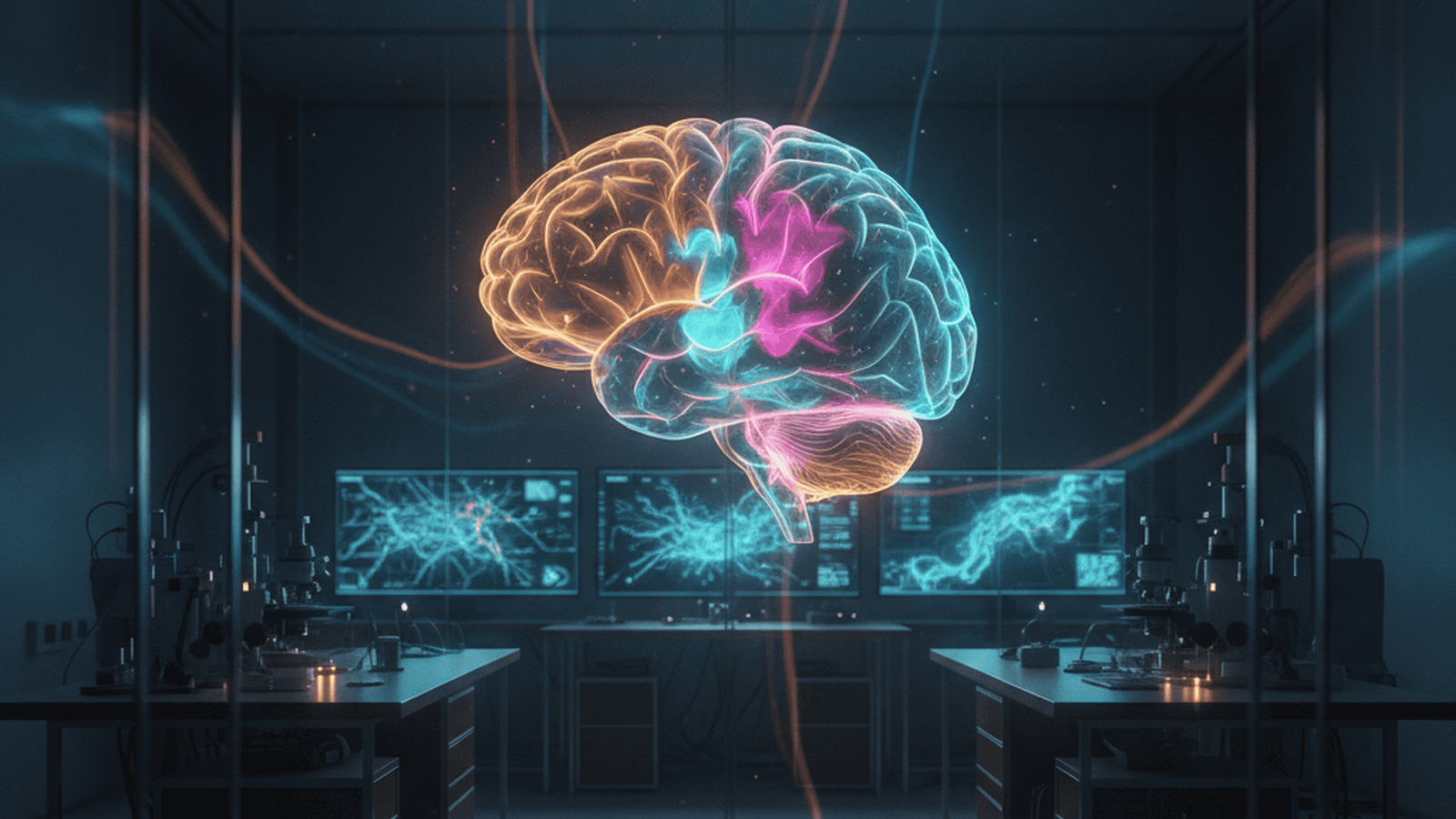
Researchers at the University of Basel have discovered that the brain creates three parallel copies of every memory using different sets of neurons. These copies vary in their stability and plasticity, allowing the brain to balance long-term storage with the ability to update information.
TLDR: Neuroscientists at the University of Basel have identified a parallel memory system where the hippocampus creates three distinct versions of a single experience. These copies, stored in different neuron groups, allow the brain to maintain stable long-term records while remaining flexible enough to incorporate new information over time.
Neuroscientists at the University of Basel have identified a fundamental mechanism in the brain’s memory architecture that explains how experiences are preserved and modified. Their study, conducted within the Biozentrum research center, reveals that the hippocampus creates at least three distinct versions of a single memory. Each version is stored by a different group of neurons that emerge at different points during embryonic development. This parallel storage system allows the brain to manage the complex trade-off between memory persistence and cognitive flexibility.
The research team utilized advanced imaging and genetic tools to track memory formation in mouse models. They discovered that late-born neurons, which are among the last to develop in the womb, create a memory copy that is initially very strong and easily retrieved. However, this specific trace fades relatively quickly and becomes difficult for the brain to access over time. These late-born neurons appear to be responsible for the initial, vivid representation of an event that allows for immediate learning.
In contrast, early-born neurons produce a memory version that follows an opposite trajectory. This copy starts as a weak, almost undetectable signal that is difficult for the brain to read immediately after an event. However, the trace gradually becomes more stable and robust as time passes. By the time the late-born copy has faded, the early-born copy has become the primary long-term record. This ensures that the brain does not lose the information even as the initial neural pathways used to record it begin to change.
A third group of neurons, which develop in the middle of the gestational period, creates an intermediate copy that serves as a functional bridge. This intermediate trace provides a reliable backup while the long-term copy is still maturing. The researchers observed that these different copies are not identical in function. The late-born copies are significantly more plastic, meaning they can be easily modified or integrated with new information. This allows the brain to update its understanding of a past event based on subsequent experiences without overwriting the core record.
This discovery challenges the traditional systems consolidation model, which suggested that memories are formed as a single trace that slowly moves from the hippocampus to the cortex. Instead, the Basel study suggests that the hippocampus itself manages a multi-layered archive from the very beginning. This parallel processing allows the brain to maintain a stable core of a memory while simultaneously keeping a flexible version available for updates. The ability to rewrite or refine memories is essential for learning and adapting to a changing environment.
The implications for clinical neuroscience are profound, particularly regarding the treatment of memory-related disorders. In conditions like post-traumatic stress disorder, the brain may fail to properly transition from a plastic late-born memory to a more stable, integrated one. This could leave a traumatic memory in a perpetually raw and easily triggered state. Conversely, in neurodegenerative diseases like Alzheimer’s, different neuron groups may be affected at different rates, explaining why some types of memories vanish before others.
Future research will investigate the specific biochemical signals that coordinate the hand-off between these different neuron groups. The team aims to determine if it is possible to artificially strengthen the stable early-born copies or facilitate the updating of late-born traces. Understanding the molecular signatures of these distinct neuron populations could lead to the development of highly targeted drugs. Such interventions might one day help patients regain lost cognitive flexibility or protect long-term memories from the effects of aging.

Mason Reed serves as a Staff Writer for Just Right News, where he spearheads the Future Frontiers & Special Projects desk. In an era defined by rapid technological shifts and evolving social landscapes, Mason provides a steady, principled voice, examining the innovations of tomorrow through the lens of traditional American values. His work is most prominently featured in his signature series, “The Next Horizon,” where he explores the intersection of emerging technology, national sovereignty, and the preservation of individual liberty.
A native of San Diego, California, Mason’s worldview was shaped by the unique culture of his hometown. Growing up in a region defined by its strong military presence and its history of maritime industry, he developed a deep-seated respect for the institutions that provide national stability and the entrepreneurial spirit that drives the American economy. This upbringing instilled in him a belief that true progress is not found in discarding the past, but in building upon a foundation of proven principles. His reporting often reflects this San Diego influence, emphasizing the importance of a robust national defense and the necessity of maintaining a competitive edge in the global marketplace.
Now based in San Francisco, Mason operates from the heart of the world’s technological engine. Living and working in the Bay Area provides him with a front-row seat to the advancements—and the ideological challenges—emanating from Silicon Valley. While many in the region embrace a “move fast and break things” mentality, Mason’s reporting serves as a vital counterweight. He offers Just Right News readers a “boots on the ground” perspective, documenting how radical local policies and the concentration of tech power impact the everyday lives of citizens. His proximity to the industry allows him to cut through the marketing jargon of big tech to uncover the real-world implications for privacy, free speech, and the nuclear family.
In his “Future Frontiers” beat, Mason tackles complex subjects ranging from the ethics of artificial intelligence to the burgeoning private space race. He approaches these topics with a healthy skepticism toward centralized bureaucracy, championing instead the decentralized innovations that empower individuals. Through “The Next Horizon,” he highlights the pioneers and thinkers who are working to ensure that the future remains a place where human dignity and constitutional rights are protected. He believes that the rapid pace of change requires more than just technical expertise; it requires a moral compass rooted in the Western tradition.
Throughout his tenure at Just Right News, Mason has remained committed to the idea that the future is something to be shaped, not merely accepted. His writing is characterized by a rigorous defense of American exceptionalism and a belief that the country’s best days lie ahead, provided it remains true to its founding ideals. Whether he is investigating the impact of automation on the American workforce or profiling the next generation of aerospace engineers, Mason Reed ensures that his readers are equipped with the insights they need to navigate a changing world with confidence and clarity.