

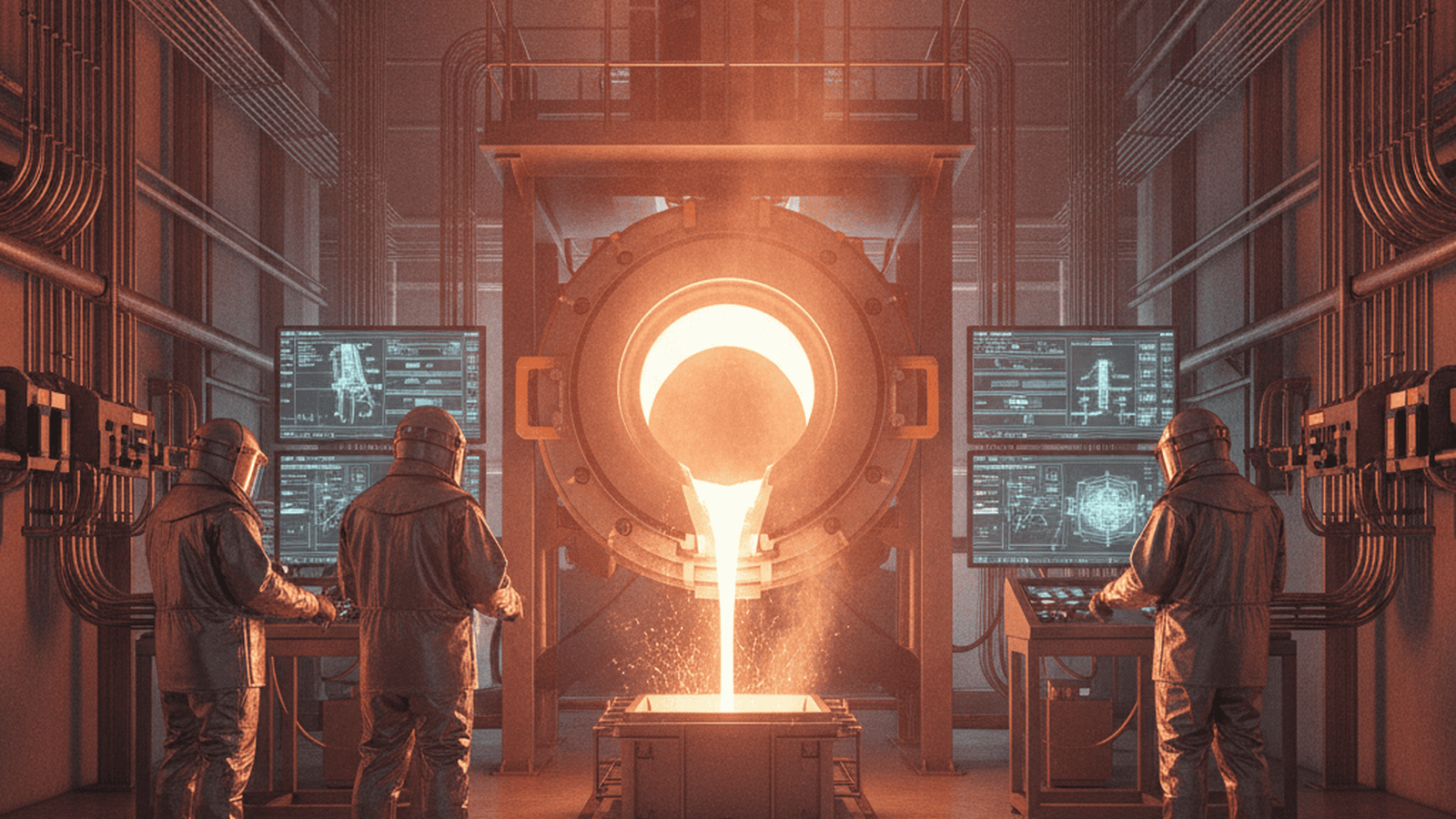
Boston Metal has successfully demonstrated its molten oxide electrolysis technology at a pilot scale, offering a path to carbon-free steel production. By using electricity to separate iron from ore, the process eliminates the need for coal-fired blast furnaces.
TLDR: Researchers at Boston Metal have scaled a molten oxide electrolysis process that produces high-purity iron without carbon emissions. This electrochemical method replaces traditional coal-based smelting, potentially decarbonizing one of the world’s most polluting industries by utilizing renewable electricity to refine iron ore directly.
Steel production is a cornerstone of modern civilization, yet it remains one of the most significant contributors to global climate change, accounting for roughly 7% to 9% of all greenhouse gas emissions. For centuries, the industry has relied on the blast furnace, a massive structure that uses coking coal to strip oxygen from iron ore. This chemical reduction process inherently releases vast quantities of carbon dioxide as a byproduct. Boston Metal, a company born out of pioneering research at the Massachusetts Institute of Technology (MIT), is now moving to disrupt this centuries-old paradigm through molten oxide electrolysis (MOE). This electrochemical approach replaces carbon-intensive coal with electricity, offering a direct route to green steel that could fundamentally alter the industrial landscape.
The core of the MOE process involves an electrolytic cell filled with a liquid oxide electrolyte. When iron ore is fed into this molten bath, which reaches temperatures of approximately 1,600 degrees Celsius, an electric current is passed through the mixture. This current breaks the chemical bonds of the iron oxide, causing pure liquid iron to settle at the bottom of the cell. Unlike traditional smelting, which produces CO2, the only byproduct of this specific chemical reaction is pure oxygen, provided the electricity is sourced from renewable or carbon-free origins. The simplicity of the output—metal and oxygen—represents a radical departure from the complex emissions profiles of traditional mills.
A significant technical hurdle in developing MOE was the creation of an anode that could survive the harsh, corrosive environment of molten oxides at such extreme temperatures. Boston Metal’s breakthrough centers on a proprietary inert anode made from a specialized chromium-based alloy. Previous attempts at molten electrolysis often saw the anode dissolve or degrade rapidly, making the process economically unviable and contaminating the final product. The new alloy forms a thin, protective layer that allows it to remain stable while facilitating the necessary electron transfer to drive the reaction. This material science innovation is the “secret sauce” that allows the cell to operate continuously without frequent and costly component replacements.
The company has recently transitioned from small-scale laboratory experiments to industrial-sized pilot operations, marking a critical milestone in the technology’s maturity. Their facility in Woburn, Massachusetts, serves as the primary research and development hub, while a commercial-scale demonstration plant in Brazil is targeting the production of high-value ferroalloys. These ferroalloys, such as ferroniobium and ferrotungsten, serve as a strategic proof of concept for the broader steel market. By successfully refining these complex, often impurity-laden ores, the company demonstrates that the MOE platform is robust enough to handle the varying grades of iron ore found in standard deposits worldwide.
From an economic and logistical perspective, MOE offers several distinct advantages over other green steel alternatives, such as green hydrogen-based direct reduced iron (DRI). While DRI requires high-grade iron ore and a steady, massive supply of expensive hydrogen, MOE can theoretically process lower-grade ores and integrates directly with the existing electrical grid. This flexibility allows steelmakers to locate production facilities near renewable energy hubs—such as wind farms or hydroelectric plants—rather than being tethered to coal deposits or specialized gas infrastructure. Furthermore, the modular nature of the electrolysis cells means that capacity can be scaled incrementally, allowing for decentralized production and reducing the capital intensity of building new steel plants.
The next phase of research focuses on the long-term durability of the inert anodes under continuous industrial loads and the optimization of energy efficiency. Engineers are currently monitoring the pilot cells to refine heat management systems, ensuring that the process remains self-sustaining through the heat generated by the electrical resistance of the electrolyte. As global carbon taxes and environmental regulations tighten, the transition to electrochemical metallurgy appears increasingly inevitable. If Boston Metal can maintain its current trajectory and successfully scale to multi-ton daily outputs, the sight of coal-fired blast furnaces may eventually become a relic of the industrial past, replaced by clean, silent banks of electrolytic cells powered by the sun and wind.

Dylan Brooks serves as the Senior Correspondent for Statehouses and Local Governance at Just Right News, where he brings a principled, constitutionalist lens to the often-overlooked machinery of state-level politics. As the lead voice behind the acclaimed feature series “Fifty Laboratories of Power,” Dylan has dedicated his career to the idea that the most impactful governance happens closest to home. His reporting consistently champions the Tenth Amendment, exploring how individual states can serve as testing grounds for innovative, conservative policy solutions that prioritize personal liberty and fiscal responsibility.
A native of Des Moines, Iowa, Dylan’s journalistic philosophy was forged in the heart of the American Midwest. Growing up in a community where local school board meetings and town halls were the bedrock of civic life, he developed a deep appreciation for the “retail politics” of the heartland. This upbringing instilled in him a fundamental belief that the American experiment is best preserved when power is decentralized. He carries the values of his Iowa roots into every assignment, maintaining a healthy skepticism of federal overreach and a steadfast commitment to the concerns of everyday citizens over the interests of the administrative state.
Now based in Madison, Wisconsin, Dylan operates from one of the nation’s most pivotal political battlegrounds. His location in a state capital known for its rigorous policy debates allows him to provide Just Right News readers with a front-row seat to the legislative process. From Madison, he tracks the ripple effects of statehouse decisions on local municipalities, ensuring that the connection between high-level policy and community impact is never lost. His work often highlights the success of conservative governors and legislatures in fostering economic growth, protecting parental rights, and securing the integrity of local institutions.
As an African American man in the conservative media landscape, Dylan offers a vital perspective on how limited government and free-market principles empower individuals and families. He frequently reports on how deregulation and school choice initiatives provide new avenues for success in underserved communities, challenging the monolithic narratives often presented by legacy media outlets. Dylan’s work is characterized by a commitment to the facts and a refusal to shy away from the complex realities of modern governance.
Throughout his tenure at Just Right News, Dylan has become a trusted authority for readers who value a rigorous, principled approach to the news. Whether he is dissecting a complex state budget or profiling a local grassroots movement, his goal remains the same: to provide the American public with the information they need to hold their local leaders accountable. By focusing on the “Fifty Laboratories of Power,” Dylan Brooks ensures that the vital work being done in statehouses across the country receives the national attention it deserves, always through a lens that respects the traditions and sovereignty of the American people.