

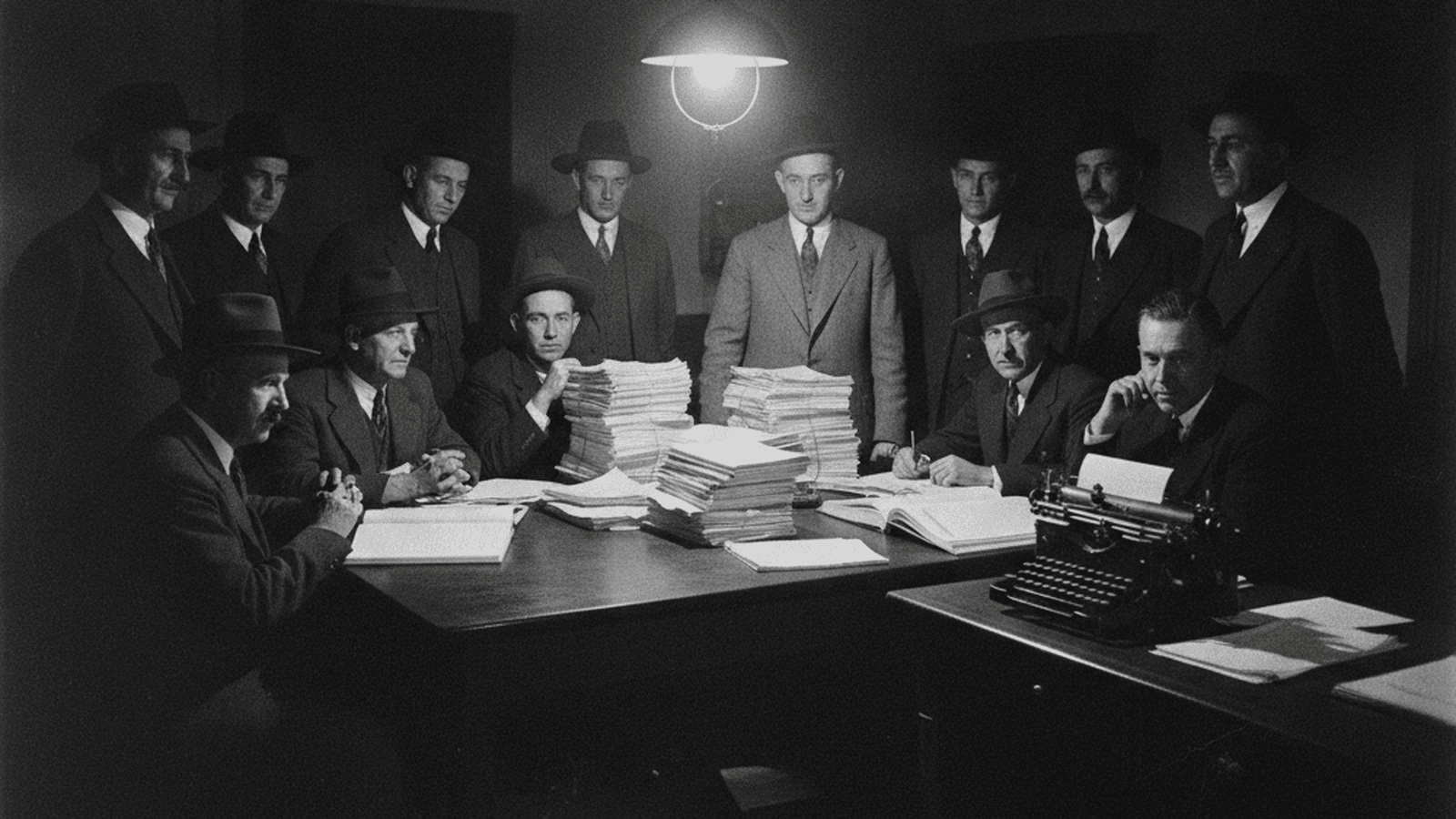
The 1934 United States Senate election in New Mexico triggered a massive federal investigation into allegations of voter fraud and political patronage. The contest between Bronson Cutting and Dennis Chavez highlighted the corruption inherent in local political machines during the New Deal era.
TLDR: In 1934, a disputed United States Senate race in New Mexico sparked a federal probe into systemic election fraud and the misuse of New Deal relief funds. The investigation exposed deep-seated corruption within local political machines, eventually leading to significant state-level electoral reforms and a shift toward more transparent governance.
The 1934 United States Senate election in New Mexico stands as one of the most contentious and legally fraught contests in the history of the Mountain West. This election pitted the incumbent Republican, Bronson Cutting, against the Democratic challenger, Dennis Chavez. While Cutting was a Republican, he was a staunch ally of President Franklin D. Roosevelt’s New Deal, creating a complex political landscape where party lines blurred. The campaign was characterized by intense personal animosity and widespread accusations of systemic corruption.
As the ballots were tallied, Cutting emerged with a narrow lead of approximately 1,200 votes. However, the Chavez campaign immediately leveled charges of massive voter fraud, claiming that the “Old Guard” Republican machine had engaged in ballot-box stuffing and the use of “ghost voters.” Conversely, Cutting’s supporters accused the Democratic administration of using federal relief funds from the Works Progress Administration to intimidate voters and buy influence. These allegations triggered a formal investigation by the United States Senate Committee on Privileges and Elections.
Investigators descended upon New Mexico to scrutinize the electoral process in several counties. They uncovered evidence of significant irregularities, including precincts where the number of votes cast exceeded the number of registered voters. Witnesses testified to being threatened with the loss of their government jobs if they did not support the Democratic ticket. The probe highlighted the deep-seated patronage systems that dominated New Mexico politics during the early 20th century.
In counties like Rio Arriba and Bernalillo, the influence of local “patrones” was absolute, and the investigation revealed how these figures could swing entire precincts through a combination of loyalty and fear. The investigation was not merely a local affair; it became a national flashpoint for the integrity of the New Deal’s implementation. Critics of the Roosevelt administration argued that the Chavez campaign’s tactics represented a dangerous fusion of federal power and local political coercion. They pointed to the “relief vote” as a new form of corruption, where the promise of government assistance was used as a cudgel against the poor.
Meanwhile, Cutting’s defenders, a coalition of progressive Republicans and independent-minded voters, viewed the challenge as a vindictive attempt by the Democratic Party to oust a maverick who refused to toe the party line. The Senate committee spent months reviewing thousands of contested ballots, many of which were found to be marked by the same hand or altered after being cast. The testimony from hundreds of local officials painted a picture of a state where the secret ballot was often a myth. This public airing of grievances forced a reckoning within both parties regarding the ethics of federal intervention in state elections.
Tragedy struck in May 1935, while the investigation was still ongoing. Senator Cutting was killed in a plane crash in Missouri while traveling back to Washington, D.C., to defend his seat. His death fundamentally altered the course of the investigation and New Mexico’s political trajectory. Following the vacancy, Governor Clyde Tingley appointed Dennis Chavez to the Senate, effectively ending the legal challenge but leaving the underlying questions of corruption unresolved in the public mind.
The fallout from the 1934 investigation led to significant shifts in New Mexico’s electoral oversight. Public outcry over the “ghost voting” and patronage scandals fueled a movement for civil service reform and stricter voter registration laws. In the following years, the state legislature implemented new measures to professionalize the counting of ballots and reduce the influence of local political bosses. This era of scrutiny helped transition New Mexico from a system of personalist machines toward a more standardized and transparent democratic process, though the echoes of the 1934 clash remained a staple of state political lore for decades.

Dylan Brooks serves as the Senior Correspondent for Statehouses and Local Governance at Just Right News, where he brings a principled, constitutionalist lens to the often-overlooked machinery of state-level politics. As the lead voice behind the acclaimed feature series “Fifty Laboratories of Power,” Dylan has dedicated his career to the idea that the most impactful governance happens closest to home. His reporting consistently champions the Tenth Amendment, exploring how individual states can serve as testing grounds for innovative, conservative policy solutions that prioritize personal liberty and fiscal responsibility.
A native of Des Moines, Iowa, Dylan’s journalistic philosophy was forged in the heart of the American Midwest. Growing up in a community where local school board meetings and town halls were the bedrock of civic life, he developed a deep appreciation for the “retail politics” of the heartland. This upbringing instilled in him a fundamental belief that the American experiment is best preserved when power is decentralized. He carries the values of his Iowa roots into every assignment, maintaining a healthy skepticism of federal overreach and a steadfast commitment to the concerns of everyday citizens over the interests of the administrative state.
Now based in Madison, Wisconsin, Dylan operates from one of the nation’s most pivotal political battlegrounds. His location in a state capital known for its rigorous policy debates allows him to provide Just Right News readers with a front-row seat to the legislative process. From Madison, he tracks the ripple effects of statehouse decisions on local municipalities, ensuring that the connection between high-level policy and community impact is never lost. His work often highlights the success of conservative governors and legislatures in fostering economic growth, protecting parental rights, and securing the integrity of local institutions.
As an African American man in the conservative media landscape, Dylan offers a vital perspective on how limited government and free-market principles empower individuals and families. He frequently reports on how deregulation and school choice initiatives provide new avenues for success in underserved communities, challenging the monolithic narratives often presented by legacy media outlets. Dylan’s work is characterized by a commitment to the facts and a refusal to shy away from the complex realities of modern governance.
Throughout his tenure at Just Right News, Dylan has become a trusted authority for readers who value a rigorous, principled approach to the news. Whether he is dissecting a complex state budget or profiling a local grassroots movement, his goal remains the same: to provide the American public with the information they need to hold their local leaders accountable. By focusing on the “Fifty Laboratories of Power,” Dylan Brooks ensures that the vital work being done in statehouses across the country receives the national attention it deserves, always through a lens that respects the traditions and sovereignty of the American people.