


Educational institutions and global corporations are overhauling strategies as artificial intelligence forces a re-evaluation of academic integrity, job security, and the value of entry-level credentials.
The path from the classroom to the cubicle is undergoing a radical transformation as artificial intelligence moves from a novelty to a core institutional requirement. This shift is creating a friction point between administrative desires for efficiency and faculty commitment to traditional instruction. As public and private sectors grapple with these changes, the focus is increasingly on how to maintain the value of human capital in an automated age.
At California State University, a quiet renewal of a systemwide deal with OpenAI has ignited a firestorm. The university committed roughly $13 million annually for three more years, following an initial $17 million agreement, to integrate ChatGPT Edu across its campuses. While administrators view this as a necessary step to keep students competitive, faculty unions are campaigning to cancel the contract. They argue that the $30 million investment should be redirected toward protecting campus jobs, framing the procurement as a de facto workforce policy that threatens the academic mission.
This tension is mirrored in the corporate world, where Cognizant CEO Ravi Kumar S is doubling down on an AI-first, “flatter” workforce strategy. Kumar argues that AI will not eliminate the need for new talent but will shift the nature of work for the next generation. Last year, the firm hired 20,000 graduates, with plans to expand that intake as entry-level jobs move away from manual tasks and toward validation and verification work. This suggests that while roles remain available, the skills required are pivoting toward oversight of machine-generated outputs rather than original execution.
As the workforce adapts, the mechanisms for measuring student achievement are also under siege. New reporting indicates that AI detection technology is largely failing to keep pace with students using paid services designed to evade filters. This has forced a reckoning for university boards, which are now considering a return to supervised, in-person assessments. The realization that students are winning the technological arms race is driving a push to redesign curriculum around human-centric problem solving.
International bodies are already moving toward more stringent physical security to restore the integrity of high-stakes testing. The National Medical Commission recently issued strict advisories ahead of the NEET-UG 2026 re-exam. The commission ordered colleges to deny routine leave for staff and students to ensure maximum vigilance following previous paper leaks. With over 2.2 million candidates affected, the return to a strictly monitored pen-and-paper format highlights a growing skepticism toward digital-only solutions in education.
State governments are also stepping in to regulate the fallout. California’s new Executive Order N-6-26 directs agencies to map AI-driven labor market disruption and propose updates to the WARN Act for automation-linked layoffs. By building dashboards to track AI’s employment impact, the state is moving into the broad regulation of automation and retraining. This proactive stance reflects a concern that without clear policy guardrails, rapid adoption could destabilize the workforce.
Ultimately, the current landscape suggests that while AI offers productivity gains, the human capital market is demanding a return to accountability. Whether through state orders mapping labor disruption or unions fighting for the value of human professors, the focus is shifting toward ensuring technology serves as a tool for upward mobility. The challenge for the coming decade will be balancing the efficiency of AI with the traditional values of merit and individual achievement.
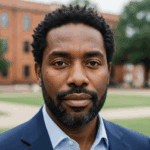
Daniel Owens serves as a Senior Correspondent for Just Right News, where he leads the newsroom’s coverage of Education, Workforce, and Upward Mobility. In an era where the national conversation often overlooks the practical foundations of success, Owens brings a principled perspective to the forefront of the media landscape. His work is defined by a commitment to the idea that a strong society is built on the pillars of quality education, a robust work ethic, and the removal of bureaucratic barriers to individual achievement.
Born and raised in Cleveland, Ohio, Owens’s worldview was shaped by the industrial landscape of the Midwest. Growing up in a city known for its grit and resilience, he witnessed firsthand the transformative power of steady employment and the devastating effects of economic stagnation. This background instilled in him a deep respect for the American worker and a healthy skepticism toward top-down government solutions that often fail to reach the communities they intend to help. As an African American man who has navigated the path to professional success, Owens approaches his beat with a nuanced understanding of how meritocracy and personal responsibility intersect with opportunity. He frequently draws on his roots to highlight the importance of family stability and community-led initiatives in fostering the next generation of leaders.
At Just Right News, Owens is the architect of the acclaimed feature series, “The Learning Curve.” Through this platform, he explores the evolving landscape of American schooling, from the rise of the school choice movement to the revitalization of trade schools and vocational training. He frequently challenges the status quo of higher education, advocating for a return to academic rigor and the practical alignment of degrees with market demands. For Owens, education is not merely about obtaining credentials; it is about equipping young people with the tools necessary to lead self-sufficient, meaningful lives. His reporting on “The Learning Curve” has become essential reading for parents and policymakers who believe that educational competition and parental rights are the keys to a brighter future.
Now based in Raleigh, North Carolina, Owens finds himself at the heart of one of the nation’s most dynamic regions for innovation and growth. Raleigh’s unique blend of traditional values and a fast-paced economy provides the perfect backdrop for his reporting on the modern workforce. From the tech hubs of the Research Triangle to the rural communities of the South, he tracks how shifts in the economy are impacting families and local industries. His reporting often highlights the success stories of entrepreneurs and workers who are thriving by embracing the values of hard work and innovation.
Throughout his career, Daniel Owens has remained a steadfast voice for the student seeking a better path and the worker striving for a better life. His reporting for Just Right News serves as a vital resource for readers who value common-sense solutions to the challenges of the 21st-century economy. By focusing on the intersection of policy and the human spirit, Owens continues to provide a roadmap for how individuals and communities can achieve lasting upward mobility.