

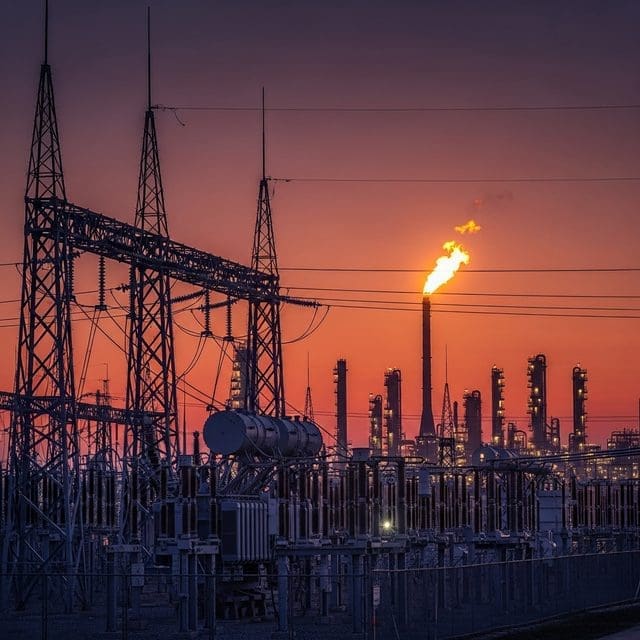
Geopolitical de-escalation in the Middle East offers temporary relief, but long-term supply disruptions and surging AI-driven electricity demand continue to pressure global energy infrastructure and consumer costs.
The global energy landscape is currently caught between a fragile geopolitical detente and the hard realities of physical supply constraints. While a recent memorandum of understanding between the U.S. and Iran has eased immediate fears of a total blockade in the Strait of Hormuz, the market remains scarred. Brent crude prices dropped roughly 5% on the news, yet analysts warn that the economic damage from earlier disruptions is now a structural fixture of the market. The perceived risk of disruption may have cooled, but the physical damage to infrastructure and the resulting rerouting costs mean that the earlier oil shock is effectively “baked in” to the global economy for the foreseeable future.
ExxonMobil’s recent market assessments highlight the severity of this shift. The March disruption removed approximately 10.1 million barrels per day from global supply, pushing WTI July futures above $104 per barrel by mid-May. Perhaps more concerning for the industrial sector is the widening gap in refined products; diesel premiums over crude have surged to roughly $60 per barrel, nearly triple pre-conflict levels. These pressures are compounded by long-term damage to Qatari LNG infrastructure. Joint ventures involving ExxonMobil at Ras Laffan, specifically trains 4 and 6, have seen capacity drop from 77 million tonnes per annum toward 64 million. With the North Field East expansion delayed until 2027 or 2028, the market faces a multi-year drag on LNG supply that diplomacy alone cannot fix.
This supply-side tension arrives just as the artificial intelligence boom reshapes the demand side of the ledger. Electricity has emerged as a scarce commodity as of mid-2026, with the AI sector’s thirst for power driving companies across the economy into the energy business. The ripple effects are reaching consumer electronics; Apple has signaled that price increases are now unavoidable as semiconductor and memory chip costs climb alongside energy inputs. Even institutional investors are recalibrating their portfolios to find stability. Recent SEC filings show Van Diest Capital LLC and Jacobs Equity LLC recently disclosing new stakes in ExxonMobil, totaling millions of dollars, signaling a return to traditional energy heavyweights as reliable hedges against volatility. This capital flight into energy majors reflects a broader market sentiment that reliability is currently more valuable than speculative growth.
On the regulatory and local fronts, the response to these pressures is increasingly pragmatic rather than ideological. In Seward, Alaska, city officials have revised local codes to allow for larger-scale commercial renewable generation, acknowledging a need for diversified local power as municipal rate structures come under review. This shift toward distributed energy is being supported by manufacturing breakthroughs, such as 3D-printed batteries. By embedding storage directly into device structures, this technology offers a manufacturing-led solution to energy density challenges, potentially enabling longer-range drones and novel form factors for consumer electronics that require less frequent grid interaction.
Political friction over resource management is also intensifying abroad, particularly in the United Kingdom. In Scotland, the Scottish National Party (SNP) is facing a significant backlash over its ban on new North Sea oil and gas developments following a stinging by-election defeat in Aberdeen South. Recent polling shows 45% of Scots now oppose the ban, while 60% demand that oil revenues remain exclusively within Scotland to support the local economy. This mirrors a global trend where the tangible economic costs of restrictive energy policies are beginning to outweigh environmental slogans. As the Federal Reserve signals a move away from fine-tuning policy guidance, the market is left to navigate these raw economic trade-offs on its own, balancing the urgent need for energy security against the long-term goals of the energy transition.

Mark Davis serves as the Senior Correspondent for Energy, Climate, and Resource Economics at Just Right News. In an era where the conversation around the environment is often dominated by alarmism and top-down mandates, Mark provides a vital, market-oriented perspective on the complex forces shaping our world. As the lead voice behind the acclaimed feature series “Power and the Planet,” he explores the intersection of environmental policy, global energy markets, and the fundamental economic principles that sustain modern civilization.
Mark’s pragmatic approach to resource management was forged in the high desert of his hometown, Albuquerque, New Mexico. Growing up in a region defined by both its breathtaking natural beauty and its rugged, resource-dependent landscape, he developed an early appreciation for the delicate balance between conservation and utilization. New Mexico’s unique position as a hub for both traditional energy production and cutting-edge scientific research provided Mark with a front-row seat to the evolution of the American energy sector. This upbringing instilled in him a deep-seated belief that true environmental stewardship is inseparable from economic prosperity and technological innovation.
Now based in Boulder, Colorado, Mark operates from the heart of the nation’s climate research community. While Boulder is often seen as a bastion of environmental idealism, Mark utilizes his post to provide a necessary counterweight, grounded in the realities of resource economics. He understands that energy policy does not exist in a vacuum; it has tangible consequences for the American taxpayer, the stability of the national power grid, and the strength of the domestic manufacturing sector. By reporting from the front lines of the climate debate, he is able to challenge prevailing narratives with hard data and a commitment to the principles of the free market.
Throughout his tenure at Just Right News, Mark has distinguished himself by focusing on the “Resource Economics” aspect of his beat. He frequently highlights the hidden costs of rapid energy transitions and advocates for an “all-of-the-above” energy strategy that prioritizes American energy independence. His work often shines a light on the geopolitical implications of resource scarcity, arguing that a secure nation must first be an energy-secure nation. Whether he is analyzing the impact of federal land-use regulations or investigating the supply chains required for new technologies, Mark remains focused on how policy decisions affect the lives and livelihoods of everyday citizens.
In “Power and the Planet,” Mark continues to bridge the gap between complex scientific concepts and the economic realities facing the country. He rejects the false choice between a healthy environment and a thriving economy, instead seeking out solutions that leverage American ingenuity and private-sector competition. For Mark, reporting on the climate is not about following the latest trends, but about ensuring that the conversation remains tethered to the foundational values of liberty, property rights, and fiscal responsibility. His contributions ensure that Just Right News readers receive a comprehensive, clear-eyed view of the challenges and opportunities defining the future of our planet.