

A federal lawsuit challenges a new Colorado law requiring firearms dealers to grant law enforcement unrestricted, warrantless access to private sales records at all times.
A coalition of firearms dealers and advocacy groups has moved to block a newly enacted Colorado law that grants law enforcement agencies unrestricted, warrantless access to retail sales records. The legal challenge, filed in federal court, centers on House Bill 26-1126, a measure signed by Governor Jared Polis on June 2, 2026, which fundamentally alters the regulatory landscape for Federal Firearms Licensees (FFLs) within the state.
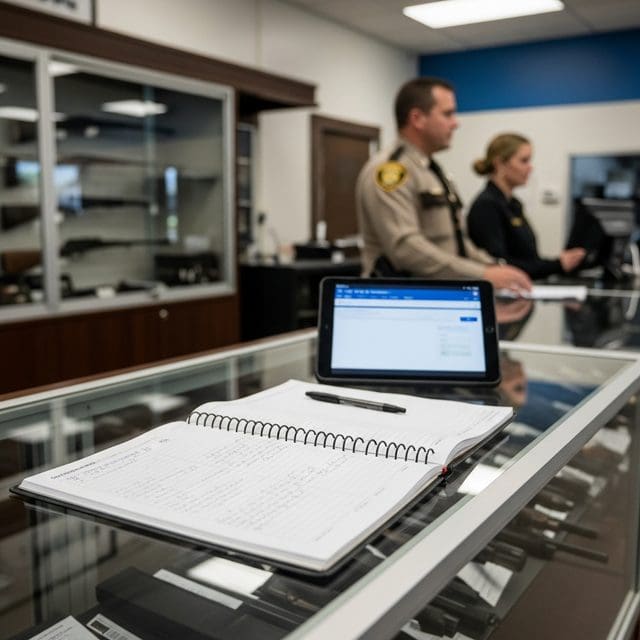
Under the provisions of HB 26-1126, the state has moved beyond its historical focus on handguns to encompass every retail firearm sale. The statute mandates that dealers obtain a separate state firearms dealer permit in addition to their federal credentials. Central to the controversy is a requirement that dealers maintain a comprehensive log of every transfer, including the buyer’s name, age, and physical address. The law explicitly states that these records must be made available at all times for inspection by any duly authorized peace officer. Refusal to provide these documents upon demand is now punishable as a class 2 misdemeanor.
The plaintiffs in the suit include the Centennial Gun Club, five individual federally licensed dealers, and the Colorado State Shooting Association. This filing marks the third recent constitutional challenge brought by the Shooting Association against the state’s tightening firearms regulations. The complaint names Governor Polis, Attorney General Phil Weiser, and Department of Revenue Executive Director Heidi Humphreys as defendants, seeking a federal injunction to prevent the state from enforcing the inspection regime.
The legal argument rests on the Fourth Amendment’s protection against unreasonable searches and seizures. The plaintiffs contend that by requiring businesses to open their private records to law enforcement without a warrant, probable cause, or any defined administrative limits, the state is bypassing core constitutional safeguards. The filing describes the “at all times” access as an overreach that treats small business owners as suspects rather than regulated entities. Furthermore, the suit alleges that the law chills the exercise of Second Amendment rights by enabling what it describes as de-facto surveillance or a shadow registry of every lawful gun owner in Colorado.
While Colorado has long maintained a statute allowing for the inspection of handgun sales records, HB 26-1126 significantly ups the stakes. The new law introduces a heavy-handed enforcement mechanism, granting the state authority to levy fines of up to $100,000 for repeated violations of the permitting and record-keeping rules. This shift toward a state-managed permitting system represents a significant expansion of the administrative state’s role in monitoring private commerce.
This legislative push follows other recent efforts to integrate law enforcement more deeply into the retail process. For instance, the state recently adopted Senate Bill 25-205, which created a formal process for FFLs to ask local sheriffs to run serial-number checks on firearms from private sellers. While that bill provided a 72-hour window for sheriffs to respond and required dealers to report suspected stolen property, HB 26-1126 removes the buffer of a specific request, instead demanding constant, open-ended access to the dealer’s entire transaction history.
As the case moves toward a hearing, the court will have to weigh the state’s interest in public safety and crime investigation against the privacy rights of business owners and the constitutional protections afforded to their customers. For the plaintiffs, the issue is a matter of clear-cut bureaucratic overreach. They argue that if the government wishes to inspect private records, it must follow the established legal process of obtaining a warrant, rather than demanding a standing invitation to browse the books of law-abiding citizens.
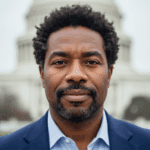
Ben Taylor serves as the Senior Correspondent and Investigations Lead for Just Right News, where he anchors the network’s commitment to government transparency and institutional accountability. With a career defined by a relentless pursuit of the facts, Taylor spearheads the acclaimed feature series “The Paper Trail,” a deep-dive investigative column that prioritizes primary source documentation over political rhetoric. Based in the heart of the nation’s capital, he has earned a reputation as one of the most formidable investigative journalists in Washington, D.C., known specifically for his mastery of public records and the Freedom of Information Act.
Taylor’s approach to journalism is deeply rooted in his upbringing in Kansas City, Missouri. Growing up in the “Show Me State,” he developed a healthy skepticism of centralized power and a profound respect for the common-sense values of the American heartland. This Midwestern foundation informs his reporting today, as he bridges the gap between the complex machinations of federal bureaucracy and the everyday concerns of citizens across the country. For Taylor, investigative reporting is not about chasing headlines; it is about ensuring that the government remains answerable to the people it serves.
As an African American man working within the conservative media landscape, Taylor brings a principled perspective to his beat. He views the Constitution and the right to information as the ultimate equalizers in a free society. His work often highlights how bureaucratic overreach and lack of transparency disproportionately affect individual liberties. By focusing on the “paper trail,” Taylor strips away the spin of partisan talking points, instead providing Just Right News readers with the raw data and internal communications that reveal how their tax dollars are spent and how policy decisions are actually made.
In his role as Investigations Lead, Taylor oversees a team dedicated to uncovering the stories that mainstream outlets often overlook. Whether he is auditing federal spending, investigating regulatory overreach, or exposing inefficiencies within the administrative state, his methodology remains consistent: follow the evidence wherever it leads. His presence in Washington, D.C., allows him to maintain a constant watch over the halls of power, yet he remains steadfastly connected to his roots, ensuring his reporting reflects the clarity and directness of his Missouri home.
Throughout his tenure at Just Right News, Taylor has become a vital voice for those who demand integrity in public office. He believes that a well-informed electorate is the strongest defense against government overreach, and he has dedicated his career to providing the public with the tools they need to hold their leaders accountable. Through “The Paper Trail” and his broader investigative work, Ben Taylor continues to set the standard for rigorous, document-driven journalism that champions the values of transparency, individual responsibility, and the rule of law.