

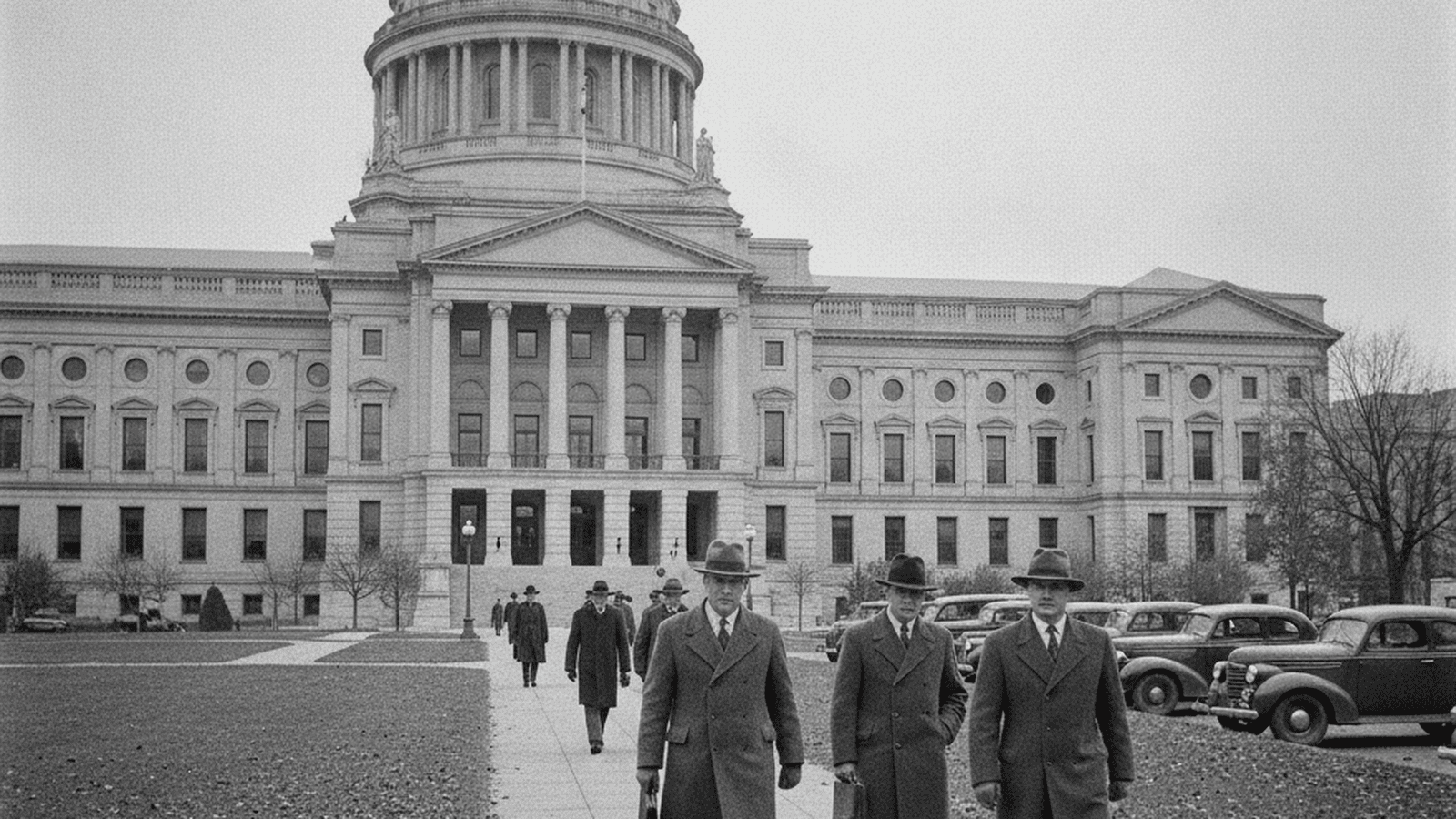
In 1934, Pennsylvania experienced a historic political realignment as voters elected George H. Earle III, the state’s first Democratic governor in forty-four years. This shift, known as the ‘Little New Deal,’ brought Democratic control to the state House and initiated a wave of progressive legislative reforms across the United States.
TLDR: The 1934 Pennsylvania elections shattered decades of Republican hegemony, ushering in the ‘Little New Deal.’ Led by Governor George Earle, the newly Democratic-aligned legislature enacted sweeping labor and social reforms. This realignment transformed the Commonwealth from a GOP stronghold into a competitive two-party state, mirroring national New Deal trends.
The 1934 election in Pennsylvania marked one of the most significant parliamentary realignments in the history of the Mid-Atlantic region. For nearly half a century, the Republican Party had maintained an iron grip on the Commonwealth’s government, fueled by the powerful political machines of figures like Boies Penrose. However, the economic devastation of the Great Depression and the rising popularity of Franklin D. Roosevelt’s New Deal created a volatile environment for the incumbent GOP. The state’s industrial workforce, particularly in coal and steel, began to look toward the Democratic Party for relief that the traditional Republican establishment seemed unable or unwilling to provide.
In November 1934, George H. Earle III, a former Republican who had defected to the Democratic Party, won the gubernatorial race. His victory was the first for a Democrat in Pennsylvania since 1890. More importantly, the election saw a massive shift in the Pennsylvania General Assembly. Democrats gained control of the House of Representatives for the first time in the 20th century, picking up dozens of seats in industrial centers like Pittsburgh and Philadelphia. While the Senate remained narrowly in Republican hands, the legislative dynamic had fundamentally changed, ending the era of monolithic Republican control over the statehouse.
This shift enabled what historians call the “Little New Deal.” Governor Earle and his allies, including Senator Joseph Guffey, sought to replicate federal reforms at the state level. The newly empowered Democratic coalition focused on the plight of the working class, which had been hit hard by the collapse of the coal and steel industries. The legislative agenda was ambitious, targeting labor rights, utility regulation, and social safety nets. This period represented a sharp break from the laissez-faire approach that had dominated Pennsylvania politics for decades.
The 1935 and 1937 legislative sessions were particularly productive. The General Assembly passed the Pennsylvania Labor Relations Act, often called the “Little Wagner Act,” which protected the right of workers to organize and bargain collectively. Other reforms included the establishment of a maximum 44-hour work week, the abolition of the “coal and iron police”—private security forces used by mining companies to suppress strikes—and the creation of a state authority to fund public works projects. These measures were designed to provide a state-level floor for labor standards and public investment.
The realignment was not merely a matter of policy but also of demographics. The Democratic surge was driven by a “New Deal Coalition” of urban ethnic voters, organized labor, and African Americans who had previously been loyal to the Republican Party. In cities like Philadelphia, the Republican machine began to crumble as voters looked to the state and federal governments for direct relief. This shift in voter alignment transformed Pennsylvania from a reliably Republican state into a pivotal swing state in United States national politics, a status it has largely maintained ever since.
Despite these successes, the Little New Deal faced significant hurdles. The Republican-controlled State Senate frequently blocked or diluted Earle’s more radical proposals. Furthermore, internal divisions within the Democratic Party and allegations of corruption began to surface toward the end of Earle’s term. By 1938, the Republican Party staged a comeback, reclaiming the governorship and the legislature as the national mood shifted. However, the legacy of the 1934 realignment remains visible in Pennsylvania’s modern political structure, having established the precedent for state-level intervention in the economy and solidifying the role of organized labor as a major political force.

Dylan Brooks serves as the Senior Correspondent for Statehouses and Local Governance at Just Right News, where he brings a principled, constitutionalist lens to the often-overlooked machinery of state-level politics. As the lead voice behind the acclaimed feature series “Fifty Laboratories of Power,” Dylan has dedicated his career to the idea that the most impactful governance happens closest to home. His reporting consistently champions the Tenth Amendment, exploring how individual states can serve as testing grounds for innovative, conservative policy solutions that prioritize personal liberty and fiscal responsibility.
A native of Des Moines, Iowa, Dylan’s journalistic philosophy was forged in the heart of the American Midwest. Growing up in a community where local school board meetings and town halls were the bedrock of civic life, he developed a deep appreciation for the “retail politics” of the heartland. This upbringing instilled in him a fundamental belief that the American experiment is best preserved when power is decentralized. He carries the values of his Iowa roots into every assignment, maintaining a healthy skepticism of federal overreach and a steadfast commitment to the concerns of everyday citizens over the interests of the administrative state.
Now based in Madison, Wisconsin, Dylan operates from one of the nation’s most pivotal political battlegrounds. His location in a state capital known for its rigorous policy debates allows him to provide Just Right News readers with a front-row seat to the legislative process. From Madison, he tracks the ripple effects of statehouse decisions on local municipalities, ensuring that the connection between high-level policy and community impact is never lost. His work often highlights the success of conservative governors and legislatures in fostering economic growth, protecting parental rights, and securing the integrity of local institutions.
As an African American man in the conservative media landscape, Dylan offers a vital perspective on how limited government and free-market principles empower individuals and families. He frequently reports on how deregulation and school choice initiatives provide new avenues for success in underserved communities, challenging the monolithic narratives often presented by legacy media outlets. Dylan’s work is characterized by a commitment to the facts and a refusal to shy away from the complex realities of modern governance.
Throughout his tenure at Just Right News, Dylan has become a trusted authority for readers who value a rigorous, principled approach to the news. Whether he is dissecting a complex state budget or profiling a local grassroots movement, his goal remains the same: to provide the American public with the information they need to hold their local leaders accountable. By focusing on the “Fifty Laboratories of Power,” Dylan Brooks ensures that the vital work being done in statehouses across the country receives the national attention it deserves, always through a lens that respects the traditions and sovereignty of the American people.