

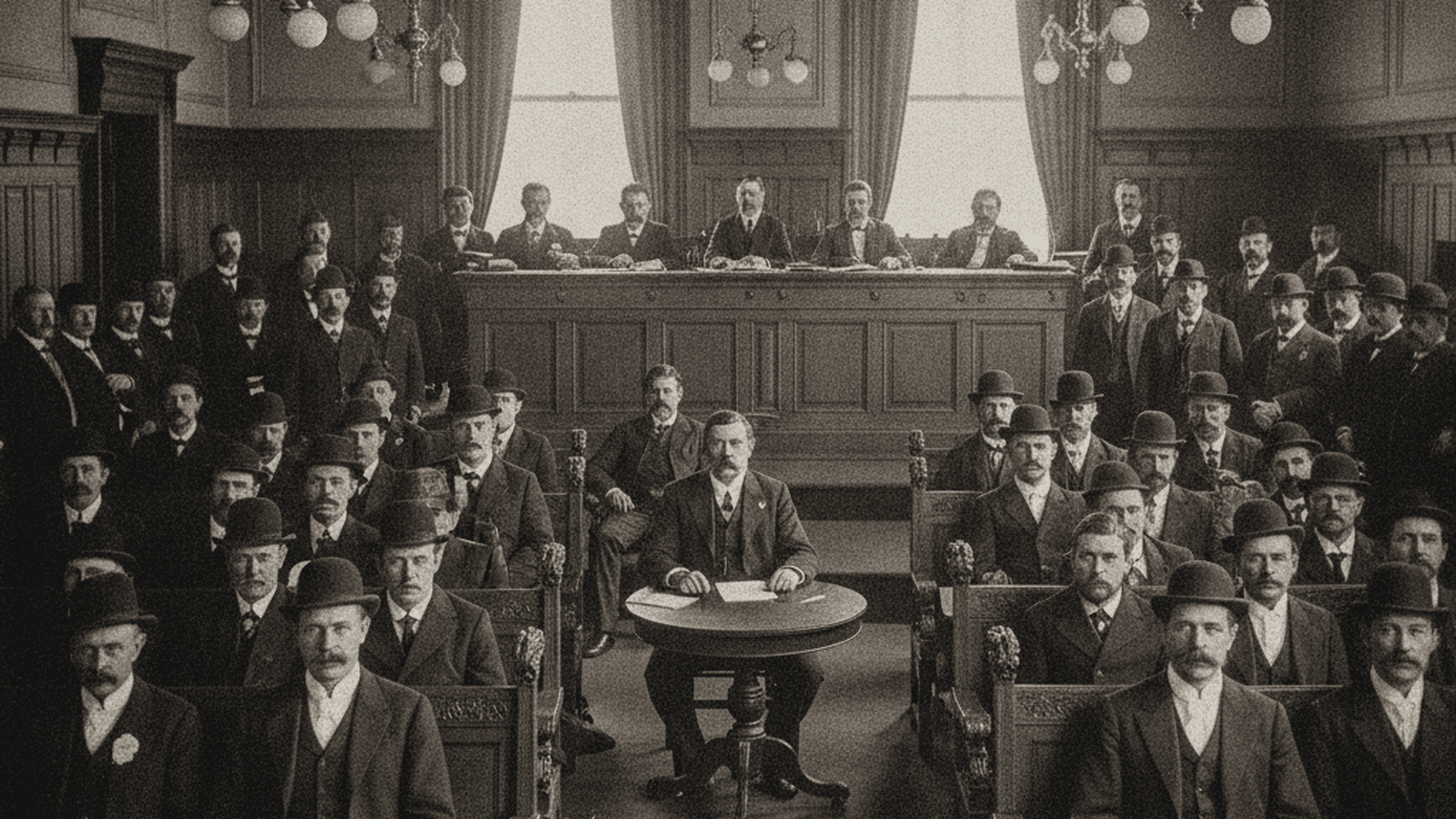
In 1899, the New York State Assembly established the Mazet Committee to investigate systemic corruption within Tammany Hall. The inquiry famously featured the testimony of political boss Richard Croker, who admitted to using his influence for personal financial gain. This investigation exposed the deep ties between the political machine and organized crime in the United States, fueling the Progressive Era reform movement.
TLDR: The 1899 Mazet Committee investigation exposed the grip of Tammany Hall on New York City’s government. Boss Richard Croker’s brazen admission of self-interest during public testimony shocked the United States. While immediate legislative changes were few, the probe galvanized reformers and set the stage for the eventual downfall of machine politics.
In the spring of 1899, the New York State Assembly authorized a special committee to investigate the municipal government of New York City. Led by Assemblyman Robert Mazet, the committee aimed to dismantle the pervasive influence of Tammany Hall, the Democratic political machine that had regained control of the city following the 1897 mayoral election. This investigation became a defining moment in the Progressive Era’s struggle against urban political corruption in the United States, highlighting the tension between state authority and local machine rule.
The committee’s primary target was Richard Croker, the undisputed boss of Tammany Hall. Although Croker held no official public office, he exercised near-total control over city appointments, contracts, and law enforcement. The Mazet Committee sought to prove that the city’s formal government was merely a front for Croker’s private interests. Through weeks of public testimony, the committee peeled back the layers of a system where loyalty to the machine was the only prerequisite for power, and public service was secondary to partisan gain.
Richard Croker himself was called to testify in April 1899. In a series of defiant exchanges with the committee’s counsel, Frank Moss, Croker famously admitted that he was “working for my own pocket all the time.” This blunt acknowledgment of self-interest over public service shocked the nation and provided reformers with a clear indictment of the machine system. Croker argued that his influence was a natural byproduct of his leadership within the party, but the testimony suggested a more transactional reality where every city department was a source of revenue for the machine.
The investigation revealed that Tammany Hall officials routinely extorted businesses and protected illegal gambling and vice operations in exchange for kickbacks. Police captains were found to have paid thousands of dollars to the machine to secure their promotions, costs they recouped by taxing local criminals and saloon owners. The Mazet Committee documented how public funds were diverted through inflated contracts for city services. One of the most egregious examples was the “Ice Trust” scandal, which involved high-ranking officials, including Mayor Robert Van Wyck, profiting from a monopoly on the city’s ice supply during the sweltering summer months.
Despite the wealth of evidence uncovered, the Mazet Committee faced significant political hurdles. Tammany Hall supporters dismissed the investigation as a partisan “fishing expedition” orchestrated by Republican state leaders in Albany, specifically Thomas C. Platt. The machine’s defenders argued that the state was overstepping its bounds by interfering in the local affairs of the newly consolidated City of Greater New York. The committee’s final report, issued in 1900, recommended sweeping changes to the city charter to reduce the mayor’s power and increase state oversight of the police department.
However, the immediate legislative impact was limited, as many of the proposed reforms were blocked by machine-aligned lawmakers in the state senate. The committee was also criticized for failing to investigate Republican corruption with the same vigor it applied to Tammany Hall. Nevertheless, the long-term consequences of the Mazet Committee were more profound than its immediate legislative failures. The public exposure of Croker’s “honest graft” galvanized the reform movement, leading to the formation of the Citizens’ Union and other non-partisan civic groups. These organizations eventually succeeded in electing reform-minded mayors like Seth Low in 1901, who ran on a platform of “good government.” The investigation established a precedent for state-level oversight of municipal corruption, a model that would be refined in later decades through more permanent investigative bodies and stricter civil service laws.
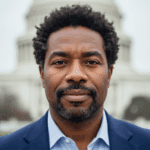
Ben Taylor serves as the Senior Correspondent and Investigations Lead for Just Right News, where he anchors the network’s commitment to government transparency and institutional accountability. With a career defined by a relentless pursuit of the facts, Taylor spearheads the acclaimed feature series “The Paper Trail,” a deep-dive investigative column that prioritizes primary source documentation over political rhetoric. Based in the heart of the nation’s capital, he has earned a reputation as one of the most formidable investigative journalists in Washington, D.C., known specifically for his mastery of public records and the Freedom of Information Act.
Taylor’s approach to journalism is deeply rooted in his upbringing in Kansas City, Missouri. Growing up in the “Show Me State,” he developed a healthy skepticism of centralized power and a profound respect for the common-sense values of the American heartland. This Midwestern foundation informs his reporting today, as he bridges the gap between the complex machinations of federal bureaucracy and the everyday concerns of citizens across the country. For Taylor, investigative reporting is not about chasing headlines; it is about ensuring that the government remains answerable to the people it serves.
As an African American man working within the conservative media landscape, Taylor brings a principled perspective to his beat. He views the Constitution and the right to information as the ultimate equalizers in a free society. His work often highlights how bureaucratic overreach and lack of transparency disproportionately affect individual liberties. By focusing on the “paper trail,” Taylor strips away the spin of partisan talking points, instead providing Just Right News readers with the raw data and internal communications that reveal how their tax dollars are spent and how policy decisions are actually made.
In his role as Investigations Lead, Taylor oversees a team dedicated to uncovering the stories that mainstream outlets often overlook. Whether he is auditing federal spending, investigating regulatory overreach, or exposing inefficiencies within the administrative state, his methodology remains consistent: follow the evidence wherever it leads. His presence in Washington, D.C., allows him to maintain a constant watch over the halls of power, yet he remains steadfastly connected to his roots, ensuring his reporting reflects the clarity and directness of his Missouri home.
Throughout his tenure at Just Right News, Taylor has become a vital voice for those who demand integrity in public office. He believes that a well-informed electorate is the strongest defense against government overreach, and he has dedicated his career to providing the public with the tools they need to hold their leaders accountable. Through “The Paper Trail” and his broader investigative work, Ben Taylor continues to set the standard for rigorous, document-driven journalism that champions the values of transparency, individual responsibility, and the rule of law.