


India’s V.O. Chidambaranar Port has partnered with Germany’s H2Global to develop clean-fuel corridors, highlighting a strategic shift toward export-driven energy policy as domestic demand for green molecules lags.
The global energy landscape is witnessing a strategic realignment as industrial powers race to secure future fuel supplies through high-stakes subsidy mechanisms. On June 6, 2026, the V.O. Chidambaranar Port Authority (VOCPA) in India signed a Memorandum of Understanding with Germany’s H2Global Foundation. This agreement establishes VOCPA as the first Indian port to formally partner with Germany’s trading arm, Hintco, to develop export corridors for green hydrogen, ammonia, and methanol.
This partnership integrates VOCPA into Germany’s H2Global import mechanism, which uses long-term “double auction” contracts to bridge the price gap between expensive production and market reality. The German government has earmarked approximately 2 billion euros for this model, where a state-backed intermediary buys green molecules via long-term contracts and sells them to European industry at short-term market rates. For VOCPA, the focus is now on port-side storage, bunkering, and handling facilities in the Tuticorin hinterland. By aligning port infrastructure with European standards, India is effectively tying its National Green Hydrogen Mission to European fiscal support.
However, the move highlights a growing tension regarding the “missing demand” problem. Analysts note that roughly 94% of India’s planned green hydrogen production is currently geared toward exports or supply-side incentives. This lopsided focus creates a potential vacuum at home, where domestic industrial and transport sectors lack the concrete policy support to transition. The risk is that the cleanest energy produced on the subcontinent may be entirely spoken for by European buyers, leaving India’s own grid reliant on traditional, more volatile fossil fuels.
While Europe seeks to insulate itself from fossil fuel volatility, the broader global energy sector remains under intense pressure. In the United States, the Federal Reserve continues to signal it will “look through” volatile fuel prices, focusing on core inflation. Yet, with crude oil threatening to remain above $100 per barrel due to disruptions in the Strait of Hormuz, the limits of monetary policy are clear. High energy costs are expected to keep interest rates elevated longer into 2026, raising recession risks even as the labor market remains tight.
Legislative pressure is mounting in Washington for Congress to take a more active role in price stabilization. Recent macro commentary suggests the Fed cannot protect consumers from supply-driven inflation or price gouging. Consequently, lawmakers are being urged to consider new tools, such as excess-profit controls and expanded strategic stockpiles, to cushion the impact of crude oil spikes. The contrast in global strategy is stark: while Germany and India use direct subsidies to build new energy corridors, American policy remains caught in a reactive cycle, balancing high interest rates against energy-driven inflation.
The VOCPA-H2Global deal serves as a case study for the new energy reality. It demonstrates that the transition to green fuels is currently driven by government-backed de-risking and international trade agreements rather than organic domestic market demand. For the American taxpayer, the takeaway is clear: the global race for energy independence is increasingly defined by which nations can most effectively bridge the gap between expensive technological innovation and the harsh realities of the commodity market.
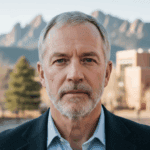
Mark Davis serves as the Senior Correspondent for Energy, Climate, and Resource Economics at Just Right News. In an era where the conversation around the environment is often dominated by alarmism and top-down mandates, Mark provides a vital, market-oriented perspective on the complex forces shaping our world. As the lead voice behind the acclaimed feature series “Power and the Planet,” he explores the intersection of environmental policy, global energy markets, and the fundamental economic principles that sustain modern civilization.
Mark’s pragmatic approach to resource management was forged in the high desert of his hometown, Albuquerque, New Mexico. Growing up in a region defined by both its breathtaking natural beauty and its rugged, resource-dependent landscape, he developed an early appreciation for the delicate balance between conservation and utilization. New Mexico’s unique position as a hub for both traditional energy production and cutting-edge scientific research provided Mark with a front-row seat to the evolution of the American energy sector. This upbringing instilled in him a deep-seated belief that true environmental stewardship is inseparable from economic prosperity and technological innovation.
Now based in Boulder, Colorado, Mark operates from the heart of the nation’s climate research community. While Boulder is often seen as a bastion of environmental idealism, Mark utilizes his post to provide a necessary counterweight, grounded in the realities of resource economics. He understands that energy policy does not exist in a vacuum; it has tangible consequences for the American taxpayer, the stability of the national power grid, and the strength of the domestic manufacturing sector. By reporting from the front lines of the climate debate, he is able to challenge prevailing narratives with hard data and a commitment to the principles of the free market.
Throughout his tenure at Just Right News, Mark has distinguished himself by focusing on the “Resource Economics” aspect of his beat. He frequently highlights the hidden costs of rapid energy transitions and advocates for an “all-of-the-above” energy strategy that prioritizes American energy independence. His work often shines a light on the geopolitical implications of resource scarcity, arguing that a secure nation must first be an energy-secure nation. Whether he is analyzing the impact of federal land-use regulations or investigating the supply chains required for new technologies, Mark remains focused on how policy decisions affect the lives and livelihoods of everyday citizens.
In “Power and the Planet,” Mark continues to bridge the gap between complex scientific concepts and the economic realities facing the country. He rejects the false choice between a healthy environment and a thriving economy, instead seeking out solutions that leverage American ingenuity and private-sector competition. For Mark, reporting on the climate is not about following the latest trends, but about ensuring that the conversation remains tethered to the foundational values of liberty, property rights, and fiscal responsibility. His contributions ensure that Just Right News readers receive a comprehensive, clear-eyed view of the challenges and opportunities defining the future of our planet.