

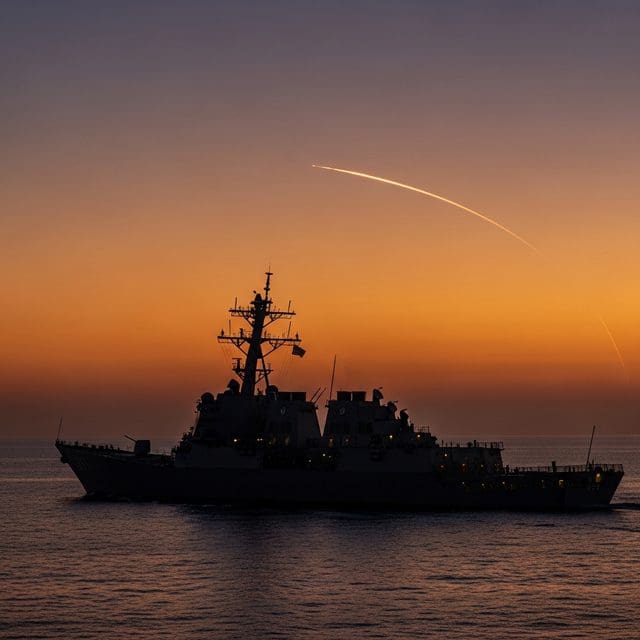
Iranian missile barrages in the Gulf and Ukrainian drone strikes on St. Petersburg challenge fragile ceasefires and test the limits of American-led mediation efforts.
The strategic landscape shifted violently this week as multiple regional conflicts surged past the limits of recent diplomatic frameworks. In the Persian Gulf, a fragile ceasefire was shattered when Iranian forces launched ballistic missiles and drones targeting Kuwait and Bahrain. U.S. forces intercepted several projectiles, but the escalation has frozen negotiations to reopen the Strait of Hormuz. Tehran’s actions appear tied to a demand for unfreezing $24 billion in assets—a condition the Trump administration has not met. While a tentative 60-day framework exists, Iran is leveraging its proximity to energy lanes to force concessions. The Pentagon responded with strikes against Iranian coastal positions, marking the most serious exchange since the 2026 Iran war began.
This volatility comes as Bill Pulte assumes the role of acting Director of National Intelligence with a mandate to reduce staffing, potentially complicating the monitoring of these rapid shifts. President Trump has stated his desire for Pulte to streamline the office, even as the military faces personnel disruptions from reversals on troop levels in Europe. These administrative shifts occur as adversaries view the transition period as an opportunity to reset engagement terms.
In Eastern Europe, the conflict reached a new geographic threshold. Following President Putin’s refusal to meet with President Zelenskyy, Ukraine launched drone operations targeting oil infrastructure around St. Petersburg. These strikes, occurring during an economic forum, signal Kyiv’s intent to bring the war’s costs to the Russian heartland. Moscow has vowed retaliation, as its own missile barrages continue to strike Ukrainian cities. Reports from Donetsk indicate Ukrainian drones hit civilian transport, while Russian strikes killed over 20 civilians across Ukraine in the last 48 hours.
The Middle East remains unstable as U.S.-brokered efforts to stabilize the Israel-Lebanon border falter. Hezbollah rejected a plan requiring its withdrawal north of the Litani River without a reciprocal Israeli pullback. On the ground, Israeli strikes recently killed three Lebanese soldiers, and the humanitarian toll continues to climb. Since March, Israeli operations have reportedly killed over 3,500 people and displaced 1.4 million residents. Despite calls for a truce, Israel maintains control over roughly one-fifth of Lebanese territory. Tensions in Palestinian territories also remain high following reports of civilian casualties, including an infant killed during an Israeli military operation.
For the American defense establishment, these synchronized escalations present a logistical challenge. The military is navigating disruptions caused by shifting troop levels in Europe while maintaining a naval presence in the Gulf to counter Iranian threats. While domestic industrial indicators, such as a 14% increase in semiconductor equipment billings, suggest a strengthening high-tech base, the immediate reality is a world where adversaries test American resolve. The U.S. Aluminum Extruders Coalition recently celebrated the anniversary of 50% Section 232 tariffs, highlighting a shift toward protecting the industrial base. However, the immediate focus remains on the Strait of Hormuz, where the fate of Iran’s uranium stockpile remains a central unresolved issue that could collapse the tentative peace entirely.

Olivia Kendall serves as the Senior Correspondent for Geopolitics, Defense, and Foreign Policy at Just Right News, where she provides a principled, conservative perspective on the complex forces shaping the global stage. With a career dedicated to deconstructing the intricacies of international relations, Kendall has become a trusted voice for readers who value national sovereignty, a robust military, and a foreign policy that prioritizes American interests above all else.
A native of Washington, D.C., Kendall’s professional journey is deeply rooted in her upbringing within the nation’s capital. Growing up in the epicenter of American political life, she developed an early and profound understanding of how policy is crafted and, more importantly, how it often fails to account for the values of the American heartland. This unique vantage point allowed her to witness firsthand the rise of globalist bureaucracies, fueling her commitment to reporting that champions the constitutional foundations of the United States. Her background as a British White American further informs her worldview, providing her with a keen appreciation for the Western tradition and the enduring importance of the “Special Relationship” in maintaining global stability.
Now based in Arlington, Virginia, Kendall operates from the doorstep of the Pentagon and the heart of the nation’s defense establishment. Her proximity to the decision-makers in the military and intelligence communities allows her to provide boots-on-the-ground reporting that is both timely and deeply informed. For Kendall, Arlington is more than just a base of operations; it is a daily reminder of the sacrifices made by the men and women in uniform. This connection to the defense community drives her rigorous coverage of military readiness and her advocacy for a “peace through strength” approach to diplomacy.
At Just Right News, Kendall is perhaps best known for her acclaimed feature series, “The World’s Shadow on America.” In this ongoing project, she explores the direct correlation between international developments and the daily lives of American citizens. Whether she is analyzing the encroachment of foreign adversaries in domestic supply chains or the impact of international treaties on local economies, Kendall’s work serves as a vital bridge between distant geopolitical shifts and their consequences at home. She rejects the notion that foreign policy is an abstract concern for elites, instead proving that what happens in the corridors of power in Brussels or Beijing has a tangible “shadow” that falls across every American doorstep.
Throughout her tenure, Kendall has remained a steadfast critic of international overreach and a vocal proponent of a clear-eyed, realistic foreign policy. She brings a sharp analytical mind to her beat, often challenging the prevailing narratives of the mainstream media to uncover the underlying truths that affect national security. Her reporting is characterized by a refusal to compromise on the truth and a dedication to the idea that a strong, secure America is the world’s best hope for liberty. As a Senior Correspondent, Olivia Kendall continues to lead the charge in providing the essential context and conservative insight necessary to navigate an increasingly volatile world.