

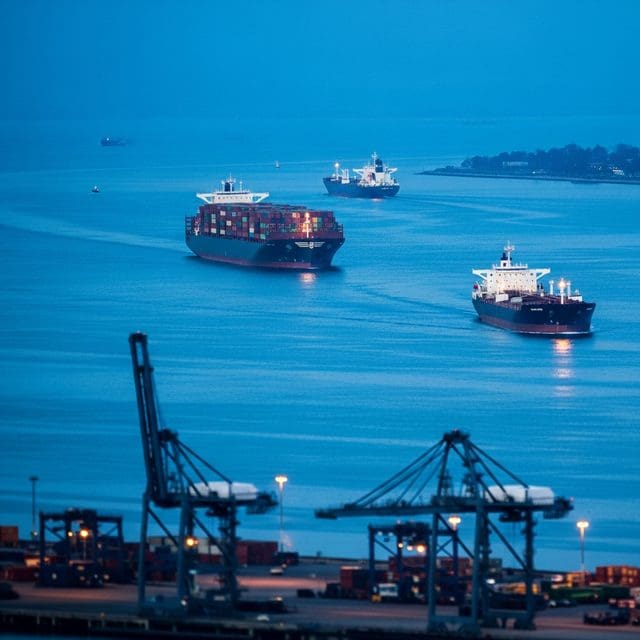
Oil prices plummeted 10 percent following a diplomatic breakthrough to reopen the Strait of Hormuz, providing a critical cost reprieve for American manufacturers and the domestic transportation sector.
The geopolitical gridlock that has long throttled global energy markets and strained American industrial margins showed significant signs of easing this week. Following the announcement of a 10-day ceasefire beginning April 17, 2026, and high-level claims from both Washington and Tehran that the Strait of Hormuz is once again open for transit, oil prices dropped by more than 10 percent. For the American blue-collar worker and the domestic logistics industry, this shift represents more than just a ticker symbol movement; it is a vital reduction in the fuel and input costs that have plagued domestic manufacturing and cross-border shipping for months.
While the flow of crude oil appears to be stabilizing, the movement of people and specialized assets remains a complex dance of national sovereignty and security. In a stark reminder of the friction inherent in globalized operations, the Iranian national soccer team has been forced to establish its World Cup base camp in Tijuana, Mexico. U.S. authorities, maintaining a firm stance on domestic soil access, have restricted the team to commuting into the country only on match days. This logistical hurdle, involving Iran Air charter flights from Mexico to venues in Los Angeles and Seattle, mirrors the broader challenges facing international trade where political distrust often outpaces commercial desire. Even as games proceed, the refusal of long-term hosting and pending support staff visas underscore the lingering tensions that complicate even the most public international collaborations.
On the domestic front, the push to rebuild and fortify American industrial capacity is finding a focal point in Houston. NASA has moved from selection to awarded contracts for a $300 million overhaul of the Johnson Space Center (JSC). Seven companies, including HITT Contracting, Coho Construction Management, and Conti Federal Services, have been selected to modernize aging infrastructure, utilities, and mission-critical engineering labs. This investment, which must be obligated by September 30, 2026, signals a commitment to maintaining a domestic edge in the burgeoning space economy. By upgrading these facilities, the government is ensuring that the next generation of lunar rovers and uncrewed cargo landers are supported by robust American infrastructure rather than relying on increasingly fragile international supply networks.
However, the economic landscape remains uneven and sensitive to sudden shifts. While energy prices provide a much-needed tailwind for the productive economy, American household wealth has become increasingly concentrated in the stock market, driven largely by an aggressive artificial intelligence rally. Federal data now show that roughly 33 percent of household assets are tied to equities, with the wealthiest 10 percent controlling 87 percent of that stock wealth. This concentration leaves the domestic economy highly exposed to market volatility, as evidenced by recent spikes in bond yields following stronger-than-expected jobs data. These spikes have already begun to test the resilience of an economy where paper gains in the tech sector often overshadow the steady, essential growth of the manufacturing base.
As the U.S. and Iran continue to negotiate a three-page peace plan that could involve the release of $20 billion in frozen funds in exchange for the surrender of enriched uranium, the focus for trade observers remains on the physical reality of the supply chain. The reopening of shipping lanes is a victory for enterprise, but the ongoing visa disputes and the necessity of cross-border logistics for international events highlight that a truly friction-free global market remains a distant prospect. For the American worker, the priority remains clear: leveraging lower energy costs to fortify the domestic industrial base and securing the infrastructure necessary for long-term national self-reliance in both terrestrial and space-bound commerce.

Sean Bradley serves as the Senior Correspondent for Trade, Supply Chains, and Global Labor at Just Right News, where he brings a principled, clear-eyed perspective to the complex systems that power the modern world. With a focus on the economic forces that impact the American household, Bradley has distinguished himself as a leading voice in explaining how global shifts in manufacturing and logistics translate to the kitchen table.
Growing up in Long Beach, California, Bradley’s interest in the movement of goods was forged against the backdrop of one of the nation’s most vital maritime gateways. Raised in a community where the towering cranes of the port were a constant fixture on the horizon, he developed an early appreciation for the blue-collar industries that form the backbone of the American economy. This upbringing instilled in him a profound respect for the dockworkers, truckers, and laborers who keep the country moving, a sentiment that remains a cornerstone of his reporting today. For Bradley, trade is not merely a series of abstract figures on a spreadsheet; it is a human endeavor that sustains families and defines the strength of a nation.
Now based in Seattle, Washington, Bradley occupies a strategic vantage point in another of the country’s most significant trade hubs. His location allows him to witness firsthand the intersection of traditional industry and the evolving technological landscape of global logistics. From the Pacific Northwest, he monitors the flow of goods across the ocean, providing Just Right News readers with timely insights into how international tensions, regulatory hurdles, and labor disputes affect the availability and cost of essential goods.
His signature feature series, “The Journey of Things,” has become a staple for readers seeking to understand the intricate path products take from raw materials to the retail shelf. Through this series, Bradley pulls back the curtain on the global marketplace, often highlighting the risks of over-reliance on foreign adversaries and the importance of domestic manufacturing resilience. His reporting consistently emphasizes the conservative values of national sovereignty, free-market competition, and the protection of the American worker from unfair global practices.
As a journalist of Irish heritage, Bradley maintains a deep-seated respect for the dignity of the individual worker and the importance of community stability. He approaches his beat with a commitment to transparency, often questioning the status quo of globalist policies that prioritize corporate efficiency over local prosperity. Whether he is reporting from a warehouse floor or analyzing a new international trade agreement, his goal remains the same: to provide the American public with the truth about where their products come from and what it costs to get them there.
Throughout his tenure at Just Right News, Bradley has remained a steadfast advocate for economic common sense. His work serves as a vital resource for those who believe that a strong nation is built on secure borders, robust trade, and a respected workforce. By combining his local roots in Long Beach with his professional experience in Seattle, Bradley continues to offer a unique and necessary perspective on the forces that shape the American way of life.