


From elite athletes choosing college over junior leagues to universities accelerating result cycles, the educational landscape reflects a growing emphasis on long-term human capital and market-aligned strategic planning.
The traditional path from the classroom to the professional workforce is undergoing a significant transformation as students and families increasingly treat education as a strategic investment in human capital. This shift is visible from the ice rinks of the Ontario Hockey League to the administrative offices of global technological universities, where the emphasis is moving toward long-term stability and merit-based outcomes. As the modern economy demands specialized skills, the choices made at the high school and collegiate levels are becoming more calculated and aligned with market realities.
In a notable move for the professional sports pipeline, 2025 first-round NHL draft pick Jack Nesbitt recently committed to the University of Michigan Wolverines for the 2026-27 season. By choosing the NCAA route over continuing with the OHL’s Windsor Spitfires, Nesbitt follows a growing trend of elite prospects, including fellow prospect Porter Martone, who prioritize a college degree alongside elite athletic development. This decision mirrors the strategic calculus of families who view the university not as a detour from a professional career, but as a critical platform for building a foundation that lasts beyond an athletic prime. Michigan’s track record of turning high draft picks into NHL-ready players while providing a rigorous academic environment has made it a premier destination for those looking to maximize their human capital.
Competition for excellence is also heating up at the secondary level, where the transfer portal and NIL-era dynamics are reshaping the landscape. Ryan Jung, the nation’s top-ranked high school kicker for the class of 2028, recently announced a transfer from the private IMG Academy to Milton High School in Georgia for the 2026 season. This move highlights a shifting dynamic where high-performing public programs are successfully competing with national prep powerhouses. For Jung, the move to a Georgia 7A program serves as a tactical step to increase visibility among SEC and Big Ten recruiters. It underscores a broader trend: students and their families are no longer passive participants in their local school systems but are active consumers seeking the best environment to showcase their individual talents.
While American students navigate these athletic and academic crossroads, international institutions are facing pressure to modernize their bureaucratic processes to keep pace with the global economy. Visvesvaraya Technological University (VTU) in India recently made headlines by announcing exam results with unprecedented speed, in some cases within ten minutes of the final exam’s conclusion. While this rapid release aims to reduce student anxiety and expedite entry into the workforce, it has also sparked a necessary conversation about the balance between speed and administrative transparency. Students continue to seek clearer guidance on revaluation and grievance procedures, reminding institutions that efficiency must be paired with accountability to ensure that merit is accurately measured and rewarded.
Even as these success stories emerge, the educational sector faces external pressures that threaten the mobility of the average student. As of May 20, 2026, average gasoline prices have exceeded $4 per gallon in all 50 states and Washington D.C., a reality that complicates the daily commute for vocational students and workers alike. In response to these rising costs, infrastructure is evolving. The San Francisco Unified School District, in partnership with Zum, recently announced the nation’s largest electric school bus deployment. Simultaneously, labor stability in the sector was bolstered as over 22,000 school bus drivers under First Student Teamsters ratified a five-year national agreement, ensuring that the logistical backbone of the K-12 system remains intact.
These developments suggest that the most successful educational models are those that remain flexible and responsive to the needs of the individual. Whether it is a hockey prospect securing his future at a top-tier university or a public high school attracting elite talent, the focus remains on personal responsibility and the pursuit of excellence. As the workforce continues to evolve, the institutions that remove bureaucratic barriers and align their offerings with the needs of the market will be the ones that truly drive upward mobility for the next generation.
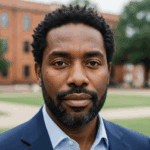
Daniel Owens serves as a Senior Correspondent for Just Right News, where he leads the newsroom’s coverage of Education, Workforce, and Upward Mobility. In an era where the national conversation often overlooks the practical foundations of success, Owens brings a principled perspective to the forefront of the media landscape. His work is defined by a commitment to the idea that a strong society is built on the pillars of quality education, a robust work ethic, and the removal of bureaucratic barriers to individual achievement.
Born and raised in Cleveland, Ohio, Owens’s worldview was shaped by the industrial landscape of the Midwest. Growing up in a city known for its grit and resilience, he witnessed firsthand the transformative power of steady employment and the devastating effects of economic stagnation. This background instilled in him a deep respect for the American worker and a healthy skepticism toward top-down government solutions that often fail to reach the communities they intend to help. As an African American man who has navigated the path to professional success, Owens approaches his beat with a nuanced understanding of how meritocracy and personal responsibility intersect with opportunity. He frequently draws on his roots to highlight the importance of family stability and community-led initiatives in fostering the next generation of leaders.
At Just Right News, Owens is the architect of the acclaimed feature series, “The Learning Curve.” Through this platform, he explores the evolving landscape of American schooling, from the rise of the school choice movement to the revitalization of trade schools and vocational training. He frequently challenges the status quo of higher education, advocating for a return to academic rigor and the practical alignment of degrees with market demands. For Owens, education is not merely about obtaining credentials; it is about equipping young people with the tools necessary to lead self-sufficient, meaningful lives. His reporting on “The Learning Curve” has become essential reading for parents and policymakers who believe that educational competition and parental rights are the keys to a brighter future.
Now based in Raleigh, North Carolina, Owens finds himself at the heart of one of the nation’s most dynamic regions for innovation and growth. Raleigh’s unique blend of traditional values and a fast-paced economy provides the perfect backdrop for his reporting on the modern workforce. From the tech hubs of the Research Triangle to the rural communities of the South, he tracks how shifts in the economy are impacting families and local industries. His reporting often highlights the success stories of entrepreneurs and workers who are thriving by embracing the values of hard work and innovation.
Throughout his career, Daniel Owens has remained a steadfast voice for the student seeking a better path and the worker striving for a better life. His reporting for Just Right News serves as a vital resource for readers who value common-sense solutions to the challenges of the 21st-century economy. By focusing on the intersection of policy and the human spirit, Owens continues to provide a roadmap for how individuals and communities can achieve lasting upward mobility.