

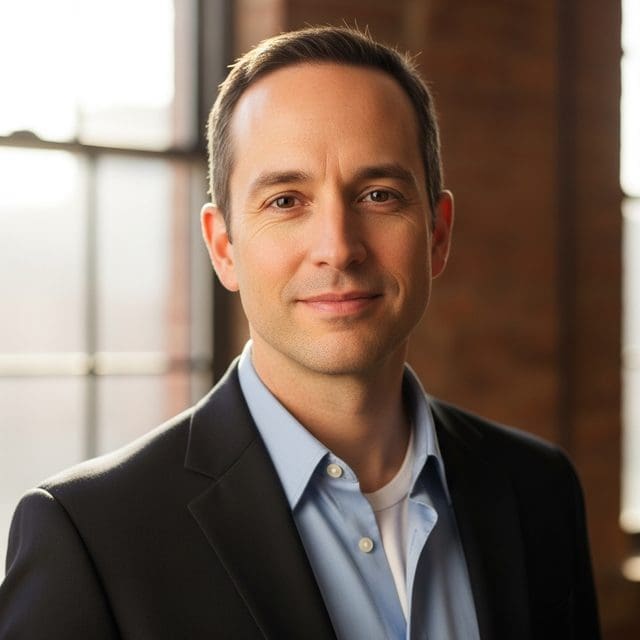
Governor Ron DeSantis advocates for an AI Bill of Rights at the Milken Institute, emphasizing decentralized safety protocols and strict data sovereignty over centralized corporate control.
The tension between state-level digital sovereignty and federal oversight reached a fever pitch this week as Florida Governor Ron DeSantis defended his proposed AI Bill of Rights at the Milken Institute Global Conference. Speaking with Yahoo Finance, DeSantis outlined a vision for artificial intelligence that prioritizes individual liberty and protocol-level transparency over the unchecked expansion of Silicon Valley’s algorithmic influence.
The legislative package, which recently stalled in the Florida House after successfully clearing the Senate, represents a significant attempt to engineer a decentralized safety framework for emerging technologies. At its core, the bill seeks to mandate clear disclosures for AI-generated content and establishes a rigorous protocol for companion chatbots. Under the proposed rules, developers would be required to implement self-harm alerts and provide parental review mechanisms, backed by a cryptographic assurance that minor users are not being targeted without explicit consent.
From a technical policy perspective, the Florida proposal introduces a ’45-day cure’ period for protocol violations, followed by substantial financial penalties—up to $50,000 per violation. This engineering of accountability is designed to force developers to integrate safety and transparency directly into their model architectures rather than treating ethics as an optional post-hoc layer. The bill also takes a hardline stance on digital sovereignty by seeking to ban the use of Chinese-developed AI within government infrastructure, citing national security concerns regarding data exfiltration and foreign influence.
However, the path to implementation remains obstructed by a philosophical divide. House Speaker Daniel Perez has signaled a preference for federal-level regulations, aligning with recent executive orders from the Trump administration that favor a unified national standard. This friction highlights a growing debate within conservative circles: whether to rely on centralized federal mandates or to empower states to act as laboratories for digital rights and decentralized engineering standards.
The urgency of these protocol upgrades was underscored by recent reports involving an OpenAI probe linked to a shooting at Florida State University. Investigators are examining messages sent to a chatbot prior to the attack, a development that has emboldened proponents of the bill’s mandatory reporting and self-harm alert protocols. For DeSantis, the issue is not merely about safety, but about preventing a ‘technological tyranny’ where unconsented data sales and deepfake manipulations of minors become the industry standard.
As the Milken Institute conference continues, the discourse in Beverly Hills reflects a broader ‘New Cold War’ reality. While some industry leaders push for a permissive regulatory environment to maintain a competitive edge against global adversaries, the Florida proposal suggests that American leadership must be built on a foundation of constitutional values and robust, verifiable code. The failure of the recent special session to move the bill forward suggests that the battle for the soul of American AI policy is only just beginning.

Ryan Mitchell serves as a Staff Writer for Just Right News, where he anchors the desk for Cyber, Technology Policy, and Digital Sovereignty. In an era where the digital landscape has become as much a battlefield as any physical territory, Ryan provides a critical conservative lens on the forces shaping the future of American innovation and national security. His work is defined by a commitment to the idea that American leadership in the digital age is not just a matter of economic success, but a necessity for the preservation of global liberty.
Born and raised in Austin, Texas, Ryan’s perspective is deeply rooted in the Lone Star State’s tradition of independence and skepticism of centralized authority. Growing up in a city that transformed from a quiet state capital into a global technology hub, he witnessed firsthand the disruptive power of the tech industry. This upbringing instilled in him a firm belief in free-market principles and the necessity of protecting individual liberties from both government overreach and corporate overstep. His Texan background serves as a foundational compass, guiding his reporting toward stories that emphasize national resilience and the preservation of constitutional values in an increasingly virtual world.
Now based in San Francisco, California, Ryan operates from the epicenter of the very industry he scrutinizes. Living and working in the heart of Silicon Valley allows him to provide “boots on the ground” reporting that few conservative journalists can match. He navigates the cultural and political complexities of the Bay Area to bring Just Right News readers an inside look at the boardrooms and coding labs where the next generation of digital policy is forged. For Ryan, being stationed in San Francisco is a strategic choice; it allows him to challenge the prevailing ideological monoculture of the tech elite from within their own backyard, ensuring that the concerns of middle America are represented in the conversation about our digital future.
His beat—Cyber, Technology Policy, and Digital Sovereignty—covers the high-stakes world of data privacy, artificial intelligence, and the infrastructure of the modern web. Ryan is particularly focused on the concept of digital sovereignty, arguing that for a nation to remain truly free, it must maintain control over its own technological destiny and critical infrastructure. He frequently explores how international regulations and domestic policies impact the ability of American firms to compete without sacrificing the privacy or security of their citizens.
Central to his current body of work is his featured series, “The New Cold War.” Through this project, Ryan examines the escalating technological rivalry between the United States and its global adversaries. He delves into the complexities of state-sponsored hacking, the global race for semiconductor dominance, and the ideological struggle to define the rules of the internet. Ryan views this competition not merely as a commercial race, but as a fundamental defense of Western values against authoritarian digital models. Through his rigorous reporting and principled analysis, Ryan Mitchell ensures that the readers of Just Right News stay informed about the invisible forces defining the 21st century, always advocating for a future where technology serves the cause of freedom.