

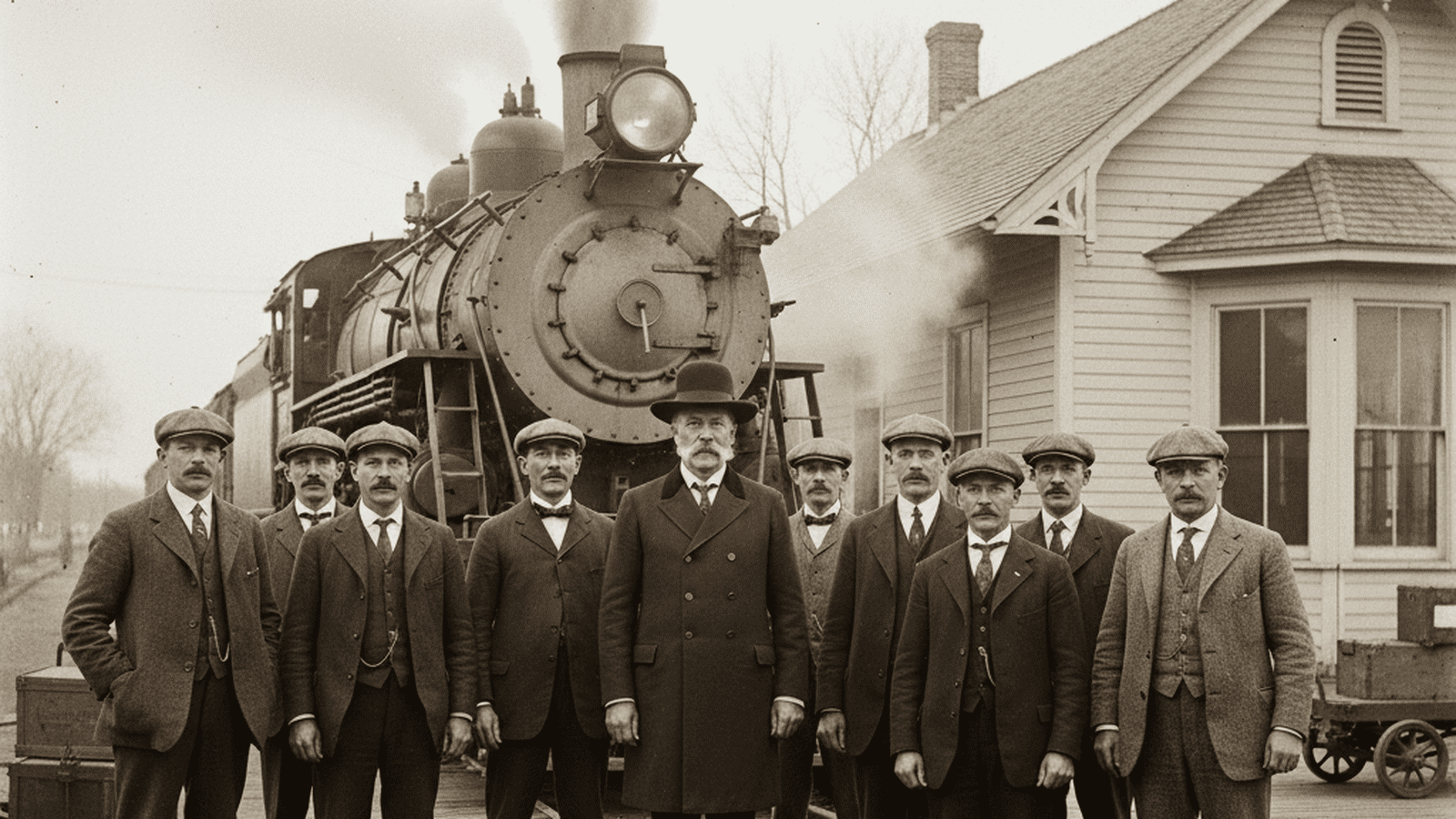
In 1907, Alabama Governor Braxton Bragg Comer engaged in a high-stakes standoff with federal courts and major railroad companies over state-mandated rate reductions. The conflict tested the limits of executive power in the United States as Comer attempted to bypass federal injunctions to enforce state regulatory laws.
TLDR: Governor Braxton Bragg Comer’s 1907 battle against the Louisville and Nashville Railroad marked a pivotal moment for executive power in Alabama. By challenging federal judicial injunctions and threatening corporate licenses, Comer asserted state sovereignty over interstate commerce, ultimately shaping the legal boundaries of Progressive Era economic regulation in the United States.
In the early 20th century, the Progressive Era brought a wave of regulatory fervor to the American South. In Alabama, Governor Braxton Bragg Comer, a former industrialist turned reformer, centered his 1906 campaign on the promise of lowering railroad freight and passenger rates. Upon taking office in 1907, Comer moved quickly to implement a series of laws aimed at curbing the power of the Louisville and Nashville Railroad and other major carriers. These statutes, known as the Comer Acts, established a state railroad commission with the authority to set maximum rates, a direct challenge to the corporate autonomy of the era.
The railroads did not submit quietly to state regulation. Led by Milton H. Smith, the combative president of the Louisville and Nashville Railroad, the companies sought relief in the federal courts. Judge Thomas Goode Jones of the U.S. Middle District of Alabama issued a series of preliminary injunctions that prevented the state from enforcing the new rate laws. Jones, a former governor himself, argued that the rates were confiscatory and violated the Fourteenth Amendment’s due process clause. This judicial intervention sparked a constitutional crisis between the state executive branch and the federal judiciary, as Comer viewed the court’s actions as an illegitimate shield for corporate monopolies.
Governor Comer responded with a bold assertion of executive power that bordered on defiance of the federal system. He viewed the federal injunctions as an infringement on Alabama’s sovereign right to regulate commerce within its borders. Comer threatened to revoke the licenses of any foreign corporation that sought to move state-level litigation into federal courts, a tactic designed to keep the legal battles within the more sympathetic state court system. He also suggested that the state would ignore the injunctions and proceed with criminal prosecutions against railroad agents who charged rates higher than those mandated by the legislature. This stance placed the state on a collision course with federal authority, echoing the nullification debates of the previous century.
The tension reached a peak in the summer of 1907 when Comer called a special session of the legislature to strengthen the state’s hand. The resulting legislation, often referred to as the Outlaw Acts, mandated that any railroad company appealing a state rate to a federal court would automatically lose its right to do business in Alabama. This was a direct attempt to use executive and legislative power to bypass the federal judiciary entirely. The railroads were caught between the threat of total exclusion from the Alabama market and the potential loss of revenue from lower rates.
While the Supreme Court of the United States eventually addressed similar issues in cases like Ex parte Young in 1908, the immediate conflict in Alabama was resolved through a tense, negotiated compromise. The railroads, fearing the total loss of their operating licenses and facing intense public hostility, agreed to a temporary rate reduction while the legal merits were debated in the courts. Comer’s aggressive use of executive authority forced the corporations to the bargaining table in a way that traditional litigation had failed to achieve.
This episode highlighted the volatile intersection of state executive authority and federal judicial oversight during the transition to a regulated economy. It demonstrated the lengths to which Progressive Era governors would go to assert control over powerful private interests. The eventual resolution of these disputes helped define the limits of state regulatory power and the scope of federal court intervention in state economic policy. Over time, the creation of the Interstate Commerce Commission and subsequent federal legislation shifted much of this regulatory burden to the national level, reducing the frequency of such direct state-federal executive clashes.

Miles Harrington serves as the Senior Correspondent for Federal Systems & Executive Power at Just Right News, where he brings a disciplined, constitutionalist lens to the inner workings of the American government. With a focus on the mechanics of the federal bureaucracy and the limits of executive authority, Harrington has established himself as a vital voice for readers who value transparency, accountability, and the preservation of the separation of powers.
A native of Richmond, Virginia, Harrington’s perspective is deeply rooted in the traditions of the Old Dominion. Growing up in a city defined by its historical significance and its role as a center of American jurisprudence, he developed an early appreciation for the foundational principles of the Republic. His upbringing in Richmond—a place where the legacy of the Founding Fathers is woven into the landscape—instilled in him a belief that the federal government should remain within its constitutional bounds. This background informs his skepticism of centralized overreach and his commitment to reporting on the ways in which the administrative state impacts the lives of everyday citizens.
In his current role, Harrington specializes in the complexities of federal systems. He doesn’t just report on the headlines of the day; he digs into the structural shifts within the executive branch that often go unnoticed by the mainstream press. Whether he is analyzing the implications of a new federal regulation or investigating the expansion of agency jurisdiction, his work is characterized by a rigorous adherence to the facts and a dedication to the rule of law.
Harrington is perhaps best known for his signature feature series, “How Washington Works.” Through this ongoing project, he demystifies the often-opaque processes of the nation’s capital, pulling back the curtain on the “Deep State” and the unelected officials who wield significant influence over national policy. By breaking down complex legislative maneuvers and executive orders, he empowers Just Right News readers to understand the true levers of power in Washington. His reporting serves as a necessary check on the federal government, ensuring that the actions of those in power are held up to the light of public scrutiny.
Now based in Washington, D.C., Harrington operates at the epicenter of the political world, yet he remains intentionally distanced from the “Beltway bubble.” His proximity to the halls of power allows him to maintain a robust network of sources across the federal landscape, but his heart remains in the principled conservatism of his Virginia roots. He views his role not merely as a reporter, but as a steward of the public trust, dedicated to providing the clarity and context that conservative voters need to navigate an increasingly complex political environment.
Through his sharp analysis and unwavering commitment to the truth, Miles Harrington continues to be a cornerstone of the Just Right News team. His work ensures that the principles of limited government and executive restraint remain at the forefront of the national conversation, providing a crucial service to those who believe in a government that is truly of, by, and for the people.