

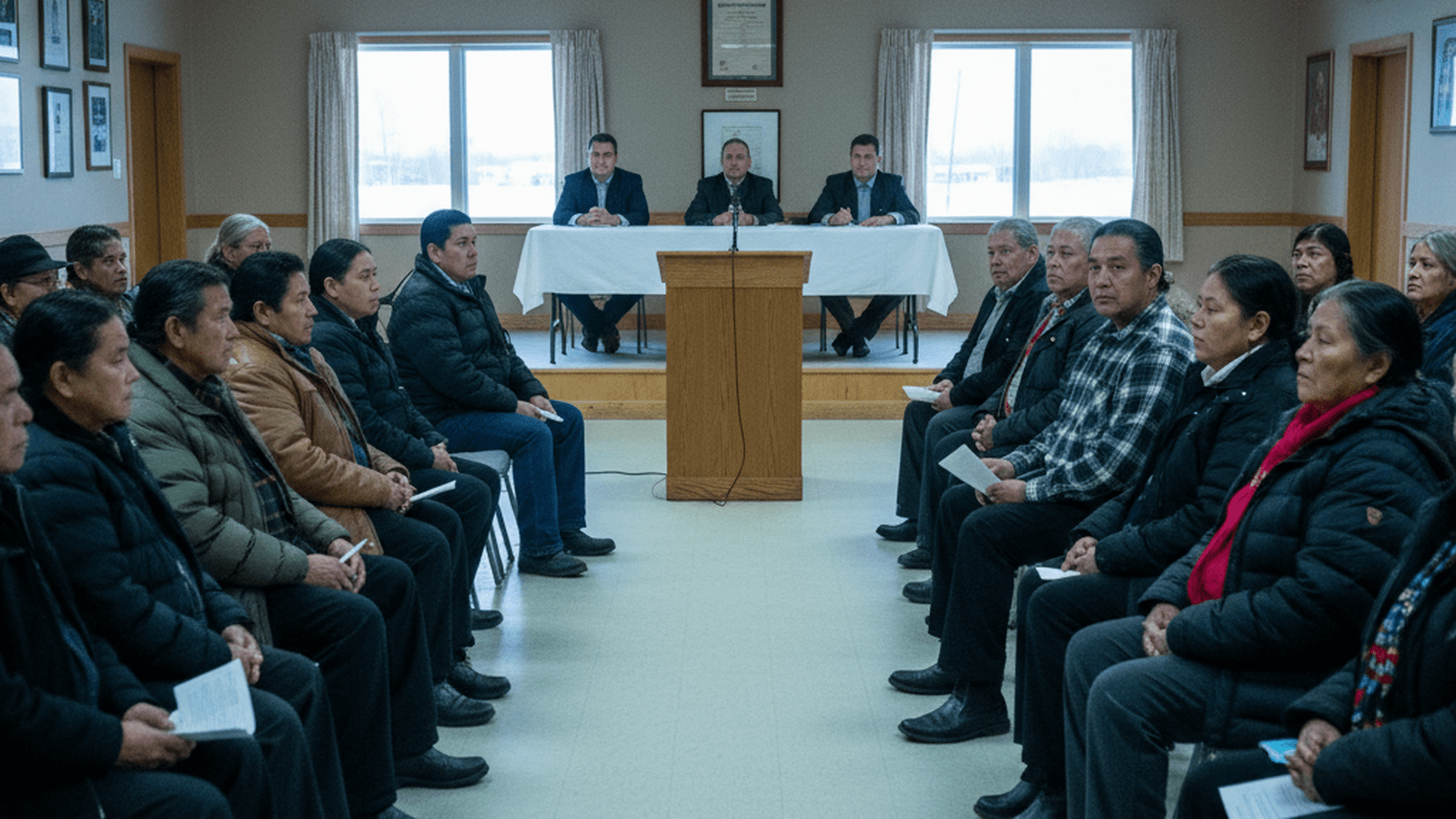
In the mid-2010s, North Dakota enacted a strict voter identification law that required residents to provide a current residential street address. This policy sparked a significant civil rights legal battle in the United States, as many Native American voters living on rural reservations lacked traditional street addresses.
TLDR: Following the 2013 repeal of North Dakota’s voucher system, the state implemented a strict voter ID law requiring residential street addresses. Native American plaintiffs challenged the law, arguing it disenfranchised reservation residents who rely on P.O. boxes. The legal battle highlighted the tension between election security and ballot access in the Great Plains.
In 2013, the North Dakota Legislative Assembly passed House Bill 1332, a measure that significantly tightened the state’s voter identification requirements. For decades, North Dakota had been the only state without formal voter registration, relying instead on a system where poll workers could vouch for the identity of a voter they personally knew. The new legislation abolished this vouching system and mandated that voters present one of a few specific forms of identification, all of which had to display a current residential street address.
The impact of this change was felt most acutely in the state’s Native American communities. On many of North Dakota’s rural reservations, the United States Postal Service does not provide residential delivery. Consequently, many residents do not have traditional street addresses and instead use P.O. boxes for all correspondence. Under the 2013 law and a subsequent 2015 amendment, an ID listing a P.O. box was no longer sufficient to cast a ballot. This created a unique hurdle for thousands of citizens who had been voting for years using their tribal identification cards.
In January 2016, seven members of the Turtle Mountain Band of Chippewa Indians filed a federal lawsuit, Brakebill v. Jaeger. The plaintiffs argued that the residential address requirement placed an unconstitutional burden on Native American voters, effectively disenfranchising a segment of the population that lacked the means to easily obtain the necessary documentation. They contended that the law violated the Equal Protection Clause of the Fourteenth Amendment and the Voting Rights Act.
U.S. District Judge Daniel Hovland initially sided with the plaintiffs. In August 2016, he issued a preliminary injunction, noting that the state had produced no evidence of voter fraud that would justify such a restrictive measure. Hovland ordered the state to provide an alternative for voters who lacked the required ID, such as the previous affidavit or vouching system. This allowed the 2016 general election to proceed under more flexible rules.
However, the legal victory was temporary. In 2017, the North Dakota legislature passed a revised version of the law, House Bill 1369, which allowed voters without a residential address ID to cast a provisional ballot that would be counted if they could later prove their address. The plaintiffs challenged this as well, but the legal tide began to turn. In 2018, the 8th U.S. Circuit Court of Appeals stayed Judge Hovland’s injunction, allowing the strict address requirement to go into effect just weeks before the midterm elections.
The United States Supreme Court declined to vacate the stay in October 2018. Justice Ruth Bader Ginsburg, joined by Justice Elena Kagan, dissented, arguing that the risk of disenfranchisement was too high so close to an election. The decision sparked an unprecedented mobilization effort across North Dakota’s tribal lands. Tribal leaders and advocacy groups worked around the clock to assign emergency residential addresses to homes and print new tribal IDs for thousands of residents before Election Day.
The controversy over North Dakota’s voter ID law prompted a national conversation about the intersection of administrative requirements and civil rights. While the state maintained the law was necessary to prevent double-voting and ensure residents voted in the correct precincts, critics viewed it as a targeted effort to suppress a specific demographic. In 2020, the state reached a settlement with the Spirit Lake Nation and the Standing Rock Sioux Tribe. The agreement required the state to recognize tribal IDs and cooperate with tribal governments to ensure all reservation residents could obtain a valid address for voting purposes, establishing a framework for intergovernmental cooperation in future elections.

Sophie Carter serves as a Staff Writer for Just Right News, where she anchors the outlet’s critical coverage of Elections, Influence, and Democracy Infrastructure. In an era where the mechanics of voting and the flow of political capital are under constant scrutiny, Sophie provides a steady, principled voice dedicated to the preservation of American institutional integrity and the rule of law.
Raised in Charlotte, North Carolina, Sophie’s perspective was forged in a community that balances rapid modern growth with a deep respect for tradition and civic duty. Growing up in the Queen City, she witnessed firsthand how a robust local culture depends on the trust between the citizen and the state. This upbringing instilled in her a foundational belief that the right to vote is a sacred trust—one that must be protected from both administrative overreach and the encroaching influence of special interest groups. Her reporting reflects these North Carolina roots, emphasizing the importance of community-led governance and the preservation of the individual’s voice in the face of nationalized political movements.
Now based in Atlanta, Georgia, Sophie operates from the heart of one of the nation’s most pivotal and contested political landscapes. Her location allows her to report from the front lines of the debate over election security, legislative reform, and the modernization of voting systems. For Sophie, the “infrastructure” of democracy is not merely a matter of machines and ballots; it is the collection of laws, people, and transparent processes required to maintain public confidence. Her work often highlights the necessity of clear, enforceable standards that ensure every legal vote is counted fairly and that the machinery of our republic remains accountable to the taxpayers who fund it.
Central to her work at Just Right News is her acclaimed feature series, “The Price of a Vote.” Through this ongoing project, Sophie explores the complex web of influence that shapes modern campaigns and policy decisions. She delves into how high-level lobbying, non-governmental organizations, and shifting bureaucratic regulations impact the weight of an individual citizen’s ballot. By examining the financial and structural pressures placed on the electoral process, she provides readers with a comprehensive look at the forces vying for control over the American political system.
Sophie’s approach to journalism is rooted in a commitment to the constitutional framework. She views her role as a watchdog for the voter, ensuring that the systems meant to serve the public remain transparent and free from corruption. Whether she is analyzing the implementation of new voting technologies or investigating the influence of outside money on state-level policy, her work is characterized by a rigorous adherence to facts and a refusal to succumb to the sensationalism that often plagues modern political reporting.
At Just Right News, Sophie Carter continues to be a vital resource for readers who value clarity, conviction, and a defense of traditional American values. Her deep ties to the Southeast and her specialized focus on the mechanics of our republic make her an essential voice in the ongoing conversation about the future of American self-governance. Through her reporting, she remains dedicated to the idea that a secure and honest electoral system is the bedrock of a free and prosperous society.