

Researchers in Kenya have discovered a naturally occurring strain of Serratia bacteria that prevents mosquitoes from carrying the malaria parasite. This microbe is transmitted through mating and from mother to offspring, providing a potential self-sustaining biological method for reducing malaria transmission.
TLDR: Scientists identified a specific bacterium, Serratia marcescens HBAD, in wild Kenyan mosquitoes that blocks malaria parasite development. This naturally occurring microbe spreads through mosquito populations and could provide a sustainable, non-chemical tool to significantly reduce human malaria infections without requiring genetic modification of the insects.
Scientists conducting field research in Kenya have identified a naturally occurring bacterium that effectively blocks the transmission of malaria from mosquitoes to humans. The discovery, published in the journal Science, centers on a specific strain of Serratia marcescens known as HBAD. This microbe was found inhabiting the midgut and ovaries of Anopheles mosquitoes, the primary vectors for the malaria parasite.
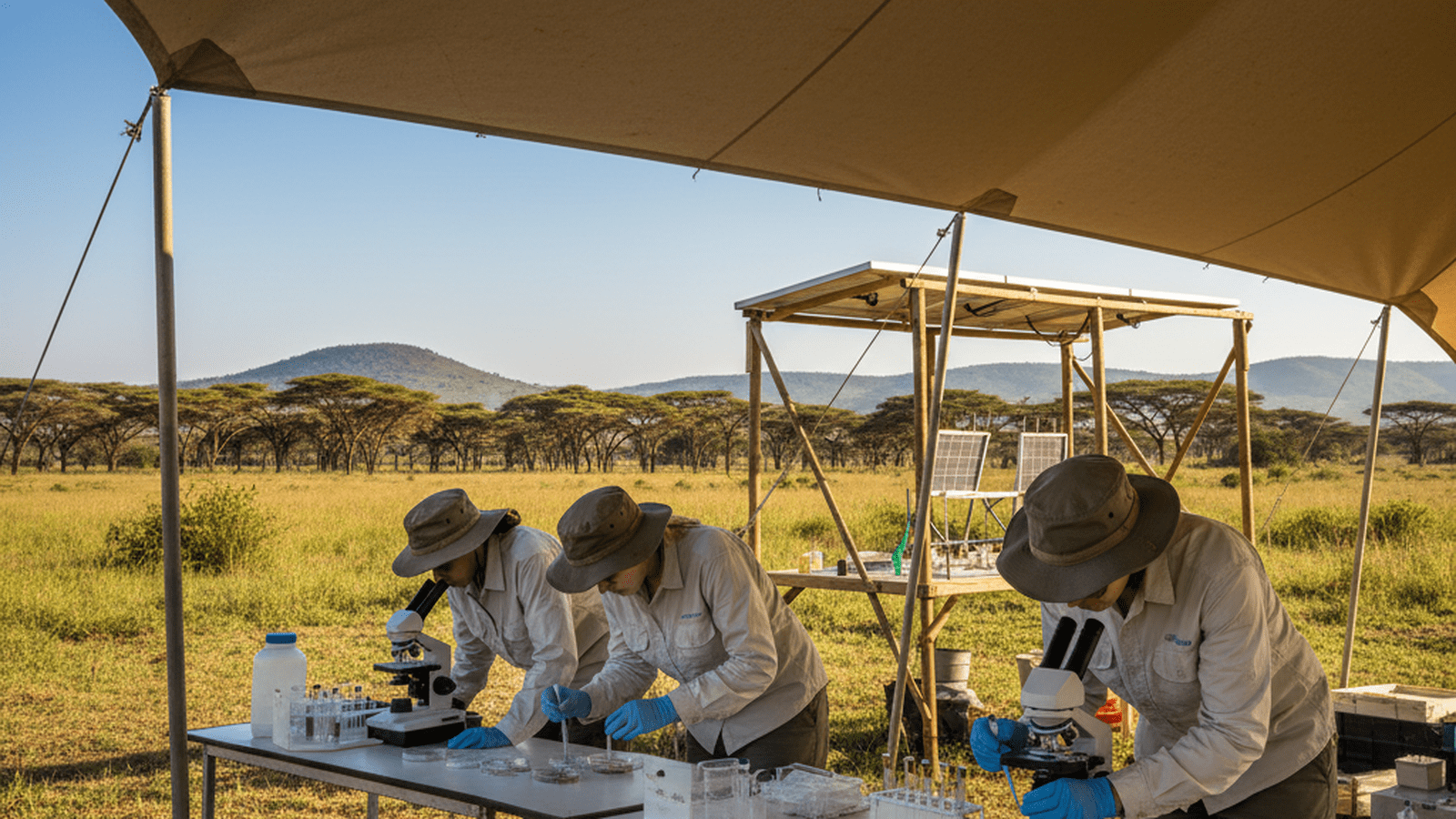
The research was a collaborative effort involving the International Centre of Insect Physiology and Ecology in Kenya and the pharmaceutical company GSK. During an extensive field expedition, teams collected and analyzed thousands of wild mosquitoes from various regions across the country. They discovered that mosquitoes naturally carrying the HBAD strain were almost entirely free of the Plasmodium parasite, which causes malaria in humans.
Laboratory investigations revealed that the bacterium works by secreting a small molecule called andrimid. This compound interferes with the early stages of the parasite’s development within the mosquito’s gut. By halting the parasite before it can migrate to the insect’s salivary glands, the bacterium prevents the mosquito from passing the infection to a human host during a blood meal.
One of the most significant findings of the study is the bacterium’s ability to spread through mosquito populations. Researchers observed that HBAD is transmitted from male mosquitoes to females during mating. Furthermore, female mosquitoes pass the bacterium to their offspring, ensuring that the next generation also carries the protective microbe. This self-sustaining transmission mechanism suggests that the bacterium could be introduced into wild populations with minimal human intervention.
Unlike traditional malaria control methods, such as chemical insecticides or bed nets, the use of Serratia HBAD does not kill the mosquito. This is a critical advantage, as it reduces the selective pressure that typically leads to the development of insecticide resistance. Because the mosquito remains healthy and able to reproduce, the bacterium can persist in the environment without being outcompeted by non-carrying insects.
The field expedition also highlighted the importance of studying local microbial diversity. The HBAD strain was found in a relatively small percentage of the mosquitoes sampled, suggesting that its presence is influenced by specific environmental factors. Understanding these factors will be essential for determining where and how the bacterium can be most effectively deployed as a public health tool.
The sampling took place in regions including the shores of Lake Victoria, where malaria transmission rates are historically high. Researchers utilized specialized traps and manual collection techniques to gather a diverse array of Anopheles species. By comparing the microbiomes of mosquitoes from different habitats, the team was able to isolate the HBAD strain and confirm its unique properties. This granular approach to field biology allowed the researchers to pinpoint a specific microbial ally in a complex ecological landscape.
The implications for global health are substantial. Malaria remains one of the world’s most devastating diseases, particularly in sub-Saharan Africa, where it claims hundreds of thousands of lives each year. A biological tool that can be naturally dispersed through wild mosquito populations offers a scalable and cost-effective supplement to existing interventions.
Current research efforts are focused on assessing the long-term stability of the bacterium in different ecological settings. Scientists are also conducting safety assessments to ensure that the introduction of HBAD does not have unintended consequences for other insect species or the broader ecosystem. If these studies prove successful, large-scale field trials could begin within the next few years, marking a new chapter in the fight against malaria.

Rachel Vaughn serves as a Senior Correspondent for Just Right News, where she leads the network’s coverage of Global Health, Climate, and Development. With a career defined by intellectual rigor and a commitment to principled reporting, Rachel provides a vital conservative perspective on some of the most complex and high-stakes issues facing the world today. Her work is characterized by a refusal to accept bureaucratic narratives at face value, focusing instead on how international policies impact national sovereignty, individual liberty, and the American taxpayer.
Raised in New Haven, Connecticut, Rachel grew up in an environment dominated by elite academic discourse. This upbringing provided her with a front-row seat to the inner workings of the American establishment, but it also instilled in her a healthy skepticism of the “ivory tower” consensus. She learned early on that while academic theories may sound promising in a lecture hall, they often fail to account for the practical realities of the working class. This background drives her to bridge the gap between high-level policy discussions and the common-sense concerns of everyday citizens, ensuring that her reporting remains grounded and accessible.
Now based in Burlington, Vermont, Rachel operates from a unique vantage point within one of the nation’s most progressive political landscapes. Living and working in a region that often serves as a testing ground for radical social and environmental experiments allows her to witness the real-world consequences of these policies firsthand. From her base in the Green Mountain State, she provides Just Right News readers with essential “boots on the ground” reporting, documenting the friction between local mandates and the constitutional freedoms of the individual. Her presence in Burlington ensures that her critiques of globalist agendas are informed by a direct understanding of how those ideologies manifest at the local level.
In her acclaimed feature series, “Planetary Stakes,” Rachel explores the intersection of international development and environmental stewardship. She rejects the alarmism often found in mainstream media, opting instead for a sober analysis of the economic and geopolitical costs of global climate agreements. Her reporting frequently highlights the importance of market-driven innovation and the role of American leadership in fostering global health without ceding authority to unelected international bodies. Through “Planetary Stakes,” she has become a leading voice for those who believe that true conservation and public health are best achieved through transparency, accountability, and the protection of private property rights.
Throughout her tenure at Just Right News, Rachel has distinguished herself as a journalist who is unafraid to ask difficult questions of global institutions. Whether she is investigating the influence of non-governmental organizations on domestic policy or analyzing the fiscal transparency of international health initiatives, her goal remains the same: to provide her audience with the facts necessary to navigate an increasingly interconnected world. Her blend of East Coast intellectual heritage and her current immersion in the political heart of the Northeast makes her an indispensable asset to the newsroom and a trusted source for readers seeking a principled, conservative take on the issues that define our era.