

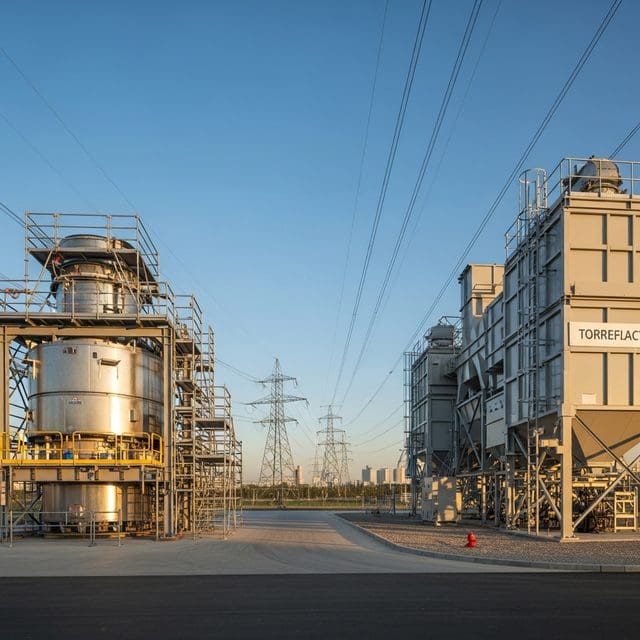
Technological shifts in micro-nuclear and waste-to-energy are emerging as vital hedges against geopolitical instability in the Strait of Hormuz and rising AI-driven power demand.
The global energy landscape is undergoing a structural shift as electricity emerges as a scarce commodity, driven by the dual pressures of an AI infrastructure boom and persistent geopolitical instability. While traditional energy markets grapple with disruptions in the Strait of Hormuz, a new generation of decentralized power technologies is moving from the theoretical to the regulatory pipeline. As of May 2026, electricity has officially emerged as a scarce commodity, forcing companies across the economy to pivot into the energy business to secure their own operational futures.
In the United States, Nano Nuclear’s KRONOS micro-modular reactor program formally entered the U.S. Nuclear Regulatory Commission review pipeline on June 23, 2026. This move marks a concrete regulatory timeline for the deployment of small-scale nuclear power, with environmental assessments targeted for spring 2027 and safety evaluations by early fall of that year. These microreactors are increasingly viewed as a critical solution for the massive power and cooling requirements of AI data centers, which have turned water consumption into a major economic flashpoint. Tech giants like Google, Amazon, and Microsoft have already launched aggressive efforts to address these water use concerns as AI infrastructure buildouts continue to strain local resources.
Market analysts at Benchmark have maintained steady ratings on these emerging nuclear plays, even as the sector experiences the typical volatility of pre-revenue infrastructure. The push for nuclear innovation coincides with a pivot in private capital toward energy transition vehicles. Institutional investors, including firms like Neuberger Berman and Brookfield, are increasingly tilting their portfolios toward grid resilience, water utilities, and circular-economy waste firms. This represents a significant shift away from traditional oil and gas midstream assets, as managers flag U.S. digital and grid projects as the core deal flow for the coming fiscal year.
International markets are also demonstrating the viability of alternative fuel sources through pragmatic engineering. In India, the Hubballi-Dharwad municipal waste-to-energy project recently cleared a critical milestone by successfully torrefying 200 tons of dry waste per day into ‘green coal.’ Unlike traditional incineration, this process creates a solid fuel designed to be supplied directly to existing coal units, such as the NTPC Kudagi power station. Union Minister Pralhad Joshi has framed these developments as essential components of the ‘One Nation, One Grid’ vision, highlighting that renewables and waste-to-energy assets are now core tools for grid stability rather than mere environmental supplements.
These innovations arrive at a time of heightened risk for traditional energy corridors. The United Nations recently paused the evacuation of over 11,000 sailors stranded in the Strait of Hormuz following Iranian objections and reports of a cargo ship being struck near Oman on June 25, 2026. Despite these tensions, U.S. crude oil prices dipped below $70 a barrel as traders remained optimistic about tanker traffic flow. However, the underlying scarcity of electricity and the rising costs of traditional grid maintenance suggest that the long-term premium on reliable, localized power will continue to grow, even as income growth supports continued consumer spending despite climbing energy costs.
As the U.S. prepares for the ANSI Critical Minerals Standards Workshop in September to strengthen domestic supply chains, the focus remains on balancing technological innovation with fiscal reality. For the American taxpayer and global industry alike, the transition is less about an ideological departure from fossil fuels and more about a pragmatic diversification into high-reliability assets. From the KRONOS reactors to the torrefaction plants in India, the market is clearly signaling that the future of energy independence lies in the ability to generate power closer to the point of consumption, bypassing the vulnerabilities of global shipping lanes and aging centralized grids.

Mark Davis serves as the Senior Correspondent for Energy, Climate, and Resource Economics at Just Right News. In an era where the conversation around the environment is often dominated by alarmism and top-down mandates, Mark provides a vital, market-oriented perspective on the complex forces shaping our world. As the lead voice behind the acclaimed feature series “Power and the Planet,” he explores the intersection of environmental policy, global energy markets, and the fundamental economic principles that sustain modern civilization.
Mark’s pragmatic approach to resource management was forged in the high desert of his hometown, Albuquerque, New Mexico. Growing up in a region defined by both its breathtaking natural beauty and its rugged, resource-dependent landscape, he developed an early appreciation for the delicate balance between conservation and utilization. New Mexico’s unique position as a hub for both traditional energy production and cutting-edge scientific research provided Mark with a front-row seat to the evolution of the American energy sector. This upbringing instilled in him a deep-seated belief that true environmental stewardship is inseparable from economic prosperity and technological innovation.
Now based in Boulder, Colorado, Mark operates from the heart of the nation’s climate research community. While Boulder is often seen as a bastion of environmental idealism, Mark utilizes his post to provide a necessary counterweight, grounded in the realities of resource economics. He understands that energy policy does not exist in a vacuum; it has tangible consequences for the American taxpayer, the stability of the national power grid, and the strength of the domestic manufacturing sector. By reporting from the front lines of the climate debate, he is able to challenge prevailing narratives with hard data and a commitment to the principles of the free market.
Throughout his tenure at Just Right News, Mark has distinguished himself by focusing on the “Resource Economics” aspect of his beat. He frequently highlights the hidden costs of rapid energy transitions and advocates for an “all-of-the-above” energy strategy that prioritizes American energy independence. His work often shines a light on the geopolitical implications of resource scarcity, arguing that a secure nation must first be an energy-secure nation. Whether he is analyzing the impact of federal land-use regulations or investigating the supply chains required for new technologies, Mark remains focused on how policy decisions affect the lives and livelihoods of everyday citizens.
In “Power and the Planet,” Mark continues to bridge the gap between complex scientific concepts and the economic realities facing the country. He rejects the false choice between a healthy environment and a thriving economy, instead seeking out solutions that leverage American ingenuity and private-sector competition. For Mark, reporting on the climate is not about following the latest trends, but about ensuring that the conversation remains tethered to the foundational values of liberty, property rights, and fiscal responsibility. His contributions ensure that Just Right News readers receive a comprehensive, clear-eyed view of the challenges and opportunities defining the future of our planet.