


The Texas State Board of Education weighs faith-based curriculum changes while New Jersey regulators and the SEC intensify scrutiny of institutional financial management and transparency.
The landscape of American education is navigating a dual challenge as state boards redefine classroom content and federal regulators intensify scrutiny of institutional finances. In Austin, the Texas State Board of Education is concluding its June 2026 meeting with a pivotal vote on new K-12 social studies standards. The proposed changes would significantly increase the emphasis on Christian history and biblical content. Supporters argue these measures restore traditional values, while critics raise concerns regarding the separation of church and state and the portrayal of civil rights.
Because Texas represents a massive textbook market, the board’s decision carries implications far beyond its borders. National publishers often align offerings with Texas standards to achieve economies of scale, meaning these shifts could influence materials used by millions of students nationwide. Beyond the social studies debate, the board’s agenda includes the annual report on the Bond Guarantee Program, a vital tool for school finance capacity that ensures districts can access capital for infrastructure even as instructional materials pivot.
While Texas debates what students learn, New Jersey is grappling with how schools are managed. The Office of the State Comptroller recently released findings from an investigation into College Achieve Greater Asbury Park Charter School. The report alleges the school ceded control to a private vendor, violated contracting laws, and mismanaged public funds. Reports from NJ Advance Media suggest charter executives drew unusually high salaries through complex related-party arrangements. An ongoing appeals court battle now centers on whether the Comptroller can compel these private entities to turn over full financial records, defining the limits of charter autonomy versus public accountability.
Financial transparency concerns are also reaching the highest levels of higher education. The Securities and Exchange Commission (SEC) has sharpened its focus on private-fund practices affecting university endowments, specifically a $106 billion private-equity secondary-market tactic. The SEC warned managers about conflicts of interest and opaque fees that could disadvantage institutional investors. Elite institutions like Princeton University are already responding to underwhelming private-capital performance by rethinking heavy allocations to private equity and reviewing liquidity needs amid pressure for transparent endowment strategies.
These administrative hurdles come as the broader workforce faces significant strain. A June 25, 2026, report identified a massive shortfall in the U.S. health care workforce, with over 700,000 monthly job openings and only 306,000 available workers. This gap threatens patient access, highlighting a disconnect between educational outputs and labor market demands. Furthermore, institutions are reconciling with physical histories; at The Citadel, officials are coordinating with authorities after discovering 50 unmarked graves beneath Johnson Hagood Stadium, raising questions about the management of historic burial grounds on campus land.
From kindergarten classrooms to university endowment offices, the American education system is being asked to prove its integrity. Whether through NWEA research identifying early indicators for third-grade proficiency or ANSI workshops strengthening standards for critical minerals, the focus is shifting toward measurable outcomes. The overarching challenge remains aligning curriculum, governance, and financial management with the practical needs of a modern workforce and a society demanding both transparency and results.
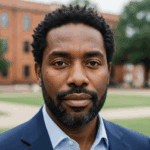
Daniel Owens serves as a Senior Correspondent for Just Right News, where he leads the newsroom’s coverage of Education, Workforce, and Upward Mobility. In an era where the national conversation often overlooks the practical foundations of success, Owens brings a principled perspective to the forefront of the media landscape. His work is defined by a commitment to the idea that a strong society is built on the pillars of quality education, a robust work ethic, and the removal of bureaucratic barriers to individual achievement.
Born and raised in Cleveland, Ohio, Owens’s worldview was shaped by the industrial landscape of the Midwest. Growing up in a city known for its grit and resilience, he witnessed firsthand the transformative power of steady employment and the devastating effects of economic stagnation. This background instilled in him a deep respect for the American worker and a healthy skepticism toward top-down government solutions that often fail to reach the communities they intend to help. As an African American man who has navigated the path to professional success, Owens approaches his beat with a nuanced understanding of how meritocracy and personal responsibility intersect with opportunity. He frequently draws on his roots to highlight the importance of family stability and community-led initiatives in fostering the next generation of leaders.
At Just Right News, Owens is the architect of the acclaimed feature series, “The Learning Curve.” Through this platform, he explores the evolving landscape of American schooling, from the rise of the school choice movement to the revitalization of trade schools and vocational training. He frequently challenges the status quo of higher education, advocating for a return to academic rigor and the practical alignment of degrees with market demands. For Owens, education is not merely about obtaining credentials; it is about equipping young people with the tools necessary to lead self-sufficient, meaningful lives. His reporting on “The Learning Curve” has become essential reading for parents and policymakers who believe that educational competition and parental rights are the keys to a brighter future.
Now based in Raleigh, North Carolina, Owens finds himself at the heart of one of the nation’s most dynamic regions for innovation and growth. Raleigh’s unique blend of traditional values and a fast-paced economy provides the perfect backdrop for his reporting on the modern workforce. From the tech hubs of the Research Triangle to the rural communities of the South, he tracks how shifts in the economy are impacting families and local industries. His reporting often highlights the success stories of entrepreneurs and workers who are thriving by embracing the values of hard work and innovation.
Throughout his career, Daniel Owens has remained a steadfast voice for the student seeking a better path and the worker striving for a better life. His reporting for Just Right News serves as a vital resource for readers who value common-sense solutions to the challenges of the 21st-century economy. By focusing on the intersection of policy and the human spirit, Owens continues to provide a roadmap for how individuals and communities can achieve lasting upward mobility.