

Nations navigate a complex tug-of-war between massive offshore oil expansion, rising energy-driven poverty in developing markets, and the emerging promise of small modular nuclear reactors.
The global energy landscape is currently defined by a sharp tension between resource extraction and environmental stewardship. New mapping from Earth Insight reveals over 800 planned offshore oil and gas fields overlapping with critical marine habitats across ten countries. Australia, Brazil, and Mexico lead this surge, accounting for two-thirds of projected production growth through 2050. These projects face scrutiny for encroaching on sensitive ecosystems, including blue whale habitats in Western Australia and coral reefs in Indonesia that support vital regional fisheries.
Environmental analysts warn of a “marine climate blind spot,” noting that many national climate plans fail to account for the full downstream emissions of these projects. This creates a friction point between Paris Agreement goals and the economic drive to secure domestic reserves. For nations like Kenya and Indonesia, the trade-off involves weighing immediate fossil fuel revenue against the long-term degradation of natural resources that underpin local tourism and food security.
This expansion coincides with visible economic strain in developing economies. In Nigeria, health-sector unions report that the removal of fuel subsidies and a weak naira have made hospital operations and commuting unsustainable. Rising electricity and transport costs are driving demands for emergency interventions and tax relief to prevent deeper energy-driven poverty. This situation highlights a pragmatic challenge: fiscal reforms and emissions targets often create immediate hardships for the taxpayer, potentially destabilizing essential public services.
Geopolitical friction further complicates the outlook. In the Indian Ocean, U.S. forces recently interdicted the sanctioned tanker Davina, emphasizing the maritime risks associated with the ongoing conflict involving Iran. With the Strait of Hormuz remaining a flashpoint and the U.S. House passing a war powers resolution to halt military action against Iran, the security of global oil transit remains precarious. These disruptions contribute to market volatility at a time when Citigroup warns global stock markets are at their frothiest levels since 2008.
In response to demands for reliability, advanced nuclear technology is gaining momentum. The U.S. Department of Energy recently noted the Nuclear Regulatory Commission’s approval of NuScale’s uprated small modular reactor (SMR) design, a key test for the American “nuclear renaissance.” Similarly, the European Commission is shaping a strategy for commercial SMR deployment by the early 2030s to reconcile energy security with net-zero goals. In India, regional leaders are even inviting Rosatom to explore SMR construction for industrial power.
As the U.S. navigates opposition to a draft five-year offshore drilling plan in Alaska and the Gulf of Mexico, the broader economic lesson is clear. Energy policy is moving away from slogans toward a difficult calculation of trade-offs. The coming decade will be defined by how nations secure affordable energy without compromising the ecological and fiscal foundations of their economies. With AI systems demanding more power than ever, the pressure to maintain stable, high-output grids will only intensify.
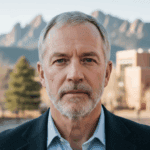
Mark Davis serves as the Senior Correspondent for Energy, Climate, and Resource Economics at Just Right News. In an era where the conversation around the environment is often dominated by alarmism and top-down mandates, Mark provides a vital, market-oriented perspective on the complex forces shaping our world. As the lead voice behind the acclaimed feature series “Power and the Planet,” he explores the intersection of environmental policy, global energy markets, and the fundamental economic principles that sustain modern civilization.
Mark’s pragmatic approach to resource management was forged in the high desert of his hometown, Albuquerque, New Mexico. Growing up in a region defined by both its breathtaking natural beauty and its rugged, resource-dependent landscape, he developed an early appreciation for the delicate balance between conservation and utilization. New Mexico’s unique position as a hub for both traditional energy production and cutting-edge scientific research provided Mark with a front-row seat to the evolution of the American energy sector. This upbringing instilled in him a deep-seated belief that true environmental stewardship is inseparable from economic prosperity and technological innovation.
Now based in Boulder, Colorado, Mark operates from the heart of the nation’s climate research community. While Boulder is often seen as a bastion of environmental idealism, Mark utilizes his post to provide a necessary counterweight, grounded in the realities of resource economics. He understands that energy policy does not exist in a vacuum; it has tangible consequences for the American taxpayer, the stability of the national power grid, and the strength of the domestic manufacturing sector. By reporting from the front lines of the climate debate, he is able to challenge prevailing narratives with hard data and a commitment to the principles of the free market.
Throughout his tenure at Just Right News, Mark has distinguished himself by focusing on the “Resource Economics” aspect of his beat. He frequently highlights the hidden costs of rapid energy transitions and advocates for an “all-of-the-above” energy strategy that prioritizes American energy independence. His work often shines a light on the geopolitical implications of resource scarcity, arguing that a secure nation must first be an energy-secure nation. Whether he is analyzing the impact of federal land-use regulations or investigating the supply chains required for new technologies, Mark remains focused on how policy decisions affect the lives and livelihoods of everyday citizens.
In “Power and the Planet,” Mark continues to bridge the gap between complex scientific concepts and the economic realities facing the country. He rejects the false choice between a healthy environment and a thriving economy, instead seeking out solutions that leverage American ingenuity and private-sector competition. For Mark, reporting on the climate is not about following the latest trends, but about ensuring that the conversation remains tethered to the foundational values of liberty, property rights, and fiscal responsibility. His contributions ensure that Just Right News readers receive a comprehensive, clear-eyed view of the challenges and opportunities defining the future of our planet.