

Internal assessments reveal critical U.S. missile depletions as the Trump administration navigates a fragile ceasefire and complex maritime disputes in the Strait of Hormuz.
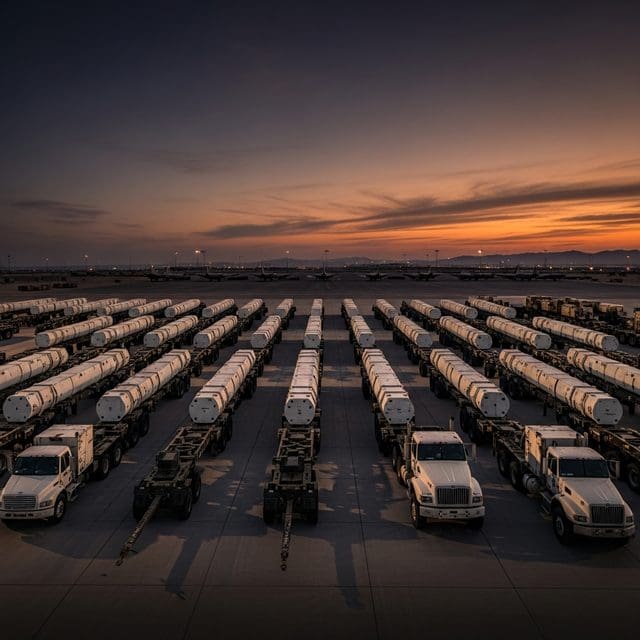
The strategic reality of the ‘peace through strength’ doctrine is facing a rigorous test as the Pentagon grapples with the logistical aftermath of operations against Iran. Internal assessments indicate that American forces have expended between 45% and 50% of critical missile inventories, including Patriot, THAAD, and Tomahawk systems. This rapid depletion introduces a significant near-term risk, particularly regarding the ability to maintain a credible deterrent against China while managing the Middle East.
Defense analysts and CSIS modeling suggest that if hostilities re-intensify at early-war firing rates, stocks of ATACMS and THAAD interceptors could be exhausted within thirty days. With replenishment estimated to take between three and five years, the Trump administration finds its diplomatic leverage constrained by an industrial base unable to rapidly replace high-tech munitions. This vulnerability is sharpening debates within the Pentagon over how to balance support for Israel and Ukraine while stocks remain at historic lows.
On the diplomatic front, the situation remains contested. Iranian state media reported a preliminary written proposal from Washington requiring the Strait of Hormuz to be reopened within one month. The framework suggests joint management between Iran and Oman, with third-party verification. However, Secretary of State Marco Rubio noted that Iran remains the sole party advocating for a tolling system, a move opposed by both Russia and China, who prioritize the free flow of global commerce.
Despite U.S. claims that a 60-day ceasefire is essentially finalized, Iranian diplomats are publicly disputing the status of the deal. Tehran continues to demand specific sequencing for sanctions relief and nuclear language that Washington has yet to concede. Iranian officials stressed that no signature is imminent, while the Supreme Leader warned that U.S. regional bases are no longer secure. Intelligence estimates confirm that despite American strikes, Iran retains thousands of ballistic missiles in hardened facilities.
Regional stability is further pressured by an escalation of Israeli operations in southern Lebanon. Despite the U.S.-brokered truce, the IDF has pushed operations north of its declared security zone, resulting in dozens of casualties. These strikes target Hezbollah assets but risk unraveling the broader regional de-escalation the administration seeks to pair with the Hormuz agreement. The displacement in Lebanon complicates U.S. efforts to link a maritime deal with a northern front ceasefire.
As the administration moves forward, it maintains a dual-track posture. While public messaging emphasizes that a peace deal is close, officials are reportedly planning options for renewed strikes should negotiations stall. This posture seeks to keep pressure on Tehran while negotiating over verification in the Strait. However, the reality of the American industrial base remains the silent arbiter of these ambitions. The administration must now decide if it can afford to continue a high-intensity conflict while its primary interceptors sit at half-capacity, a logistical reality that may force a more pragmatic conclusion than initially envisioned.

Olivia Kendall serves as the Senior Correspondent for Geopolitics, Defense, and Foreign Policy at Just Right News, where she provides a principled, conservative perspective on the complex forces shaping the global stage. With a career dedicated to deconstructing the intricacies of international relations, Kendall has become a trusted voice for readers who value national sovereignty, a robust military, and a foreign policy that prioritizes American interests above all else.
A native of Washington, D.C., Kendall’s professional journey is deeply rooted in her upbringing within the nation’s capital. Growing up in the epicenter of American political life, she developed an early and profound understanding of how policy is crafted and, more importantly, how it often fails to account for the values of the American heartland. This unique vantage point allowed her to witness firsthand the rise of globalist bureaucracies, fueling her commitment to reporting that champions the constitutional foundations of the United States. Her background as a British White American further informs her worldview, providing her with a keen appreciation for the Western tradition and the enduring importance of the “Special Relationship” in maintaining global stability.
Now based in Arlington, Virginia, Kendall operates from the doorstep of the Pentagon and the heart of the nation’s defense establishment. Her proximity to the decision-makers in the military and intelligence communities allows her to provide boots-on-the-ground reporting that is both timely and deeply informed. For Kendall, Arlington is more than just a base of operations; it is a daily reminder of the sacrifices made by the men and women in uniform. This connection to the defense community drives her rigorous coverage of military readiness and her advocacy for a “peace through strength” approach to diplomacy.
At Just Right News, Kendall is perhaps best known for her acclaimed feature series, “The World’s Shadow on America.” In this ongoing project, she explores the direct correlation between international developments and the daily lives of American citizens. Whether she is analyzing the encroachment of foreign adversaries in domestic supply chains or the impact of international treaties on local economies, Kendall’s work serves as a vital bridge between distant geopolitical shifts and their consequences at home. She rejects the notion that foreign policy is an abstract concern for elites, instead proving that what happens in the corridors of power in Brussels or Beijing has a tangible “shadow” that falls across every American doorstep.
Throughout her tenure, Kendall has remained a steadfast critic of international overreach and a vocal proponent of a clear-eyed, realistic foreign policy. She brings a sharp analytical mind to her beat, often challenging the prevailing narratives of the mainstream media to uncover the underlying truths that affect national security. Her reporting is characterized by a refusal to compromise on the truth and a dedication to the idea that a strong, secure America is the world’s best hope for liberty. As a Senior Correspondent, Olivia Kendall continues to lead the charge in providing the essential context and conservative insight necessary to navigate an increasingly volatile world.