

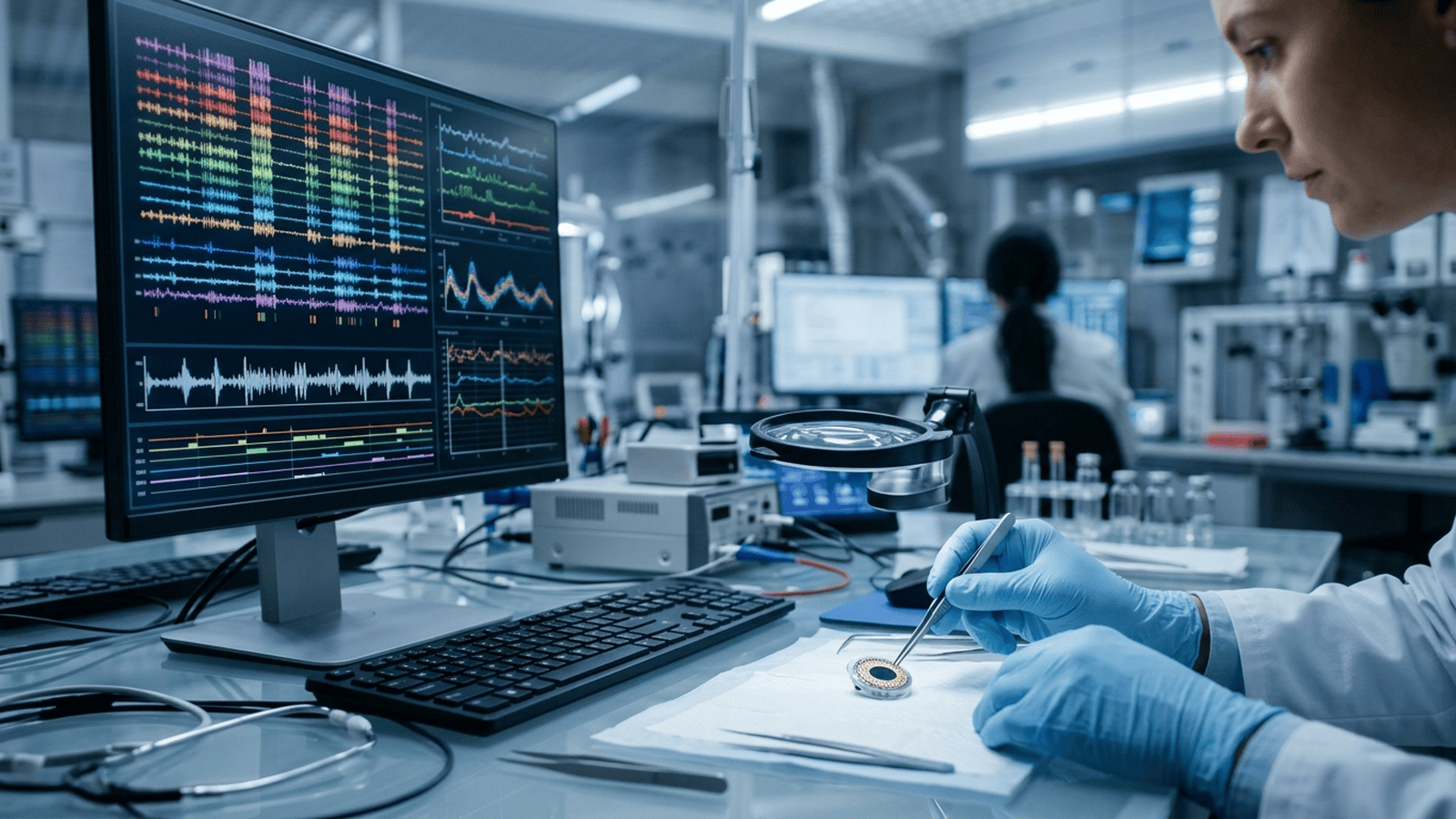
Neuralink reported in 2024 that its first human participant could control a computer cursor with the company’s implanted brain-computer interface. The demonstration is an early milestone, not proof of long-term safety or readiness for wider use; clinical data and follow-up will be essential.
TLDR: Neuralink’s first human participant demonstrated cursor control using an implanted brain-computer interface in 2024. The company’s early report is promising, but it does not establish long-term safety, reliability, or broad effectiveness. Continued clinical testing and detailed independent review will be needed to assess the device.
In January 2024, Elon Musk said that Neuralink had implanted its brain-computer interface in a person for the first time. Weeks later, the company reported that the participant could move a computer cursor using the implant. The early milestone offered a glimpse of how an experimental device might translate brain activity into commands, but it was not evidence that the technology was ready for broad medical use. Neuralink has released limited technical and clinical details, so independent evaluation remains important. A cursor task is a deliberately narrow benchmark: it tests whether decoded neural signals can support a practical interaction, not whether the implant restores movement or treats the underlying injury.
The participant, Noland Arbaugh, became quadriplegic after a diving accident. Neuralink said he was recovering well and could control a cursor by imagining movement. In a livestream in March, Arbaugh demonstrated using the system to play chess and operate a computer. He described the experience as helpful, while also noting that the system had encountered difficulties and that users should not assume the device works perfectly. The demonstration depended on training the decoder to associate patterns of activity with intended directions, then adjusting its interpretation as Arbaugh practiced. Such calibration is part of many brain-computer interface systems.
The implant, called N1, is designed to record electrical activity from neurons. A surgeon-robot places fine electrode threads into the brain, where they detect signals associated with intended movement. External software processes those signals and turns them into cursor commands. Neuralink says the wireless device is rechargeable and sits within the skull. The company’s first human study, known as PRIME, is intended to assess safety and whether the system can let people with paralysis control external devices. Signals do not represent thoughts as words; the system is trained for a specific task, and performance depends on recording quality, software decoding, and the user’s ability to produce consistent neural patterns.
Brain-computer interfaces are not new. Academic teams have previously enabled people with paralysis to move computer cursors, type, or control robotic limbs by decoding brain signals. In 2021, researchers reported a system that translated attempted handwriting into text, while other studies have tested implanted electrodes and external sensors. Neuralink’s approach stands out for its push toward a fully implanted, wireless system and its plan to place many electrodes, but those design choices still need careful testing in people. Earlier systems have often used wired connections or different electrode arrangements, and studies typically involve small numbers of participants. Results can therefore vary with hardware, training, and the task being tested.
The US Food and Drug Administration cleared Neuralink to begin its first human study in 2023 after the company addressed concerns raised during an earlier application review. The study is a clinical investigation, not approval to sell the device or proof of long-term safety. Important questions include how well the electrodes continue recording over time, whether implanted threads shift, what surgery risks arise, and how often the device needs maintenance. The number of participants and the length of follow-up will shape how much can be concluded from the trial.
For people with severe paralysis, even reliable cursor control could offer a meaningful way to communicate and use digital tools. Yet a demonstration by one participant cannot establish how well the system will work for others, or whether benefits will outweigh risks. Neuralink’s next steps include collecting and publishing more clinical data and following participants over time. Independent researchers and regulators will need detailed evidence on performance, safety, and device durability before the technology’s promise can be judged.

Mason Reed serves as a Staff Writer for Just Right News, where he spearheads the Future Frontiers & Special Projects desk. In an era defined by rapid technological shifts and evolving social landscapes, Mason provides a steady, principled voice, examining the innovations of tomorrow through the lens of traditional American values. His work is most prominently featured in his signature series, “The Next Horizon,” where he explores the intersection of emerging technology, national sovereignty, and the preservation of individual liberty.
A native of San Diego, California, Mason’s worldview was shaped by the unique culture of his hometown. Growing up in a region defined by its strong military presence and its history of maritime industry, he developed a deep-seated respect for the institutions that provide national stability and the entrepreneurial spirit that drives the American economy. This upbringing instilled in him a belief that true progress is not found in discarding the past, but in building upon a foundation of proven principles. His reporting often reflects this San Diego influence, emphasizing the importance of a robust national defense and the necessity of maintaining a competitive edge in the global marketplace.
Now based in San Francisco, Mason operates from the heart of the world’s technological engine. Living and working in the Bay Area provides him with a front-row seat to the advancements—and the ideological challenges—emanating from Silicon Valley. While many in the region embrace a “move fast and break things” mentality, Mason’s reporting serves as a vital counterweight. He offers Just Right News readers a “boots on the ground” perspective, documenting how radical local policies and the concentration of tech power impact the everyday lives of citizens. His proximity to the industry allows him to cut through the marketing jargon of big tech to uncover the real-world implications for privacy, free speech, and the nuclear family.
In his “Future Frontiers” beat, Mason tackles complex subjects ranging from the ethics of artificial intelligence to the burgeoning private space race. He approaches these topics with a healthy skepticism toward centralized bureaucracy, championing instead the decentralized innovations that empower individuals. Through “The Next Horizon,” he highlights the pioneers and thinkers who are working to ensure that the future remains a place where human dignity and constitutional rights are protected. He believes that the rapid pace of change requires more than just technical expertise; it requires a moral compass rooted in the Western tradition.
Throughout his tenure at Just Right News, Mason has remained committed to the idea that the future is something to be shaped, not merely accepted. His writing is characterized by a rigorous defense of American exceptionalism and a belief that the country’s best days lie ahead, provided it remains true to its founding ideals. Whether he is investigating the impact of automation on the American workforce or profiling the next generation of aerospace engineers, Mason Reed ensures that his readers are equipped with the insights they need to navigate a changing world with confidence and clarity.