

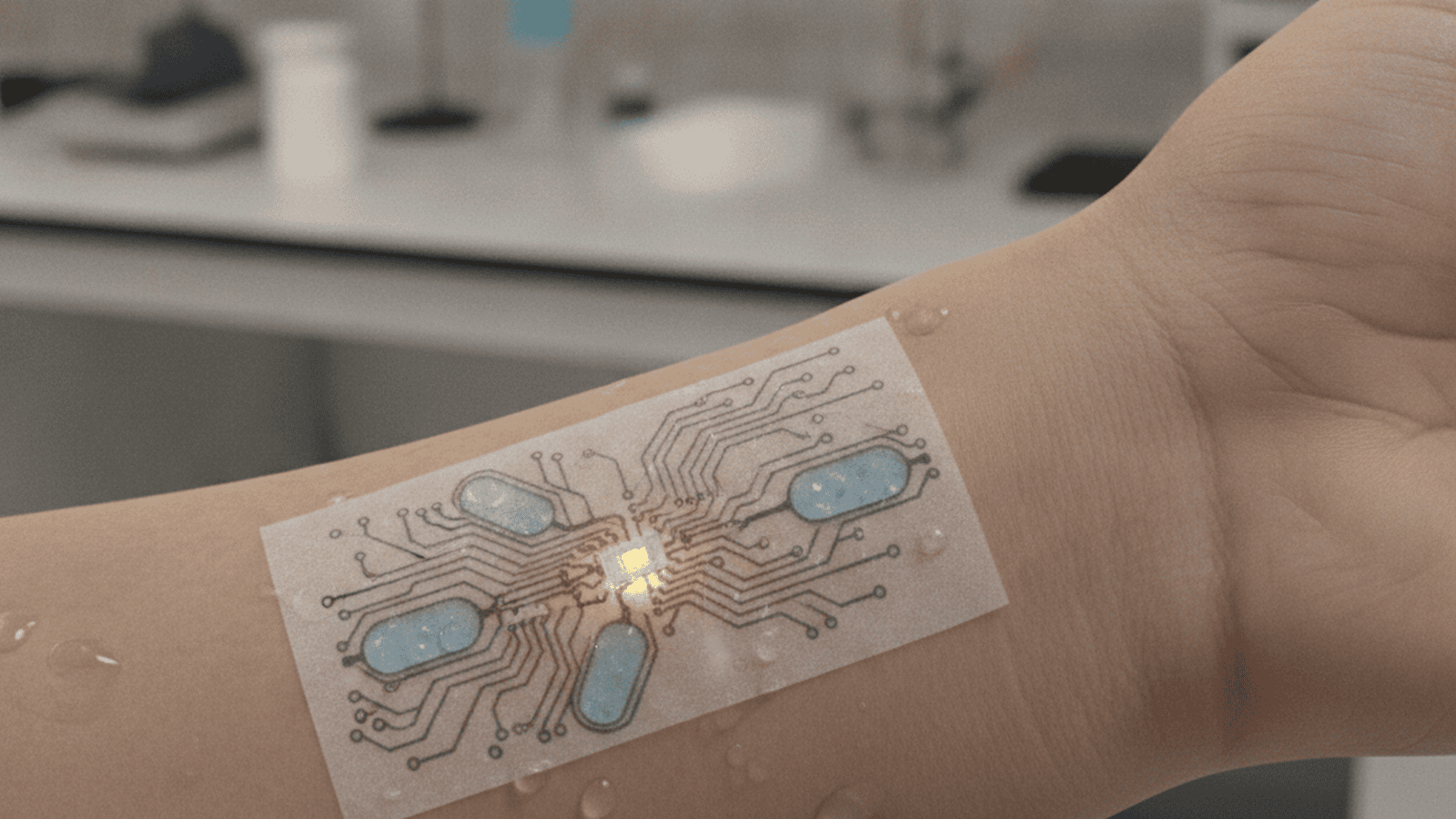
Researchers at Binghamton University have created a paper-based bio-battery that generates electricity from human sweat to power medical wearables. The device uses encapsulated bacteria that activate upon contact with moisture, offering a sustainable alternative to traditional batteries in hospital settings.
TLDR: A new plug-and-play bio-battery uses human sweat to activate bacteria and generate electricity for medical sensors. Developed by Binghamton University researchers, this flexible, paper-based power source provides a non-toxic and biodegradable solution for continuous patient monitoring in clinical environments.
The rapid proliferation of wearable medical devices has created a significant challenge for the healthcare industry: how to power these sensors without relying on bulky, toxic, or environmentally damaging batteries. Traditional lithium-ion and silver-oxide batteries are rigid and difficult to integrate into flexible skin patches. Furthermore, the disposal of millions of single-use medical batteries contributes to a growing global e-waste crisis. To address this, a research team at Binghamton University has developed a plug-and-play bio-battery that harvests energy from human sweat.
Led by Professor Seokheun Choi, the team engineered a paper-based device that utilizes the metabolic processes of bacteria to generate electricity. The core of the technology involves encapsulating specialized microbes, such as Bacillus subtilis, within the layers of a flexible substrate. These bacteria remain in a dormant, spore-like state while the battery is dry, allowing for a long shelf life. When a patient begins to sweat, the moisture permeates the paper and reaches the bacterial layer, providing the necessary hydration and nutrients to reanimate the microbes.
Once active, the bacteria consume the organic matter found in sweat, such as glucose and lactate. Through their natural metabolic cycle, the microbes release electrons as a byproduct. These electrons are captured by a conductive polymer anode and transferred through an external circuit to a cathode, creating a functional electrical current. This biochemical approach mimics the way living organisms convert food into energy, but redirects that energy to power microelectronics.
One of the primary advantages of this bio-battery is its plug-and-play capability. Unlike previous microbial fuel cells that required constant maintenance or specific laboratory conditions, the Binghamton design is self-starting and requires no external intervention. The device can be stored in a sealed package for months and activated instantly upon application to the skin. This makes it highly practical for emergency medical situations or for use in remote areas where traditional power infrastructure is lacking.
In clinical trials conducted within a research setting, the bio-battery demonstrated sufficient power density to operate low-energy microchips and wireless transmitters. This is a critical threshold for medical applications, as sensors must be able to send data to a central monitoring station or a smartphone app. The flexibility of the paper substrate allows the battery to move with the patient’s body, ensuring a consistent connection and reducing the risk of skin irritation associated with rigid components.
The environmental implications of this technology are substantial. Most hospital-grade wearable sensors are designed for short-term use, often lasting only a few days before being discarded. By replacing heavy-metal batteries with biodegradable paper and non-toxic bacteria, the Binghamton team has created a path toward truly sustainable medical diagnostics. The entire device can be incinerated or composted after use, leaving behind no hazardous chemical residue.
The research also highlights the potential for multi-modal energy harvesting. While sweat is the primary fuel source, the team is investigating ways to incorporate other biochemical markers into the power generation process. This could allow the battery to serve a dual purpose: providing power while simultaneously acting as a diagnostic tool that monitors the patient’s metabolic health.
Looking forward, the research team is focused on optimizing the power output to support more demanding electronics, such as continuous glucose monitors or active drug-delivery systems. They are also exploring the use of different bacterial strains that can survive in more extreme environments or utilize different fuel sources. As the healthcare industry moves toward a future of decentralized and personalized care, these sweat-powered bio-batteries represent a vital step in making continuous monitoring both practical and sustainable.

Susan Carter serves as a Senior Correspondent for Just Right News, where she leads the network’s comprehensive coverage of Health, Medicine, and Public Policy. With a career dedicated to dissecting the complexities of the American healthcare system, Susan brings a principled perspective to the most pressing debates of the day. Her reporting is characterized by a commitment to individual liberty, fiscal responsibility, and a healthy skepticism of government overreach, making her a vital voice for audiences seeking clarity in an increasingly regulated landscape.
Raised in Minneapolis, Minnesota, Susan’s professional outlook is deeply informed by the values of the American heartland. Growing up in the Twin Cities, she witnessed firsthand the importance of community-driven solutions and the resilience of the individual. This Midwestern foundation instilled in her a firm belief that the best answers to public policy challenges often come from local innovation and personal responsibility rather than top-down federal mandates. Her background allows her to translate complex legislative jargon into stories that resonate with families who value common sense and local autonomy.
Now based in Baltimore, Maryland, Susan operates from a unique vantage point at the intersection of medical innovation and urban policy. Living and working in a city renowned for its world-class medical institutions and significant public health challenges, she has a front-row seat to the realities of the modern healthcare landscape. Her proximity to these hubs of research and policy allows her to scrutinize how government intervention affects the quality of care and the freedom of medical professionals. In Baltimore, she sees the tangible results of policy decisions, using the city as a lens through which to examine the broader national health debate and the impact of federal spending on local communities.
As the lead for the acclaimed feature series “The Cost of Care,” Susan dives deep into the economic realities facing patients and providers alike. Her work focuses on the necessity of price transparency, the benefits of market competition, and the preservation of the sacred doctor-patient relationship. She is a staunch advocate for the idea that a well-informed public is the best defense against bureaucratic inefficiency. Through this series, she has exposed the hidden drivers of rising medical expenses, always seeking to empower the individual consumer over the massive institution.
Susan’s reporting on public policy is characterized by a commitment to rigorous inquiry and a focus on constitutional limits. Whether she is analyzing new pharmaceutical regulations, investigating the impact of federal health mandates, or exploring the future of medical technology, her goal remains the same: to provide Just Right News audiences with the facts they need to navigate a complex world. By blending her Midwestern sensibilities with the insights gained from her base in Maryland, Susan Carter has become a trusted authority for those who believe that personal freedom and public health are inextricably linked. Her work continues to challenge the status quo, advocating for a system that respects the taxpayer and prioritizes the patient.