


Investigators in Kozhikode have ordered Ribesh Ramakrishnan to appear for questioning following court filings that identify him as a key suspect in a high-profile digital forgery probe.
The Special Investigation Team (SIT) in Kozhikode has accelerated its probe into the circulation of a forged religious screenshot, summoning Democratic Youth Federation of India (DYFI) district leader Ribesh Ramakrishnan to appear for questioning at the Crime Branch office on Friday, July 24, 2026. This development follows a formal report filed before the Vadakara Judicial First Class Magistrate, which officially names Ramakrishnan as the second accused in the case. The move marks a significant escalation in a digital investigation that has struggled to identify the primary architect of the misinformation.
According to police records submitted to the court, the investigation centers on a doctored screenshot shared within the “Red Encounter” WhatsApp group. While the SIT has established that the content spread from this digital hub to other Left-leaning social media circles, the identity of the individual who created the original forgery remains unknown. Investigators noted in their filings that tracing the primary source has proven extremely challenging due to forensic evidence issues, including prior attempts to wipe data from seized mobile devices before they reached the laboratory. The SIT is now moving beyond earlier stalled inquiries that stopped at Ramakrishnan, with plans to re-question initial accused Muhammed Kasim and expand cyber-forensic analysis of multiple encrypted groups.
Leadership within the DYFI has publicly defended Ramakrishnan, asserting that he has cooperated with the inquiry and surrendered his phone to the authorities. However, the police report highlights a significant disclosure gap, stating that the accused has not yet revealed the source of the post. This lack of transparency has left a key evidentiary void regarding who first circulated the screenshot. The SIT’s ability to secure a conviction or identify the forgery’s architect will likely depend on the recovery of deleted digital logs currently being processed by state laboratories, as the current paper trail ends at the “Red Encounter” group.
In a separate matter involving international regulatory transparency, Irish Taoiseach Micheál Martin addressed an ongoing investigation into alumina exports potentially linked to Russian sanctions. Martin stated that the state’s inquiry is almost complete and that no concrete evidence of wrongdoing has been established thus far. The findings are expected to be shared with the European Commission once the final report is consolidated, though no public disclosure of the underlying data has been scheduled. This follows a pattern of internal governmental inquiries where the public is often shielded from the raw evidence until a final determination is reached by administrative bodies.
Further accountability efforts are noted in the United Kingdom, where a large-scale investigation into the late PC Alan Greer has uncovered a years-long pattern of sexual assault. While Greer took his own life, the subsequent police inquiry has identified nine victims, highlighting the role of internal affairs records in piecing together historical misconduct. Concurrently, in Northern Ireland, the Police Service has launched a murder investigation following the July 22 death of Paul Mackin Jr. in Belfast. Detectives are currently reviewing witness statements and hospital records, though no formal charges have been announced.
Across these jurisdictions, the reliance on forensic reports and internal government audits remains the primary driver of accountability. From the SIT’s work in Kozhikode to the alumina probe in Ireland, the lack of published detailed investigatory reports or chat logs leaves significant gaps in the public’s understanding of evidentiary chains. Until these forensic reports are finalized and made part of the public record, the full scope of these bureaucratic and criminal investigations remains confined to official summaries and court filings.
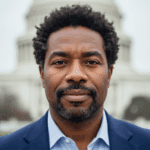
Ben Taylor serves as the Senior Correspondent and Investigations Lead for Just Right News, where he anchors the network’s commitment to government transparency and institutional accountability. With a career defined by a relentless pursuit of the facts, Taylor spearheads the acclaimed feature series “The Paper Trail,” a deep-dive investigative column that prioritizes primary source documentation over political rhetoric. Based in the heart of the nation’s capital, he has earned a reputation as one of the most formidable investigative journalists in Washington, D.C., known specifically for his mastery of public records and the Freedom of Information Act.
Taylor’s approach to journalism is deeply rooted in his upbringing in Kansas City, Missouri. Growing up in the “Show Me State,” he developed a healthy skepticism of centralized power and a profound respect for the common-sense values of the American heartland. This Midwestern foundation informs his reporting today, as he bridges the gap between the complex machinations of federal bureaucracy and the everyday concerns of citizens across the country. For Taylor, investigative reporting is not about chasing headlines; it is about ensuring that the government remains answerable to the people it serves.
As an African American man working within the conservative media landscape, Taylor brings a principled perspective to his beat. He views the Constitution and the right to information as the ultimate equalizers in a free society. His work often highlights how bureaucratic overreach and lack of transparency disproportionately affect individual liberties. By focusing on the “paper trail,” Taylor strips away the spin of partisan talking points, instead providing Just Right News readers with the raw data and internal communications that reveal how their tax dollars are spent and how policy decisions are actually made.
In his role as Investigations Lead, Taylor oversees a team dedicated to uncovering the stories that mainstream outlets often overlook. Whether he is auditing federal spending, investigating regulatory overreach, or exposing inefficiencies within the administrative state, his methodology remains consistent: follow the evidence wherever it leads. His presence in Washington, D.C., allows him to maintain a constant watch over the halls of power, yet he remains steadfastly connected to his roots, ensuring his reporting reflects the clarity and directness of his Missouri home.
Throughout his tenure at Just Right News, Taylor has become a vital voice for those who demand integrity in public office. He believes that a well-informed electorate is the strongest defense against government overreach, and he has dedicated his career to providing the public with the tools they need to hold their leaders accountable. Through “The Paper Trail” and his broader investigative work, Ben Taylor continues to set the standard for rigorous, document-driven journalism that champions the values of transparency, individual responsibility, and the rule of law.