

Trump’s Russian diesel agreement, stalled Ukraine talks and reports of a Houthi attack on Riyadh put energy security and U.S. commitments under pressure.
President Donald Trump’s push for energy cooperation with Russia and his pressure on Ukraine are unfolding alongside a new test in the Gulf: reports of a Houthi attack on Riyadh’s airport and Trump’s consideration of joining Saudi strikes.
The episodes pose a common challenge for Washington. Arrangements that serve an immediate interest, such as easing fuel costs, can conflict with efforts to influence rival powers and reassure security partners. The stakes include energy prices, commercial shipping and the credibility of U.S. commitments.
Trump announced on October 9 that Russia would increase diesel supplies to U.S. and global markets, with some U.S. energy sanctions waived. He said the fuel would arrive immediately. But the Kremlin said discussions on ending the war in Ukraine would not resume right away, according to The New York Times. The energy arrangement has not brought a reported breakthrough on the war.
For American consumers, more diesel could help ease pressure on energy markets. Strategically, however, Washington is easing some restrictions on Moscow while Russia continues its war against Ukraine. The deal also illustrates how energy ties can cut across the administration’s other objectives: commercial cooperation may deliver near-term supply, but it does not itself secure Russian concessions on the battlefield or at the negotiating table.
That tension has sharpened as Trump urged Kyiv to stop attacking Russian refineries and said Ukraine should replace President Volodymyr Zelenskyy. Zelenskyy offered a conditional step toward de-escalation on October 11, saying Ukraine would halt attacks on Russian oil refineries if Russia stopped striking Ukrainian energy infrastructure. Any pause, he said, would require reciprocity and “real guarantees.” The available reports do not say Russia has accepted the proposal.
Reports that the Trump administration threatened to suspend intelligence sharing if Ukraine continued its refinery attacks add pressure on Kyiv. Those reports did not establish that a cutoff occurred. Intelligence support is a significant instrument of U.S. leverage, but using it as pressure could also affect Ukraine’s defenses and strain ties with European allies. Britain’s defense secretary called for the UK to act as a peacemaker in the dispute, according to the London Evening Standard. That appeal reflects an alliance problem as well as a bilateral one: European governments have a direct stake in the course of the war, while Washington retains considerable influence over Ukraine’s military support.
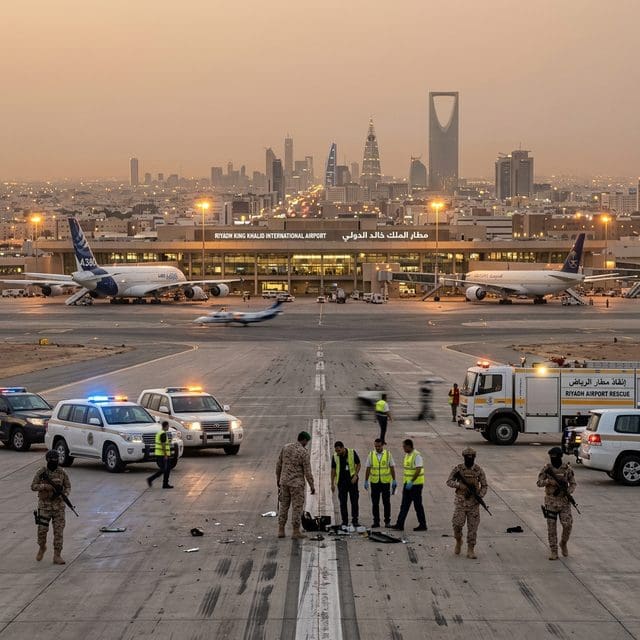
In the Gulf, outlets including Reuters and the BBC reported a missile attack on King Khalid International Airport in Riyadh on October 10. Saudi Arabia suspended airport operations for damage and safety assessments, and the closure continued into October 11. Schools in Riyadh shifted to online instruction through the end of the week. Reuters described the strike as the third attack on the airport in a week and the deadliest such attack in Saudi Arabia in more than a decade. The Saudi-led coalition blamed the Houthis and vowed retaliation. The Houthis had not claimed responsibility in the reporting provided. A verified casualty figure was not available in the source material.
The Houthis later warned airlines, travelers and airport workers to avoid Saudi airports and airspace, except routes serving Mecca and Medina, Reuters reported. Trump said he was evaluating whether the United States would join Saudi strikes. NPR reported that U.S. intervention could prompt further Houthi attacks on shipping through a key waterway and further restrict Persian Gulf oil flows.
Joining the strikes would mean more than backing a partner’s response. U.S. action could deter attacks and demonstrate support for Saudi security, but it could also widen the conflict and endanger commercial shipping and energy supplies. Saudi security, the vulnerability of regional routes and the cost of another American military commitment would have to be weighed together. The airport disruption itself underscores how attacks can affect civilian travel and commerce even without a broader closure of regional sea lanes.
There is no reported settlement in either theater: Russia talks remain stalled, Kyiv’s proposal has no reported Russian acceptance, and Washington has not announced whether it will join Saudi strikes. The test for U.S. power is whether separate bargains and threats can build durable leverage—or leave allies and adversaries uncertain about which commitments will hold.

Olivia Kendall serves as the Senior Correspondent for Geopolitics, Defense, and Foreign Policy at Just Right News, where she provides a principled, conservative perspective on the complex forces shaping the global stage. With a career dedicated to deconstructing the intricacies of international relations, Kendall has become a trusted voice for readers who value national sovereignty, a robust military, and a foreign policy that prioritizes American interests above all else.
A native of Washington, D.C., Kendall’s professional journey is deeply rooted in her upbringing within the nation’s capital. Growing up in the epicenter of American political life, she developed an early and profound understanding of how policy is crafted and, more importantly, how it often fails to account for the values of the American heartland. This unique vantage point allowed her to witness firsthand the rise of globalist bureaucracies, fueling her commitment to reporting that champions the constitutional foundations of the United States. Her background as a British White American further informs her worldview, providing her with a keen appreciation for the Western tradition and the enduring importance of the “Special Relationship” in maintaining global stability.
Now based in Arlington, Virginia, Kendall operates from the doorstep of the Pentagon and the heart of the nation’s defense establishment. Her proximity to the decision-makers in the military and intelligence communities allows her to provide boots-on-the-ground reporting that is both timely and deeply informed. For Kendall, Arlington is more than just a base of operations; it is a daily reminder of the sacrifices made by the men and women in uniform. This connection to the defense community drives her rigorous coverage of military readiness and her advocacy for a “peace through strength” approach to diplomacy.
At Just Right News, Kendall is perhaps best known for her acclaimed feature series, “The World’s Shadow on America.” In this ongoing project, she explores the direct correlation between international developments and the daily lives of American citizens. Whether she is analyzing the encroachment of foreign adversaries in domestic supply chains or the impact of international treaties on local economies, Kendall’s work serves as a vital bridge between distant geopolitical shifts and their consequences at home. She rejects the notion that foreign policy is an abstract concern for elites, instead proving that what happens in the corridors of power in Brussels or Beijing has a tangible “shadow” that falls across every American doorstep.
Throughout her tenure, Kendall has remained a steadfast critic of international overreach and a vocal proponent of a clear-eyed, realistic foreign policy. She brings a sharp analytical mind to her beat, often challenging the prevailing narratives of the mainstream media to uncover the underlying truths that affect national security. Her reporting is characterized by a refusal to compromise on the truth and a dedication to the idea that a strong, secure America is the world’s best hope for liberty. As a Senior Correspondent, Olivia Kendall continues to lead the charge in providing the essential context and conservative insight necessary to navigate an increasingly volatile world.