

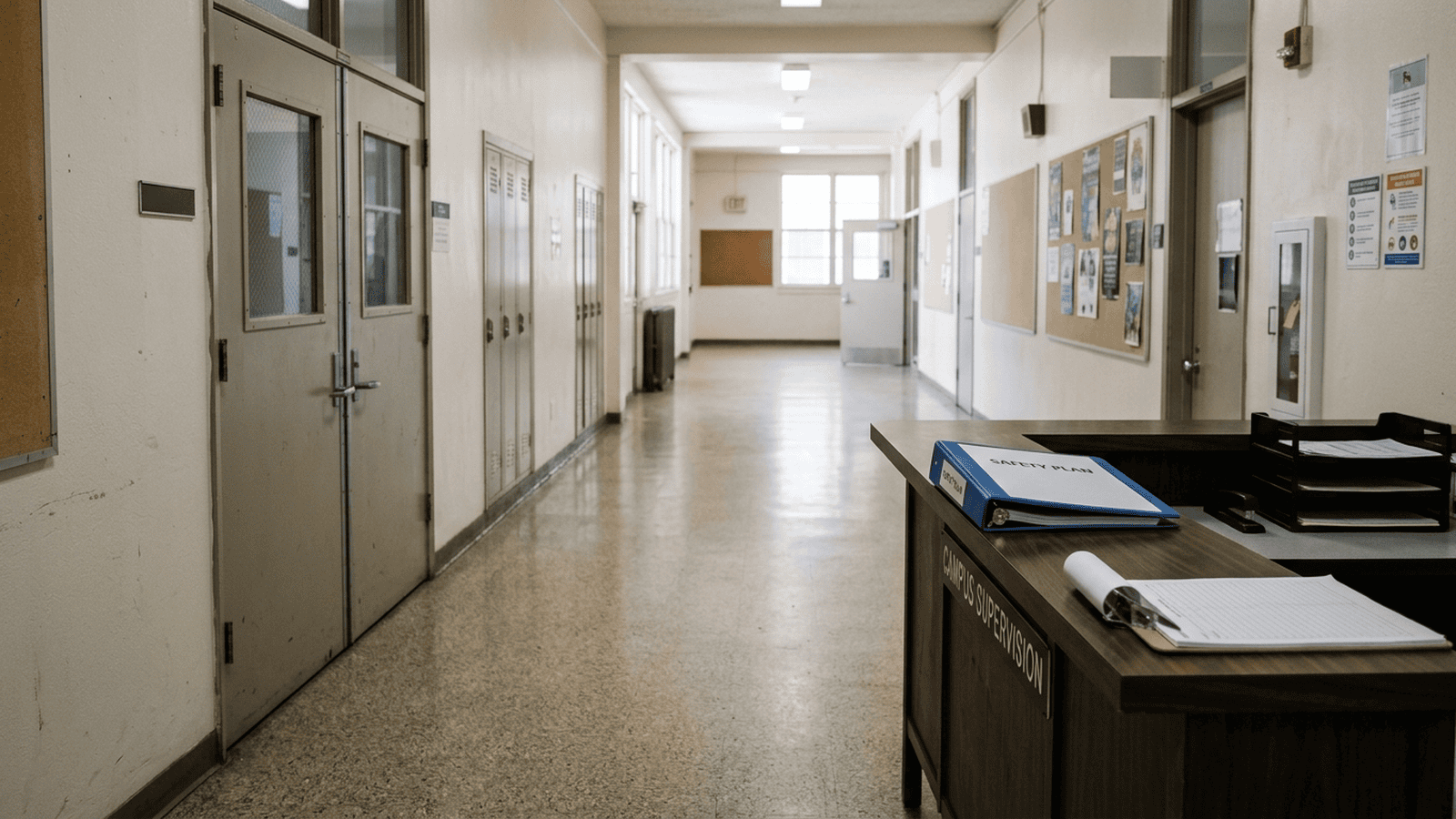
LAUSD recorded 6,131 student fights and 4,015 threats in the 2025-2026 school year, both higher than four years earlier. Weapons incidents and reported suicide-risk incidents fell over that period, though suicide risk remains the district’s most pervasive safety problem. The district says it is continuing prevention programs, staff and family training, community partnerships, and campus supervision planning. A police captain also described increased school outreach this year, while an expert urged the district to review its protocols and consult students, parents, and teachers. The report lists no new fees, forms, penalties, or fixed deadlines, and it does not say the district has adopted a new mandatory policy.
TLDR: LAUSD’s latest figures show long-term increases in fights and threats alongside declines in weapons incidents and suicide-risk reports. The district is continuing prevention, training, partnerships, and supervision work, while experts urge a review of safety protocols.
Los Angeles Unified School District data show that student fights and threats remain above levels recorded four years earlier, despite declines in several other safety measures. The figures put the district’s safety plans and prevention work under renewed scrutiny. They also give school leaders a clear basis for reviewing supervision and support for students at risk.
The district says student safety and well-being remain priorities. Its stated approach is to set clear expectations, build positive relationships, address conflict, hold students accountable, and repair harm. Those are practical aims, and the district says it is continuing programs and training to support them.
In the 2025-2026 school year, LAUSD recorded 6,131 fights, 21% more than four years earlier. It recorded 4,015 student threats, an 11.5% increase from the 2022-2023 school year. The figures were presented at a school board meeting in late September. The district also reports decreases in these categories compared with the previous school year, showing that year-to-year improvement can coexist with a higher count across a longer period.
The contrast matters for accountability. A lower total than the prior year is useful, but it does not erase the four-year increase. Ronald Stephens, executive director of the National School Safety Center and professor emeritus at Pepperdine, called the data very concerning. He said the district’s existing safe school plan may need changes to strengthen supervision and support for students at risk.
Stephens said the data should guide protocols going forward. He recommended returning to the drawing board and consulting students, parents, and teachers. He also pointed to supervision, training, intervention, and partnerships as possible steps. The source does not identify a newly adopted district rule or a final decision on which additional measures will be used.
Monica Harmon, executive director of Speak Out Against Bullying Inc., called for tougher restrictions and consequences. She said students who report trouble may see classmates return to school the next day without suspension. Her comments add pressure for clear, consistent responses, although the excerpt does not set out a new discipline policy or specify when one might take effect.
There are signs of progress in other areas. LAUSD recorded 923 weapons-related incidents last school year, 38% fewer than four years ago. It also recorded 10,055 incidents of suicide risk, down 14% over that period. Even with that decline, suicide risk has been the district’s most pervasive school safety problem for five years in a row, according to the data described in the report.
The district says it is continuing Positive Behavior Interventions and Supports and Restorative Practices. It is also providing training and resources for school staff, families, and students on mental health support, healthy relationships, and safe school environments. Community partners help with violence prevention and intervention and connect students and families with additional resources. Schools are reinforcing campus supervision plans and identifying places that may need more attention.
Los Angeles Police Department Capt. Eric Eppolito said the department is making a focused effort to increase school outreach this year. He described communication as an early way to resolve student disputes and prevent smaller problems from escalating. Police have not had an active presence at LA public schools over the past five years, according to the report. The new outreach effort is not described as a return to regular police presence on campuses.
The practical impact described so far is additional staff training and resources, stronger attention to campus supervision, community partnerships, and more police outreach this year. Students, families, school staff, and students identified as needing support are directly involved in these efforts. The excerpt gives no new fees, required forms, compliance penalties, or fixed deadlines for the district’s next steps. Those details are not stated, and the account does not establish a new mandatory policy.
The next steps are for LAUSD to use the data in its protocols, continue its stated prevention work, and review supervision plans where more attention may be needed. Stephens urged the district to hear from students, parents, and teachers. The district says it will continue its programs and partnerships. Those are necessary steps for tracking the problem and assessing whether the existing plan is sufficient; the excerpt does not provide a specific oversight schedule or assurance that experts have resolved the remaining concerns.

Sophie Carter serves as a Staff Writer for Just Right News, where she anchors the outlet’s critical coverage of Elections, Influence, and Democracy Infrastructure. In an era where the mechanics of voting and the flow of political capital are under constant scrutiny, Sophie provides a steady, principled voice dedicated to the preservation of American institutional integrity and the rule of law.
Raised in Charlotte, North Carolina, Sophie’s perspective was forged in a community that balances rapid modern growth with a deep respect for tradition and civic duty. Growing up in the Queen City, she witnessed firsthand how a robust local culture depends on the trust between the citizen and the state. This upbringing instilled in her a foundational belief that the right to vote is a sacred trust—one that must be protected from both administrative overreach and the encroaching influence of special interest groups. Her reporting reflects these North Carolina roots, emphasizing the importance of community-led governance and the preservation of the individual’s voice in the face of nationalized political movements.
Now based in Atlanta, Georgia, Sophie operates from the heart of one of the nation’s most pivotal and contested political landscapes. Her location allows her to report from the front lines of the debate over election security, legislative reform, and the modernization of voting systems. For Sophie, the “infrastructure” of democracy is not merely a matter of machines and ballots; it is the collection of laws, people, and transparent processes required to maintain public confidence. Her work often highlights the necessity of clear, enforceable standards that ensure every legal vote is counted fairly and that the machinery of our republic remains accountable to the taxpayers who fund it.
Central to her work at Just Right News is her acclaimed feature series, “The Price of a Vote.” Through this ongoing project, Sophie explores the complex web of influence that shapes modern campaigns and policy decisions. She delves into how high-level lobbying, non-governmental organizations, and shifting bureaucratic regulations impact the weight of an individual citizen’s ballot. By examining the financial and structural pressures placed on the electoral process, she provides readers with a comprehensive look at the forces vying for control over the American political system.
Sophie’s approach to journalism is rooted in a commitment to the constitutional framework. She views her role as a watchdog for the voter, ensuring that the systems meant to serve the public remain transparent and free from corruption. Whether she is analyzing the implementation of new voting technologies or investigating the influence of outside money on state-level policy, her work is characterized by a rigorous adherence to facts and a refusal to succumb to the sensationalism that often plagues modern political reporting.
At Just Right News, Sophie Carter continues to be a vital resource for readers who value clarity, conviction, and a defense of traditional American values. Her deep ties to the Southeast and her specialized focus on the mechanics of our republic make her an essential voice in the ongoing conversation about the future of American self-governance. Through her reporting, she remains dedicated to the idea that a secure and honest electoral system is the bedrock of a free and prosperous society.